
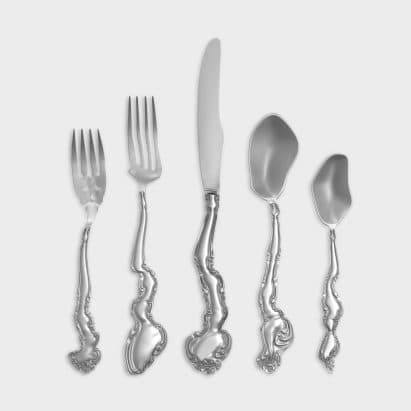
3D-Printed Cutlery Takes Center Stage at 3 Days of Design
The intersection of technology and tableware has long been a space ripe for exploration, but rarely does it arrive with such visual impact as it did at this year's 3 Days of Design festival in Copenhagen. Los Angeles gallery Marta, working alongside renowned curator Dung Ngo, unveiled a striking exhibition of 3D-printed cutlery that immediately captured the imagination of visitors, designers, and industry watchers alike. The pieces on display — knives, forks, and spoons of breathtaking complexity — represent a bold new chapter in the story of how we design the objects we use every single day.
What Is 3 Days of Design?
For those unfamiliar with the event, 3 Days of Design is one of Scandinavia's most anticipated annual design festivals, held each June in Copenhagen, Denmark. The festival transforms the Danish capital into a sprawling showcase of innovation, drawing galleries, studios, brands, and independent designers from across the globe. Over the course of three days, hundreds of exhibitions and installations open their doors to the public, celebrating everything from furniture and lighting to materials research and digital fabrication. It has earned a reputation as a destination where genuinely forward-thinking ideas are given room to breathe, and the Marta exhibition proved no exception.
Marta Gallery and Dung Ngo: A Creative Partnership
Marta is a Los Angeles-based gallery with a strong track record of championing experimental design objects that sit comfortably between art and function. Founded with a commitment to presenting work that challenges conventional notions of what designed objects can be, the gallery has built a loyal following among collectors and design enthusiasts who appreciate work that pushes boundaries. Curator Dung Ngo, who has spent decades working at the forefront of design discourse, brought his characteristically rigorous curatorial eye to this project, assembling a collection of 3D-printed pieces that tell a coherent and compelling story about the future of manufacturing.
Why 3D Printing Is Changing Cutlery Design
Traditional cutlery manufacturing relies on processes such as casting, stamping, forging, and milling — techniques that, while highly refined over centuries, impose strict limits on what shapes are possible. A spoon must be producible from a mold. A fork's tines must be achievable through mechanical pressing. These constraints have quietly shaped the visual language of our tableware for generations, and most of us have simply never questioned them.
3D printing — or additive manufacturing, to use the more precise term — dismantles those constraints entirely. Instead of removing material or pouring it into a fixed mold, a 3D printer builds an object layer by layer, following a digital file. This means that internal voids, interlocking geometries, lattice structures, and organic curves that would be physically impossible to manufacture using conventional means suddenly become entirely achievable. The Marta exhibition leverages exactly this freedom, presenting cutlery that would be impossible to produce any other way.
The Designs: Form Freed from Manufacturing Logic
The pieces displayed by Marta and Dung Ngo at 3 Days of Design are not simply novelties or provocations. They represent serious design thinking applied to objects that most people interact with multiple times a day. Each knife, fork, and spoon in the collection speaks to a different possibility unlocked by additive manufacturing:
- Forms with intricate internal structures that reduce weight without sacrificing structural integrity, creating pieces that feel almost impossibly light in the hand while remaining perfectly balanced for use at the table.
- Geometries that reference natural structures — bone scaffolding, coral branching, crystalline lattices — translated into functional eating utensils that carry a striking, almost alien beauty.
- Surface textures and patterns of extraordinary detail that would be entirely impractical to achieve through casting or machining, giving each piece a tactile richness that rewards close examination.
- Experimental proportions and ergonomic variations that invite a reconsideration of what a fork or spoon should feel like in the hand, and how the relationship between object and user might be reimagined.
The Broader Cultural Significance
It would be easy to frame this exhibition purely as a technical demonstration, but that would undersell its cultural resonance. Cutlery is one of the most intimate categories of designed objects in existence. We hold these things in our hands, bring them to our mouths, and pass them across tables to people we love. Their design carries weight that goes far beyond aesthetics or ergonomics. By radically reinventing what these objects can look like and how they can be made, Marta and Dung Ngo are implicitly asking a deeper question: how much of the visual and material world around us has been shaped not by choice or preference, but simply by the limits of the tools available to previous generations of makers?
As 3D printing technology becomes more accessible, more precise, and capable of working with a wider range of materials — including food-safe metals and resins — the design possibilities it opens up will gradually move from exhibition spaces into everyday life. The work shown at 3 Days of Design offers a vivid preview of what that future might look and feel like.
3D Printing and Sustainable Design Possibilities
Beyond pure aesthetics, there is a sustainability argument worth noting. Additive manufacturing is, by its nature, far less wasteful than subtractive processes that generate significant material offcuts. When a piece of cutlery is 3D printed, material is deposited only where it is needed. For designers and brands increasingly conscious of their environmental footprint, this represents a meaningful advantage — one that the design community is beginning to take seriously as the conversation around responsible production intensifies.
Looking Ahead: The Future of Tableware Design
The exhibition at 3 Days of Design 2026 is unlikely to be the last word on 3D-printed cutlery, but it may well prove to be a landmark moment in the conversation. Marta's commitment to presenting work at the frontier of design practice, combined with Dung Ngo's curatorial intelligence, has produced a body of work that is both genuinely beautiful and intellectually stimulating. For anyone with an interest in where design is heading — or simply in the objects that populate our most intimate daily rituals — this is a story well worth following.
As festivals like 3 Days of Design continue to provide platforms for exactly this kind of experimental thinking, it becomes increasingly clear that the future of the designed object will be shaped not by what machines have always been able to do, but by what imagination and technology can achieve together.