
Amazon Makes Its Move Into LTL Freight: A Game-Changer for the Logistics Industry
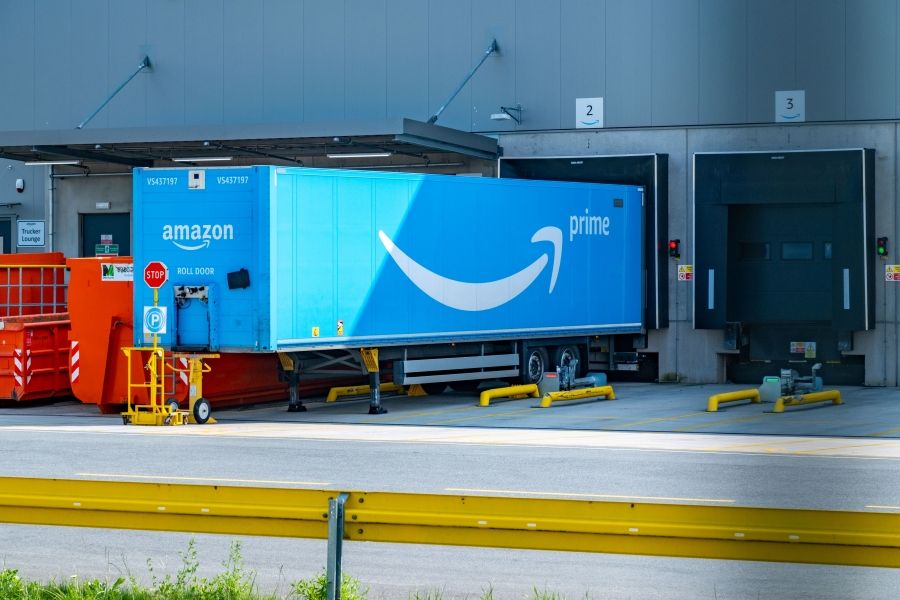
Amazon has never been shy about expanding its footprint, and its latest push into the less-than-truckload (LTL) freight market is no exception. The e-commerce and technology giant has officially launched an LTL shipping service, marking yet another bold step in its mission to control more of its own supply chain — and potentially reshape an entire corner of the freight industry. While the headlines might suggest a sweeping threat to all carriers, the reality is more nuanced: it is third-party logistics providers (3PLs) and freight brokerages that have the most reason to pay attention.
What Is LTL Freight and Why Does It Matter?
Before diving into the implications of Amazon's new offering, it helps to understand what LTL freight actually is. Less-than-truckload shipping refers to the transportation of freight that does not require a full truckload. Rather than filling an entire trailer, multiple shippers share space on a single truck, splitting the cost of transport proportionally. It is an efficient, cost-effective solution for businesses shipping moderate volumes of goods — too much for a parcel carrier but not enough to justify a dedicated full truckload.
The LTL sector is a significant piece of the U.S. freight economy, generating tens of billions of dollars in annual revenue. It has historically been dominated by large, asset-based carriers — companies that own their trucks, terminals, and infrastructure. Names like Old Dominion Freight Line, Saia, and XPO have long held commanding positions in this space. However, in recent years, a growing layer of intermediaries has emerged: third-party logistics providers and brokerages that connect shippers with carriers, often adding technology and service layers on top of existing carrier networks.
Amazon's Entry: What We Know About the New LTL Service
Amazon's new LTL service leverages its already vast logistics infrastructure — the same network of fulfillment centers, delivery stations, and transportation assets it has built over the past decade primarily to serve its own retail business. By opening that capacity to outside shippers, Amazon is doing what it has done in other areas of its business: converting an internal cost center into an external revenue stream.
This is not Amazon's first foray into freight services. The company has been steadily building out Amazon Freight, its carrier offering for full truckload and partial truckload shipments, for several years. The addition of LTL capabilities represents a logical extension of that strategy and a more direct challenge to the established freight ecosystem. Amazon's scale, technology capabilities, and existing shipper relationships give it a formidable starting position from which to compete.
Who Faces the Greatest Competitive Pressure?
Here is where the analysis gets particularly interesting. According to sources familiar with the matter who spoke with the Journal of Commerce, the competitive threat from Amazon's LTL entry is not evenly distributed across the industry. Asset-based LTL carriers — the companies that own the trucks and terminals — are expected to feel relatively limited direct pressure, at least in the near term. These carriers operate deep, established networks with decades of institutional knowledge, customer relationships, and physical infrastructure that cannot be replicated overnight.
The segment that faces a more immediate and meaningful threat is the intermediary layer: third-party logistics providers and freight brokerages. These businesses have been playing an increasingly prominent role in the LTL market, offering shippers technology-driven platforms, consolidated purchasing power, and value-added services. They sit between shippers and asset-based carriers, and that is precisely the position Amazon is now targeting.
Why 3PLs and Brokerages Are More Vulnerable
- Technology overlap: Many 3PLs and brokerages have built their competitive advantage on digital freight matching and data-driven logistics tools. Amazon's technology capabilities are arguably superior at scale, making it difficult for smaller platforms to differentiate purely on tech.
- Existing shipper relationships: Amazon already has commercial relationships with millions of businesses that sell on its marketplace. Offering them LTL services is a natural upsell that requires minimal additional sales effort.
- Pricing power: Amazon's scale allows it to potentially undercut intermediaries on price, squeezing the margins that brokerages depend on to sustain their business models.
- One-stop-shop appeal: Shippers increasingly want consolidated logistics solutions. Amazon's ability to bundle warehousing, fulfillment, parcel, and now LTL under one roof is a powerful proposition that most standalone brokerages cannot match.
What This Means for the Broader Freight Market
Amazon's LTL push is likely to accelerate trends that were already underway in the freight industry. Consolidation among smaller brokerages and 3PLs may quicken as companies seek scale and capabilities to compete with a well-resourced new entrant. Meanwhile, technology investment across the industry will intensify, as companies scramble to differentiate their service offerings beyond simple capacity access.
For shippers, increased competition is generally good news. More options, better technology, and potentially lower prices tend to follow when a disruptive player enters a market. However, shippers that rely heavily on independent 3PLs for customized, relationship-driven logistics support may want to evaluate how their provider landscape evolves over the coming months and years.
Asset-Based Carriers: Watching Carefully, Not Panicking
The established LTL carriers have weathered competitive disruptions before. The rise of digital freight brokerages in the 2010s was supposed to commoditize their services — and while it did create margin pressure in some segments, the major asset-based carriers ultimately adapted and continued to thrive. Amazon's entry will require attention and strategic response, but carriers with dense, proven networks and loyal direct shipper relationships are not without their own competitive moats.
What carriers will need to monitor is whether Amazon begins to siphon off the intermediary volume that flows through their networks indirectly via 3PLs and brokers. If Amazon builds enough of its own shipper base and routes freight through its own assets rather than purchasing capacity on the open market, carriers could see a reduction in volume over time — even without competing head-to-head in the traditional sense.
The Bigger Picture: Amazon's Logistics Ambitions Have No Ceiling
Amazon's LTL launch is best understood not as a single product decision but as one piece of a long-term strategy to become a full-service logistics provider capable of handling nearly any shipping need any business might have. From last-mile delivery to ocean freight forwarding, from warehousing to air cargo, Amazon has been systematically building the infrastructure and services to compete across the entire logistics value chain.
For the logistics industry, the message is clear: Amazon is no longer just a customer. It is a competitor, and its ambitions in freight are only getting broader. Third-party logistics providers and brokerages, in particular, would be wise to reassess their value propositions, deepen customer relationships, and invest aggressively in the capabilities that truly differentiate them — because the window for doing so comfortably may be narrowing.