
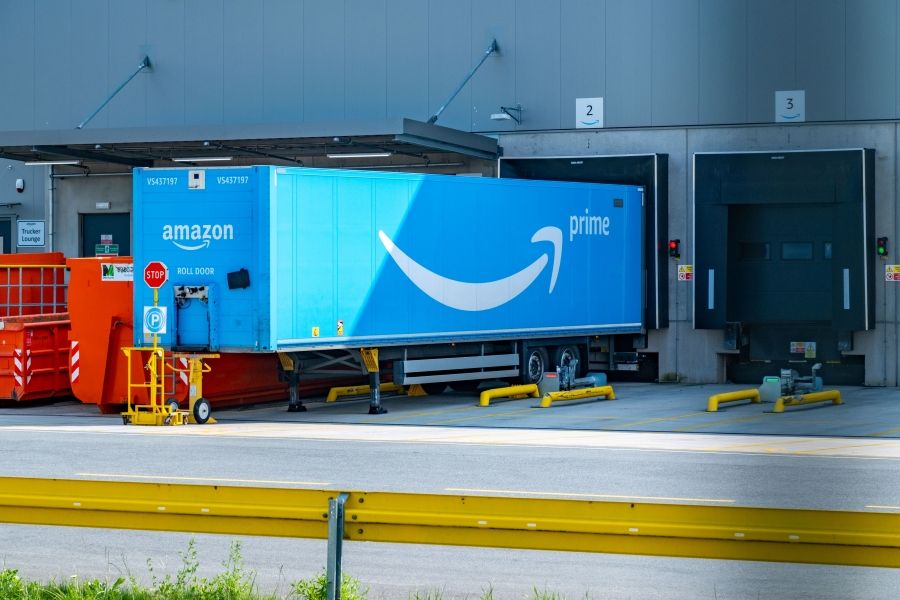
Amazon Enters the LTL Freight Market — And It's a Game Changer
Amazon has never been shy about expanding its reach, but its latest move into the less-than-truckload (LTL) freight market signals a bold new chapter in the company's relentless push to dominate every layer of the supply chain. With the official launch of its LTL service, Amazon is no longer simply a shipper using other carriers — it is becoming a direct competitor in one of the most complex and fragmented segments of the freight industry. While established, asset-based LTL carriers may weather this disruption better than expected, third-party logistics providers (3PLs) and freight brokerages have good reason to be watching closely.
What Is LTL Freight and Why Does It Matter?
Before diving into the implications of Amazon's move, it helps to understand what LTL shipping actually is and why it occupies such a strategically important position in the logistics landscape. Unlike full truckload (FTL) shipping, where a single shipper fills an entire truck, less-than-truckload freight involves consolidating shipments from multiple shippers into one vehicle. This model is essential for small and mid-sized businesses that regularly ship pallets or smaller freight quantities that don't justify the cost of an entire truck.
The LTL market has historically been dominated by asset-heavy carriers — companies that own their own fleets, terminals, and infrastructure. Carriers such as FedEx Freight, Old Dominion Freight Line, and XPO Logistics have long held entrenched positions in this space. However, in recent years, non-asset-based players — brokerages and 3PLs that coordinate freight movements without owning the underlying equipment — have carved out a growing slice of the market by offering flexibility, technology-driven pricing, and broad carrier networks.
It is precisely this latter group that Amazon's new LTL service is poised to disrupt most significantly.
Amazon's Logistics Expansion: A Long Time Coming
Amazon's entry into LTL is not a sudden impulse — it is the logical continuation of a multi-year logistics buildout that has seen the company develop its own last-mile delivery network, air cargo fleet, fulfillment centers, and middle-mile transportation operations. Amazon Logistics has quietly grown into one of the largest parcel delivery networks in the United States, rivaling UPS and FedEx in volume if not yet in geographic reach for business-to-business freight.
By moving into LTL, Amazon is leveraging an existing infrastructure advantage that few competitors can match. The company already operates a vast network of sortation centers, fulfillment warehouses, and delivery stations across the country. Plugging LTL capabilities into this network gives Amazon an immediate operational foundation that a traditional startup would take years and billions of dollars to replicate.
Moreover, Amazon's deep technological capabilities — including advanced route optimization algorithms, machine learning-driven demand forecasting, and its own proprietary shipping software — give it a potentially significant edge in the efficiency-sensitive LTL space, where load planning and terminal operations can make or break profitability.
Who Feels the Most Pressure?
Industry sources speaking with the Journal of Commerce have been pointed in their analysis: asset-based LTL carriers are not the primary targets of Amazon's competitive pressure. The companies that should be taking a harder look at their positioning are third-party logistics providers and freight brokerages.
The reason is straightforward. Asset-based carriers have something Amazon does not yet fully possess in the LTL space — dense terminal networks, deeply trained dock workers, and decades of operational expertise in handling multi-stop, consolidated freight. Building out that kind of physical infrastructure is a slow, capital-intensive process. For the foreseeable future, legacy carriers with established terminal footprints hold a structural moat.
Freight brokerages and 3PLs, however, compete on a different axis. Their value proposition rests on:
- Aggregating capacity across multiple carriers to offer competitive pricing
- Providing technology platforms that simplify freight quoting and booking
- Offering supply chain visibility and customer service that smaller shippers value
- Acting as a single point of contact for shippers navigating complex freight needs
Amazon can replicate or surpass every one of these capabilities. Its scale gives it unmatched purchasing power with carriers. Its technology infrastructure is world-class. And its brand recognition and existing relationships with millions of business sellers on its marketplace give it an instant customer pipeline that most brokerages could only dream of accessing.
Implications for Shippers and the Broader Supply Chain
For shippers, especially small and mid-sized businesses, Amazon's LTL entry could ultimately be a welcome development. Increased competition in the LTL brokerage space typically drives down rates, improves service quality, and accelerates technology adoption across the industry. Companies that have long relied on brokers and 3PLs to navigate LTL complexity may gain access to simpler, more integrated solutions — particularly those already embedded in the Amazon ecosystem as third-party sellers or fulfillment by Amazon (FBA) participants.
That said, shippers should also remain mindful of the risks that come with consolidating too much of their logistics spend with a single provider. Supply chain resilience depends on diversification, and an over-reliance on any one logistics partner — regardless of how capable — introduces vulnerability.
What Should 3PLs and Brokerages Do Now?
The emergence of Amazon as an LTL competitor does not mean the end of third-party logistics providers or freight brokerages. It does mean the bar for differentiation has been raised considerably. To compete effectively in an Amazon-influenced LTL market, these companies should focus on the following priorities:
- Double down on specialization: Niche freight expertise — hazardous materials, temperature-controlled shipments, oversized freight — creates value that a generalist platform like Amazon cannot easily commoditize.
- Invest in proprietary technology: Brokerages that can offer superior visibility, predictive analytics, and seamless integration with shipper ERP systems will retain a defensible position.
- Deepen customer relationships: Long-term partnerships built on trust, customization, and consultative service are harder to displace than transactional freight bookings.
- Explore carrier partnerships: Aligning more closely with asset-based carriers through preferred provider agreements or technology integrations can strengthen service reliability and pricing stability.
The Bigger Picture: Amazon's Logistics Ambitions Have No Ceiling
Amazon's LTL launch is one chapter in a much longer story about the company's ambitions to become the operating system of global commerce. From warehousing and last-mile delivery to freight forwarding and now LTL, Amazon is methodically building the infrastructure to handle virtually any shipment, at any size, from any origin to any destination. For the logistics industry, this is both a competitive threat and a signal that the era of comfortable incumbency is over. Companies that adapt — by specializing, innovating, and delivering genuine value beyond what a tech-enabled platform can automate — will survive and thrive. Those that don't may find themselves on the wrong side of another Amazon disruption story.