
Commonwealth Fusion Is Rewriting the Fusion Energy Timeline
For decades, nuclear fusion has been the ultimate promise of clean energy — always said to be twenty years away, no matter when you asked. The conventional roadmap laid out by the international scientific community follows a cautious, methodical path: build the massive ITER experimental reactor, learn from it, then design a next-generation DEMO plant, and eventually arrive at commercial fusion power sometime in the second half of this century. Commonwealth Fusion Systems (CFS) has a different idea. Its approach can be summarized in three words: do it now.
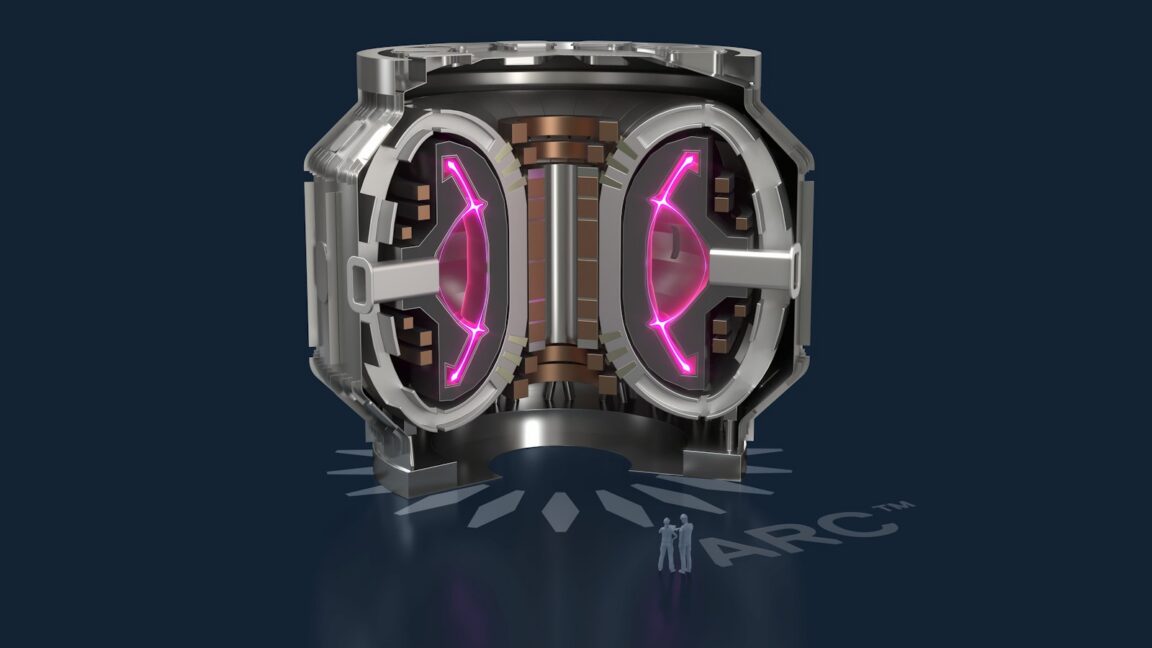
With its experimental SPARC tokamak more than 70 percent complete and a site already secured for its commercial follow-on, the ARC reactor, Commonwealth Fusion is not waiting for the world's scientific institutions to catch up. A fresh wave of peer-reviewed research is now laying out precisely why the company believes its physics are sound — and what questions remain to be answered before fusion energy becomes a commercial reality.
Why the Traditional Fusion Roadmap Is Running Out of Time
The internationally backed ITER reactor, currently under construction in southern France, represents humanity's most ambitious collaborative science project. Designed to demonstrate that a fusion reaction can produce more energy than it consumes, ITER is a critical milestone — but it is not expected to generate its first hot plasmas until the mid-2030s. Commercial fusion power, under the traditional roadmap, remains many decades away.
The problem is that the energy landscape is not standing still. Solar panel costs have fallen by more than 90 percent over the past decade and continue to decline. By the time ITER completes its experimental program and informs the design of a DEMO plant, renewable energy sources will likely already dominate global electricity grids. For fusion to be commercially relevant, it needs to arrive on a much faster timeline — and that is exactly the opportunity Commonwealth Fusion is chasing.
How High-Temperature Superconductors Change Everything
The core technological bet behind Commonwealth Fusion's entire strategy is high-temperature superconducting (HTS) magnets. Conventional fusion reactor designs, including ITER, rely on large and complex magnetic systems that constrain how compact a reactor can be. Commonwealth Fusion's proprietary HTS magnets can generate extraordinarily powerful magnetic fields in a much smaller physical footprint.
This matters enormously because the physics of tokamak fusion reactors are highly sensitive to magnetic field strength. A stronger magnetic field allows plasma to be confined at the necessary temperatures and pressures within a significantly smaller vessel. A smaller vessel means less material, faster construction timelines, lower costs, and a path to commercial viability that does not require building a reactor the size of a small city.
The company successfully demonstrated its HTS magnet technology in 2021, achieving a record-breaking 20-tesla magnetic field — a milestone that gave the fusion community and investors significant confidence that the SPARC and ARC designs were grounded in proven hardware, not just theoretical projections.
SPARC: The Experiment That Bridges Science and Commerce
SPARC is Commonwealth Fusion's experimental tokamak, designed to serve the same purpose for the company that ITER serves for the broader international fusion program — but on a far more compressed timeline. With construction more than 70 percent complete and first plasma operations potentially as soon as 2026, SPARC is designed to achieve net energy gain: producing more fusion energy than the energy required to heat the plasma.
Crucially, SPARC is not intended to be a power plant. It is a physics experiment, a proof of concept, and most importantly a data-gathering machine. The results from SPARC will be used to finalize the design of ARC, Commonwealth Fusion's planned commercial reactor. This phased approach mirrors the ITER-to-DEMO pathway but collapses the timeline from decades into years.
The ARC Reactor: Five Papers, One Bold Vision
The most significant recent development from Commonwealth Fusion is the publication of five peer-reviewed scientific papers, produced in collaboration with academic partners, that collectively make the physics case for the ARC reactor design. These papers represent a rigorous, public, and independently verifiable scientific argument that ARC's approach is grounded in established plasma physics and credible engineering principles.
The papers cover what current computational models predict about ARC's performance, how those models align with decades of tokamak experimental data, and — critically — what specific physics questions remain open and will need to be resolved through SPARC's experimental campaign. This level of scientific transparency is notable in the fusion startup world, where proprietary concerns often keep technical details out of public view.
ARC is designed to generate approximately 400 megawatts of fusion power, sufficient to supply electricity to hundreds of thousands of homes. The company already has a site identified and has signed agreements with early customers, signaling that the path from experiment to commercial operation is being treated as an engineering and business challenge, not merely a scientific one.
What Still Needs to Be Learned
Commonwealth Fusion's scientists are candid about the uncertainties that remain. Plasma physics at the scale and conditions required for net-energy fusion involves complex, interacting phenomena that even the best computer models cannot fully predict in advance. Key areas where SPARC's experimental data will be essential include plasma stability at high magnetic field strength, energy confinement behavior, and the management of plasma-facing materials under intense heat and neutron flux.
The peer-reviewed papers identify these open questions explicitly, mapping them to specific experiments planned for SPARC. This structured approach — knowing what you don't know, and designing experiments to find out — is the hallmark of credible science-driven engineering.
A Pivotal Moment for Fusion Energy
Commonwealth Fusion Systems is not the only private company pursuing commercial fusion, but its combination of proven magnet technology, an experimental reactor nearing completion, a detailed commercial plant design backed by peer-reviewed science, and real customer commitments places it among the most advanced programs in the world. The publication of the ARC physics papers marks a new level of maturity for the company — a public declaration that its plans are ready to be scrutinized, challenged, and ultimately validated by the broader scientific community.
If SPARC performs as predicted and the ARC design holds up under experimental scrutiny, Commonwealth Fusion could deliver the first commercial fusion power to the grid in the 2030s — not as a distant hope, but as an engineered reality built on solid physics and a relentless sense of urgency.