
Is the American Dream Still Within Reach? The Numbers May Surprise You
For generations, the American Dream has rested on a deceptively simple promise: each new generation should be able to do a little better than the one before it. Own a home. Build wealth. Live with a sense of financial security that your parents worked to hand down to you. It's a compact that has shaped policy, culture, and the deepest personal ambitions of millions of Americans.
But lately, that promise feels like it's on trial. Mortgage rates remain stubbornly elevated, home prices in many markets have reached historic highs, and a growing chorus of voices — in newsrooms, on social media, and around dinner tables — insists that the ladder of upward mobility has quietly been pulled up. If you're a millennial staring at your bank account at the end of a long month, you might find yourself wondering: did I miss something, or did the rules just change?
The honest answer is more complicated than either doomscrolling or blind optimism will allow. When you actually sit down and do the math, what emerges is a picture that is neither entirely bleak nor falsely reassuring — it's nuanced, and nuance is precisely what this conversation has been missing.
The Feeling of Falling Behind Is Real — But So Is the Data That Complicates It
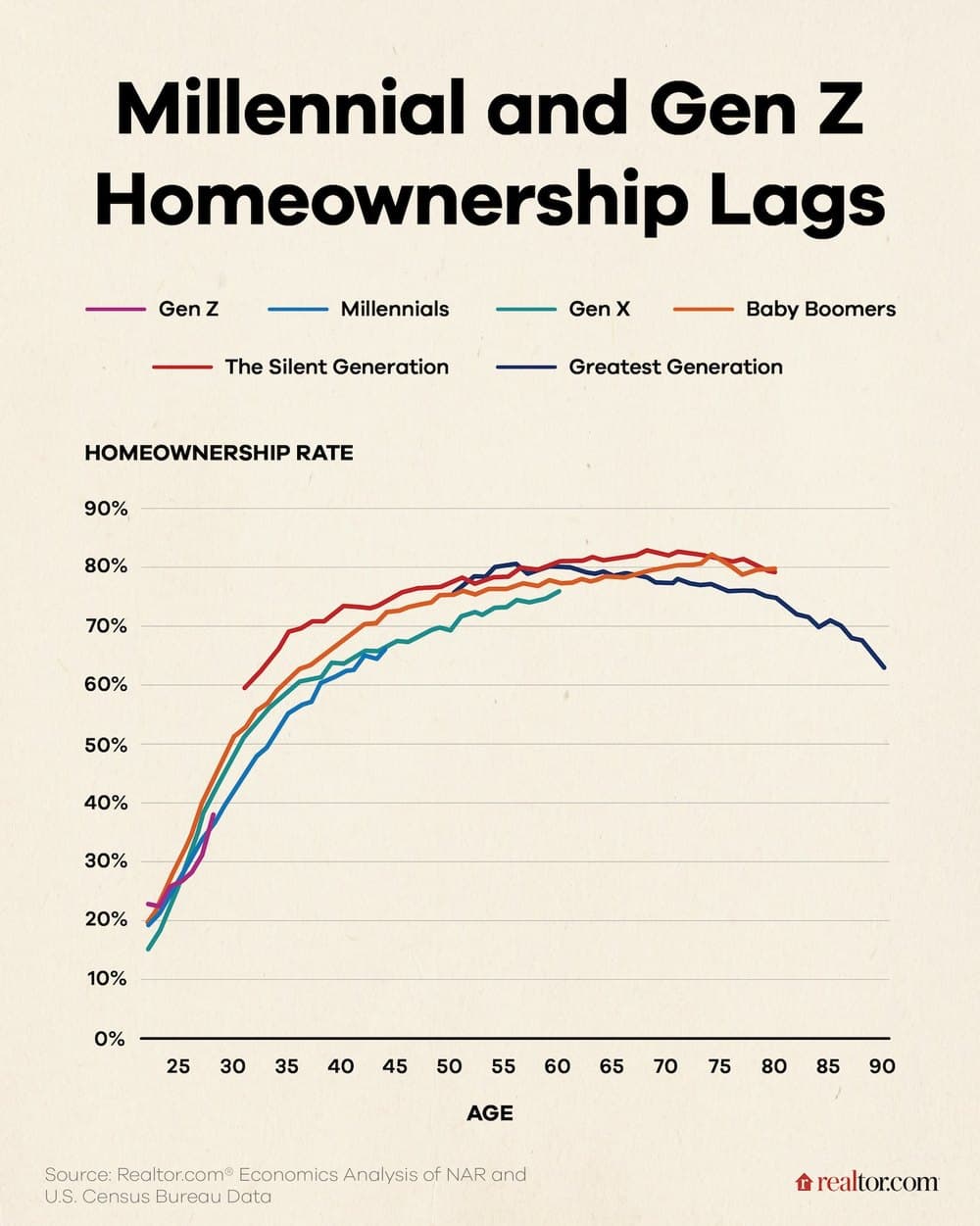
There is no shortage of evidence that the traditional milestones of adulthood are arriving later, or sometimes not arriving at all. Homeownership rates among younger Americans have lagged behind where previous generations were at the same age. The starter home, once a rite of passage, has become increasingly difficult to find in many metro areas. The so-called "missing middle" of housing — modest, affordable properties for first-time buyers — has been squeezed out of existence in some of the most desirable cities in the country.
Yet alongside those headlines, a different set of data points quietly tells another story. Many millennials — now ranging from their late 20s into their early 40s — are wealthier than the stereotype of the avocado-toast-eating, rent-burdened generation would suggest. Those who did manage to purchase homes in the years before or during the pandemic are sitting on record levels of equity. And while the middle class has undeniably shrunk in recent decades, economists note that much of that shrinkage has been upward movement, not downward collapse.
This does not mean everyone is fine. It means the story is unevenly distributed — which, in many ways, is the more important and more troubling insight.
Homeownership: The Wealth Gap No One Can Afford to Ignore
One of the most striking findings in recent housing research is just how dramatically homeownership affects net worth. Homeowners, on average, have built wealth at a rate that far outpaces renters. When home values surged during and after the pandemic, those gains were largely captured by people who already owned property — widening the gap between owners and non-owners in ways that will take years to fully understand.
This creates a feedback loop that can feel almost impossible to escape. Rising home values make it harder for first-time buyers to enter the market, which means more people rent for longer, which means fewer people accumulate the equity that makes the next financial step — whether that's funding a small business, paying for a child's education, or retiring comfortably — achievable on reasonable terms.
- Homeowners build equity passively as property values appreciate over time, even without making additional investments.
- Renters, by contrast, may pay comparable or higher monthly costs with no long-term asset accumulation to show for it.
- The longer the entry into homeownership is delayed, the smaller the window for compounding wealth gains before retirement age.
Understanding this dynamic isn't an argument that renting is always a bad financial decision — market conditions, location, and personal circumstances all matter enormously. But it does help explain why the wealth gap between generations, and between demographic groups within generations, continues to widen even in a nominally prosperous economy.
What "Falling Behind" Actually Means in 2025
Part of the anxiety around the American Dream is definitional. What exactly are we measuring ourselves against? For many people, the benchmark is their parents' experience — but that experience was shaped by a specific and largely unrepeatable set of historical conditions: post-war suburban expansion, artificially low interest rates, federally subsidized housing programs, and decades of rising wages in manufacturing and other sectors that no longer employ the same share of workers.
Comparing your financial trajectory to that particular moment in American history is, in a very real sense, comparing yourself to an outlier. That doesn't make your current struggles less real or less stressful. But it does suggest that the framework itself may need updating.
In 2025, "doing better than your parents" might look different than it did in 1975. It might mean building wealth through different vehicles, in different geographies, on a different timeline. It might mean redefining what homeownership looks like — whether that's a condo rather than a house, a smaller city rather than a major metro, or co-ownership arrangements that are just beginning to gain mainstream acceptance.
A More Honest Conversation About the American Dream
The most productive thing we can do with the anxiety about falling behind is to resist both extremes: the performative despair that says the dream is dead and the toxic positivity that says anyone can make it if they just try hard enough. Both are intellectually dishonest, and both let the people and systems most responsible for structural barriers off the hook.
What the data actually suggests is that the path to financial stability still exists — but it is narrower, more variable, and more dependent on timing, geography, and starting circumstances than it has been in recent memory. That's a solvable problem, not an immutable law. But solving it requires clear eyes, honest arithmetic, and a willingness to update the definition of success rather than simply mourn the one we inherited.
So if you've been lying awake doing the math on your own version of the American Dream, here's a place to start: stop comparing your chapter three to someone else's chapter thirty. Then, look at the actual numbers — your income trajectory, your local housing market, your realistic savings rate — and build a plan based on where you actually are, not where a mid-century ideal says you should be. The dream may look different than promised. That doesn't mean it's gone.