
The American Dream Is Under Pressure — But Is It Really Dead?
The promise at the heart of the American Dream has always been deceptively simple: each generation should be able to do a little better than the one before it. Own a home. Build equity. Pass something meaningful down to your kids. For decades, that promise felt like a birthright, baked into the cultural contract of growing up in the United States.
But lately, that contract feels like it's been written in disappearing ink. Open any news app on any given morning and you'll find a fresh wave of headlines confirming what millions of millennials already feel in their bones — the dream is gated, the milestones have moved, and the math simply doesn't add up the way it once did. If you've ever looked at your bank account at the end of a hard month and thought, "This isn't what I imagined my 30s would look like," you are far from alone.
The question worth asking, though, is whether the despair matches the data — or whether the full picture is more complicated than the headlines suggest.
Why So Many Millennials Feel Like They're Falling Behind
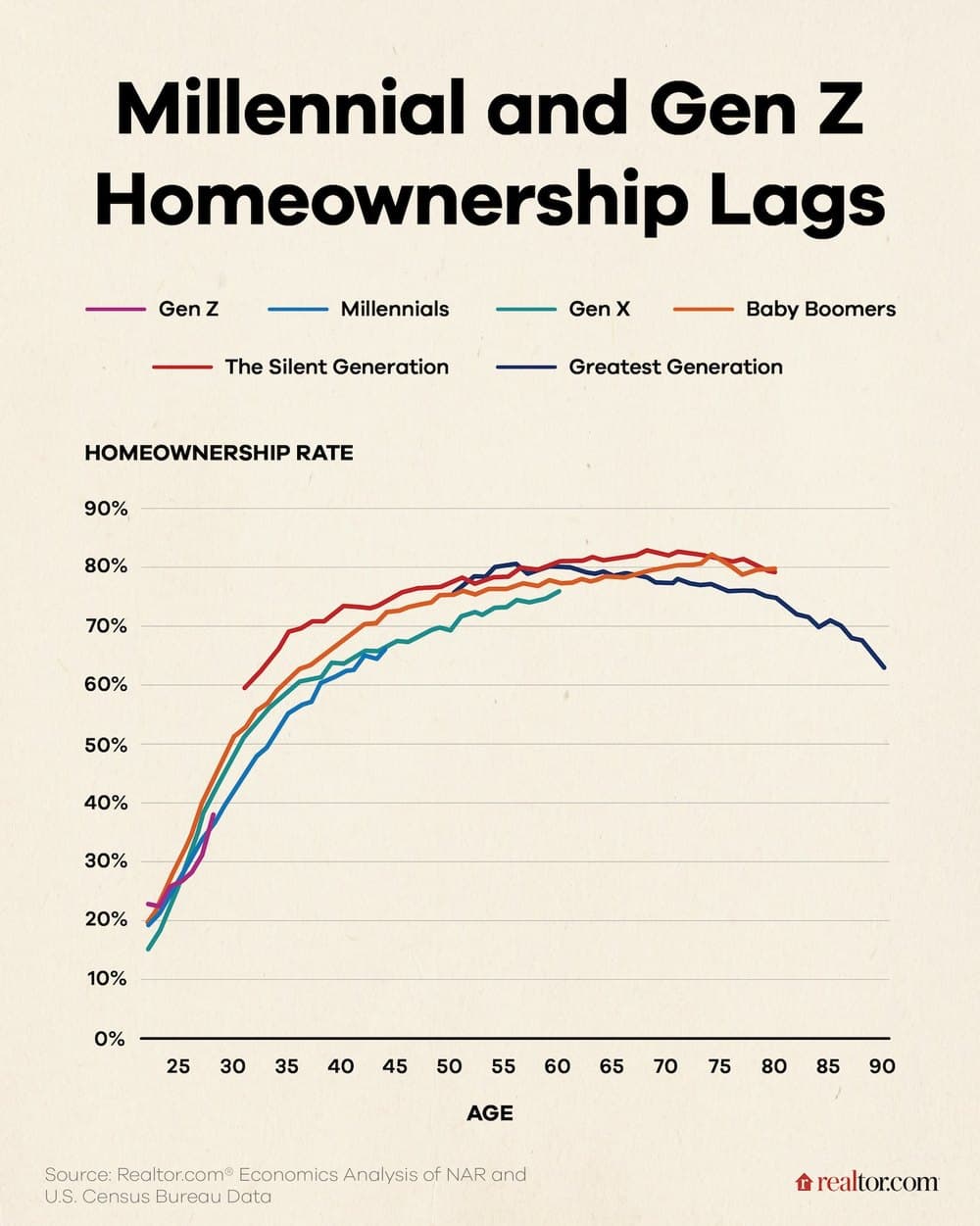
The emotional case is easy to make, because it's deeply lived. Millennials entered the workforce during or shortly after the 2008 financial crisis, graduated with record student loan debt, watched home prices surge out of reach during the pandemic, and are now navigating an era of high interest rates that have made monthly mortgage payments on a modest home feel like a luxury purchase.
The milestones that once marked a stable adulthood — buying a first home, starting a family, accumulating savings — are arriving later, if they arrive at all. The so-called starter home has nearly vanished from many markets, priced out of reach for buyers who don't already have significant equity or family wealth to draw on. And the much-discussed Great Wealth Transfer, the trillions of dollars expected to pass from Baby Boomers to their heirs, may arrive too late to matter for many millennials who needed the help twenty years ago.
It's a generational portrait that feels grim, and the data on homeownership affordability does little to soften it. By almost any traditional metric — the share of income required to buy a median-priced home, the gap between wage growth and home price appreciation, the average age of first-time buyers — the landscape is objectively harder than it was for previous generations.
The Data That Complicates the Despair
And yet, a more honest accounting of millennial financial life reveals a more complicated story. Research consistently shows that many millennials are wealthier than the dominant cultural narrative suggests. Here are some of the numbers that tend to get lost in the doom-scrolling:
- Homeowners are sitting on record gains. Those millennials who did manage to purchase homes — especially those who bought before or during the early stages of the pandemic — have accumulated extraordinary equity in a short period of time. Homeowners are, by some estimates, dramatically wealthier than renters, with that gap widening significantly in recent years.
- The middle class has shrunk but stretched upward. While headlines about the shrinking middle class are technically accurate, a significant portion of that movement has been upward, not downward. More Americans have moved into higher income brackets than out of them, a nuance that often gets swallowed by the broader narrative of decline.
- Millennials as a generation hold more wealth than the stereotype implies. Aggregate millennial wealth has grown substantially over the past decade. The problem is that this wealth is deeply unevenly distributed, with a relatively small segment of millennials holding a disproportionate share, while those without homeownership or inherited advantages lag significantly further behind.
The Real Problem: Inequality Within a Generation
This is perhaps the most important reframe. The crisis of the American Dream for millennials is not simply about one generation doing worse than another. It's about a widening divide within the generation itself. The millennials who own homes are building wealth at a remarkable pace. Those who rent — often because they couldn't scrape together a down payment, didn't have family help, or live in markets where prices outran their savings — are watching that gap widen every year.
In other words, the American Dream isn't equally dead for everyone. For some, it's alive and producing returns they never expected. For others, the door closed before they had a real chance to walk through it. And the determining factor, more often than not, wasn't individual effort or financial discipline — it was timing, geography, and the presence or absence of inherited advantage.
What the Math Actually Says About Moving Forward
If you're in your 30s or early 40s and feel the gap acutely, the honest answer is that your feelings are grounded in real structural shifts, not personal failure. Housing affordability is at historic lows. The post-WWII model of homeownership as a universal on-ramp to the middle class has broken down in many cities and regions. Acknowledging that is not defeatism — it's accuracy.
But the data also suggests that building wealth in the current environment, while harder, is not impossible. Homeownership remains one of the most powerful wealth-building tools available to ordinary Americans, even at today's prices and rates. The calculus has changed, but the underlying logic has not. Those who are able to enter the market — even in less obvious ways, in less obvious markets — still tend to build significantly more long-term wealth than those who remain on the sidelines indefinitely.
Redefining the Dream Without Abandoning It
Perhaps what this moment really demands is a recalibration, not a funeral. The American Dream as a concept was never perfectly realized for every group in every era. What made it powerful was the directional belief that things could and should improve, that effort and participation in the economy would yield stability over time.
That belief is worth preserving even as the specific milestones evolve. Homeownership may look different — later, in different markets, in different forms — but the underlying goal of financial security and the ability to build something lasting is not beyond reach for most people who engage with it seriously and strategically.
The American Dream is under real pressure. The math is harder than it used to be. But harder is not the same as impossible, and despair, however understandable, is rarely a useful financial strategy.