
Former DC Housing Authority Employee Admits to $15 Million Mortgage Fraud Scheme
A former Washington, D.C. housing official has pleaded guilty to orchestrating one of the most brazen mortgage fraud schemes in the region's recent history — one that exploited the name and sacrifice of American military veterans for personal financial gain. Richard Cunningham, 55, admitted in federal court to fabricating an entirely fictional federal housing assistance program for veterans in order to deceive mortgage lenders out of approximately $15 million. The case has drawn widespread attention not only because of its scale, but because of the deliberate misuse of veteran-related programs to execute the fraud.
Who Is Richard Cunningham?
Richard Cunningham is a former employee of the District of Columbia Housing Authority who left the agency in 1999 to pursue a career as a private real estate developer. Over the years, he established Cunningham Real Estate Management LLC, a company through which he controlled various properties across Washington, D.C. While his professional background in public housing gave him intimate knowledge of how government assistance programs work, prosecutors allege he ultimately used that knowledge to construct an elaborate web of lies designed to defraud financial institutions.
His position at the DC Housing Authority would have provided him with credibility and familiarity with the language, structure, and documentation associated with legitimate federal housing programs — tools he allegedly weaponized for personal enrichment. Cunningham's insider understanding of how voucher documents are processed and verified reportedly made it easier for him to craft convincing forgeries that passed initial scrutiny by lenders.
The Phony Veterans Assistance Payments Program
At the heart of the fraud was a completely fabricated initiative that Cunningham called the "Veterans Assistance Payments" program. This program did not exist. There was no federal agency backing it, no legislative authority authorizing it, and no legitimate documentation supporting it. Nevertheless, Cunningham allegedly presented this invented program to mortgage lenders as a real, operational federal initiative designed to assist veterans in securing and maintaining housing.
Using fraudulent documentation tied to this fictitious program, Cunningham reportedly convinced lenders to extend mortgage financing on properties he controlled in Washington, D.C. He is said to have fabricated federal voucher documents and forged signatures to make the scheme appear legitimate. The lenders, believing they were participating in a government-backed veterans housing initiative, disbursed funds that Cunningham then diverted for his own use.
Court documents further reveal that the proceeds Cunningham obtained through the scheme "have been dissipated by him and cannot be located," suggesting the funds were spent rather than preserved or invested in any identifiable asset. This detail will likely complicate restitution efforts at the time of sentencing.
Federal Charges and Potential Penalties
Cunningham pleaded guilty to making false statements to a mortgage lending business. Under federal law, this charge carries a maximum penalty of up to 20 years in prison and a fine of up to $1 million. He is scheduled to be sentenced on December 4, according to information released by the DC District Attorney's office.
An attorney representing Cunningham did not respond to a request for comment following the guilty plea. The plea agreement filed with the court this week outlines the full scope of the admitted conduct, including the fabrication of documents, the forgery of signatures, and the misrepresentation of property conditions and financing arrangements to deceive lenders.
DC District Attorney Jeanine Pirro Responds
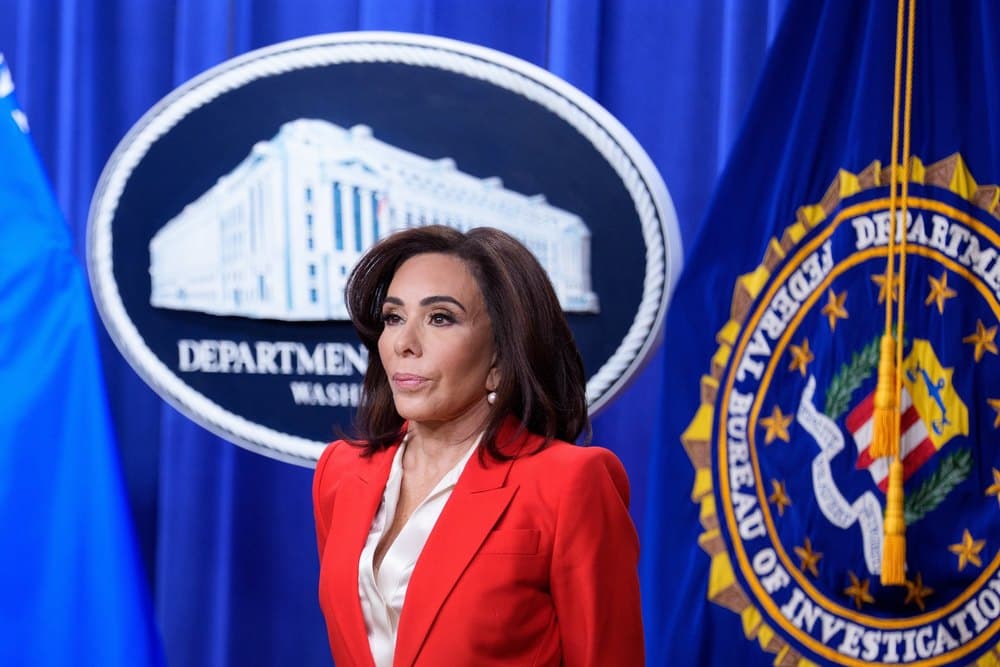
DC District Attorney Jeanine Pirro issued a pointed statement following the guilty plea, emphasizing both the financial severity of the fraud and its morally troubling dimensions. "Richard Cunningham didn't just defraud lenders, he fabricated federal voucher documents, forged signatures, and invented a veterans housing program that never existed, all to line his own pockets," Pirro stated. "Exploiting the name and sacrifice of American veterans to commit fraud is particularly offensive, and my office will pursue those abuses with the full weight of federal law."
Pirro's comments reflect a broader commitment by the DC U.S. Attorney's office to aggressively pursue fraud cases that involve the misuse of veteran-related programs or imagery. Veterans' housing assistance programs are a critical safety net for thousands of service members transitioning to civilian life, and their integrity depends on public trust. When bad actors exploit the credibility of these programs for personal gain, they not only harm financial institutions but undermine the very systems designed to support those who served the country.
Broader Implications for Mortgage Fraud and Housing Program Integrity
The Cunningham case highlights several important vulnerabilities in the mortgage lending ecosystem. Lenders, particularly those dealing with government-backed or government-affiliated housing programs, must maintain robust verification processes to authenticate the legitimacy of program documentation before disbursing funds. The fabrication of an entirely fictional federal program — complete with forged vouchers and falsified signatures — underscores how sophisticated and targeted mortgage fraud schemes have become.
This case also raises questions about oversight mechanisms within the real estate development sector, particularly for developers with prior government experience. Cunningham's background at the DC Housing Authority gave him both credibility and institutional knowledge that he allegedly turned against the very system he once served.
- Mortgage lenders are encouraged to independently verify the existence and status of any government program referenced in a loan application directly with the relevant federal agency.
- Forensic document review and signature verification protocols can serve as a critical line of defense against fabricated documentation.
- Federal investigators continue to prioritize cases involving fraudulent use of veterans' programs, signaling increased scrutiny across the housing finance sector.
What Happens Next
With a sentencing date set for December 4, the coming months will determine the full legal consequences Cunningham faces for his actions. Federal prosecutors are expected to push for a sentence that reflects the scale of the fraud, the deliberate exploitation of veterans' programs, and the apparent dissipation of the fraudulently obtained funds. Given that the $15 million in proceeds cannot be located, restitution to the defrauded lenders remains an open and pressing question that the court will need to address.
The case serves as a stark reminder that mortgage fraud — particularly when it involves the fabrication of federal programs and the misappropriation of veterans' names and benefits — carries severe consequences under federal law. As District Attorney Pirro made clear, the full weight of federal prosecution will be brought to bear on those who seek to exploit vulnerable institutions and the legacy of American servicemembers for personal financial gain.