
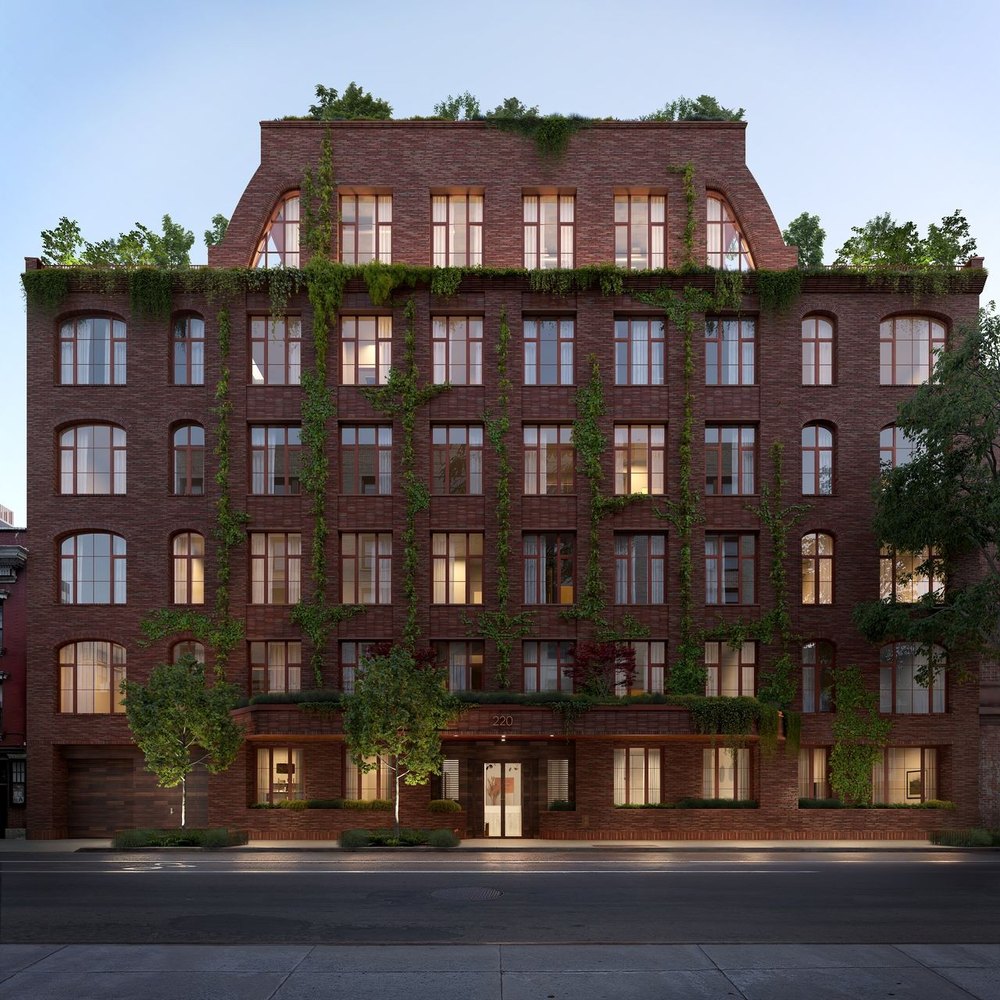
NYC's East Village Is No Longer a Bargain: Luxury Condo Sells Out in Just 11 Weeks
For decades, Manhattan's East Village wore its rough edges like a badge of honor. The birthplace of punk rock, home to dive bars, independent bookstores, and a fiercely proud working-class community, the neighborhood long resisted the gleaming glass towers and boutique hotel lobbies that swallowed up its neighbors to the west. But the latest numbers from one of its newest residential developments suggest that era may finally be drawing to a close — and fast.
A luxury condominium project at 220 East 9th Street has sold all 18 of its units in just 11 weeks, with the final penthouse going under contract for nearly $10 million. It is a milestone that would have seemed almost unimaginable even five years ago in a neighborhood where the median list price still hovers around $1.49 million — far below the $2.05 million median of the neighboring West Village.
Inside 220 East 9th Street: What Buyers Are Getting for Their Money
The development at 220 East 9th Street offered 18 residential units ranging in price from $1 million to $10 million, catering to a wide spectrum of luxury buyers while keeping the building's overall identity firmly in the upper tier of the market. The flagship offerings were two four-bedroom penthouses — Penthouse A and Penthouse B — which carried asking prices of $9.95 million and $9.75 million respectively. A third penthouse, Penthouse C, had already closed earlier in the year at $6.95 million.
The building remains under construction, meaning buyers committed to multi-million-dollar contracts based on floor plans, renderings, and the promise of a finished product that would deliver the kind of space, light, and finishes that justify prices more commonly associated with Tribeca or the Meatpacking District. That level of buyer confidence in a neighborhood still transitioning speaks volumes about current demand dynamics in Manhattan real estate.
Why the East Village Is Having Its Luxury Moment Right Now
Real estate observers have watched the East Village inch upmarket for years, but the speed of this sell-out has surprised even seasoned brokers. Several converging forces are driving the neighborhood's rise.
Spillover Demand From Saturated Luxury Markets
The West Village, Chelsea, and Tribeca have long been Manhattan's prestige addresses for buyers seeking a downtown lifestyle with high-end amenities. But inventory in those neighborhoods is increasingly scarce and prices have surged to levels that price out even affluent buyers who don't want to stretch into the $15 million or $20 million range. The East Village, sitting directly to the east and offering a comparably vibrant street life, has become the logical next step — offering relative value while still delivering a genuine Manhattan experience.
Cultural Capital Meets Residential Comfort
Part of what makes the East Village uniquely attractive is precisely the grit that developers and buyers have historically tried to escape. The neighborhood's proximity to Tompkins Square Park, its concentration of independent restaurants, music venues, and cultural institutions, and its walkable, human-scaled streetscape give it a character that no amount of interior design can manufacture. Buyers at 220 East 9th Street are not just purchasing square footage — they are purchasing access to one of the last authentically textured urban environments left in lower Manhattan.
Limited New Supply
The East Village is a largely built-out neighborhood with strict zoning protections in significant portions of its footprint, particularly around its historic districts. New ground-up development opportunities are rare, which means that when a quality project does come to market, demand concentrates quickly. With only 18 units available and no comparable new-construction luxury product nearby, the sell-out pace was, in retrospect, predictable.
What the Numbers Say About East Village's Shifting Price Landscape
The closing prices at 220 East 9th Street are striking when placed against broader neighborhood benchmarks. With a neighborhood median list price of approximately $1.49 million, the building's penthouses are selling at roughly six to seven times that figure. That kind of price stratification is unusual even by Manhattan standards, where luxury buildings routinely sit atop more affordable surrounding inventory.
By comparison, the West Village's median list price of $2.05 million reflects a neighborhood that completed its luxury transformation years ago. Chelsea and Tribeca post even higher medians. The fact that a single East Village development is now trading at West Village penthouse levels — without the historical prestige of those addresses — signals genuine, structural demand rather than a one-time anomaly.
- East Village median list price: $1.49 million
- West Village median list price: $2.05 million
- 220 East 9th St. penthouse closing range: $6.95 million – $9.95 million
- Total units sold: 18 of 18
- Time to sell out: 11 weeks
The Sales Strategy That Made It Work
One of the more remarkable details about the sell-out is that the building was never formally listed on the open market in the traditional sense. According to brokers involved in the transaction, the units were sold through targeted outreach and word-of-mouth, a strategy that speaks both to the strength of buyer demand and to the increasingly off-market nature of top-tier Manhattan real estate transactions. When supply is this limited and buyer appetite is this strong, public listings become almost unnecessary.
What This Means for the Broader East Village Market
The rapid sell-out at 220 East 9th Street is likely to have ripple effects across the neighborhood. Sellers of existing co-ops and condos will take note, and future developers considering East Village sites will underwrite their projects with more aggressive pricing assumptions. Neighboring streets are already experiencing increased interest from buyers who missed out on this building and are looking for the next best option.
The larger question is what this transformation means for the neighborhood's identity. The East Village earned its cultural significance precisely because it remained affordable enough for artists, musicians, and small-business owners to survive there. As residential prices approach West Village levels, the economic pressures that displaced so many creative communities from SoHo, the Lower East Side, and Williamsburg will intensify here as well.
For now, however, the market has delivered its verdict clearly: buyers want the East Village, and they are willing to pay prices that would have seemed impossible just a few years ago. Whether the neighborhood can hold onto the rawness that made it desirable in the first place is the question that no floor plan or sales brochure can answer.