
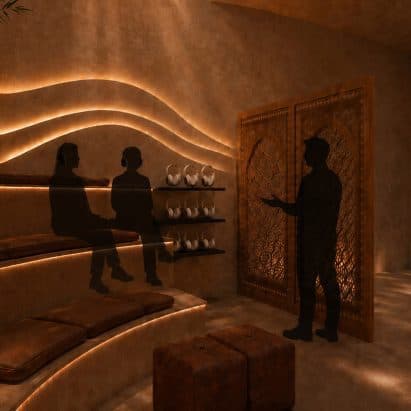
Ajman University Students Reimagine Emirati Heritage Through Innovative Interior Design
Architecture and interior design schools across the UAE have long been hotbeds of creativity, but a recent showcase from Ajman University has captured international attention in a particularly compelling way. Featured in Dezeen's prestigious School Shows series, a student-designed Emirati language and culture centre has emerged as one of the most talked-about academic projects to come out of the Gulf region in recent memory. Drawing deeply from the visual vocabulary of traditional Emirati architecture, the project offers a vision of cultural preservation that feels both rooted in history and thoroughly contemporary in its execution.
What Is the Dezeen School Shows Platform?
For those unfamiliar with the platform, Dezeen School Shows is an ongoing editorial series run by the globally recognised architecture and design publication Dezeen. The series provides a curated spotlight on graduating and advanced student work from design schools around the world, giving emerging talent an opportunity to present their concepts to a professional international audience. Being featured is a significant milestone for any student or institution, as it signals that the work has met a high standard of conceptual rigour, visual communication, and real-world relevance. Ajman University's inclusion in this series places it firmly among the leading design schools producing forward-thinking graduates in the Arab world.
The Concept: A Centre for Language and Cultural Immersion
At the heart of this particular project is an ambitious brief: to design a language and cultural immersion centre that serves as both an educational facility and a living expression of Emirati identity. The student's design responds to this challenge by turning to two of the most iconic elements of traditional Gulf architecture — the courtyard and the barjeel wind tower.
Courtyards have been a fundamental feature of vernacular architecture throughout the Arabian Peninsula for centuries. They serve a dual social and environmental function, providing a shaded communal gathering space while also enabling natural ventilation in an extreme desert climate. The barjeel, meanwhile, is a traditional wind-catching tower used to direct airflow downward into the interior of a building, functioning as a form of passive cooling long before mechanical air conditioning existed. Together, these two elements represent a sophisticated, climatically intelligent design tradition that has much to teach contemporary architects and designers.
By incorporating these references into a modern cultural centre, the student project argues that heritage is not merely decorative — it is deeply functional, environmentally relevant, and socially meaningful.
Design Features and Spatial Language
The rendered visualisations of the project reveal a thoughtful spatial composition that balances openness with intimacy. Public-facing areas of the centre draw inspiration from the expansive, welcoming nature of the traditional courtyard, encouraging movement, gathering, and spontaneous interaction. Meanwhile, more enclosed spaces — such as language learning rooms and cultural exhibition areas — echo the inward-looking privacy of traditional Emirati domestic architecture.
The material palette proposed in the design reflects a similar sensitivity to context. Warm earth tones, natural textures, and geometric patterning reference the craft traditions of the region without resorting to superficial pastiche. The result is an environment that feels authentic and grounded, rather than merely themed or decorative.
Lighting also plays a significant role in the project's spatial narrative. The way natural light filters through screened openings and diffused surfaces mirrors the dappled quality of sunlight experienced in traditional mashrabiya lattice screens — yet another layer of cultural reference woven into the design with genuine architectural purpose.
Why Cultural Centres Like This Matter
The timing and context of this project carry considerable weight. Across the UAE and the wider Gulf Cooperation Council region, there is a growing and government-supported movement to preserve and promote Emirati language, culture, and heritage in the face of rapid urbanisation and a highly diverse, expatriate-majority population. Arabic language promotion, in particular, has been identified as a national priority, with institutions and initiatives working to ensure that the Emirati dialect and classical Arabic remain vibrant and relevant for younger generations.
A dedicated language and culture centre, designed with architectural intention and cultural sensitivity, could serve as a powerful physical anchor for these efforts. It communicates, through built form alone, that language and identity are worth investing in — that culture deserves a home as thoughtfully designed as any commercial or civic building.
Ajman University's Growing Design Reputation
This project is one of several strong interior design concepts to have come out of Ajman University in recent years, reflecting the institution's commitment to producing graduates who can think both locally and globally. The College of Architecture, Art and Design at Ajman University has been building a reputation for encouraging students to engage seriously with regional identity, sustainability, and community-centred design principles.
Having student work recognised on platforms like Dezeen not only benefits individual graduates — it raises the profile of UAE design education on the world stage and signals to prospective students and industry partners that serious, internationally competitive design thinking is happening right here in the Emirates.
The Broader Significance for UAE Architecture and Design
Projects like this Emirati language and culture centre are part of a broader architectural conversation happening across the UAE about what it means to design for place, memory, and cultural continuity. As cities like Dubai and Abu Dhabi continue to attract international starchitects and landmark buildings, there is an equally important counter-narrative emerging from within — one driven by local institutions, local designers, and a genuine desire to ensure that the built environment reflects the values and history of the people who call this region home.
- Traditional Emirati courtyard design principles are being reinterpreted for contemporary cultural facilities.
- The barjeel wind tower offers both aesthetic inspiration and a model for passive, climate-responsive design.
- Academic projects from UAE universities are gaining recognition on major international design platforms.
- Language and cultural preservation is increasingly reflected in architectural programming across the Gulf region.
The student project from Ajman University is, in many ways, a microcosm of this larger movement. It demonstrates that the most compelling design work often emerges not from a blank slate, but from a deep, respectful, and creative engagement with what already exists — in the landscape, in the climate, and in the collective memory of a people. As the UAE continues to evolve at a remarkable pace, projects like this serve as a reminder that innovation and heritage are not in opposition. They can, and should, coexist beautifully.