
Federal Reserve Holds Interest Rates Steady in a Landmark Decision Under Kevin Warsh
In one of the most closely watched monetary policy decisions in recent memory, the Federal Reserve has voted unanimously to keep interest rates unchanged, delivering a clear and decisive signal to markets, homebuyers, and the broader economy: fighting inflation remains the central bank's top priority. The 12-0 vote, led by newly installed Fed Chairman Kevin Warsh, marks a defining early moment for the new chair and sets the tone for what could be a significantly different era of monetary policy communication at the Fed.
Who Is Kevin Warsh and Why Does This Decision Matter?
Kevin Warsh was President Donald Trump's handpicked choice to succeed Jerome Powell as Chair of the Federal Reserve, and Wednesday's rate decision was his first major test in the role. Warsh is no stranger to the Fed — he previously served as a Fed governor — but his appointment came amid considerable political pressure from the White House, with President Trump repeatedly and publicly calling for the Fed to lower interest rates to stimulate the economy.
The fact that Warsh not only resisted that pressure but joined a unanimous vote to hold rates steady speaks volumes about his approach to the role. It signals that, at least for now, the new chairman intends to govern the central bank with independence, even when that independence puts him at odds with the president who appointed him.
Notably, former Chairman Jerome Powell — who remains on the Fed's Board of Governors now that his term as chair has expired — also voted in favor of the rate pause, reinforcing the institutional consensus behind the decision.
What the Fed's Statement Actually Said
Perhaps just as striking as the vote itself was the language — or rather, the deliberate lack of it — in the statement released alongside the decision. The Fed's post-meeting statements have historically been dense documents full of economic qualifications, forward guidance, and careful hedging. This time, however, that tradition was stripped away.
The statement was described as radical in its brevity. Gone was the typical forward-looking language about future rate paths. In its place was a single, pointed declaration: "The Committee will deliver price stability."
For Fed watchers and financial markets alike, this is a meaningful shift. Forward guidance has long been one of the Fed's most powerful tools — by signaling future intentions, policymakers can influence long-term borrowing costs and financial conditions without actually changing rates. Removing that guidance suggests Warsh prefers a more data-dependent, meeting-by-meeting approach rather than committing to a specific future direction.
Why Inflation Made Rate Cuts Impossible
The broader context behind Wednesday's decision is a persistent and troubling inflation picture. According to Realtor.com senior economist Jake Krimmel, rising inflation made it effectively impossible for Warsh to deliver the rate cuts that President Trump has demanded, even if he had wanted to.
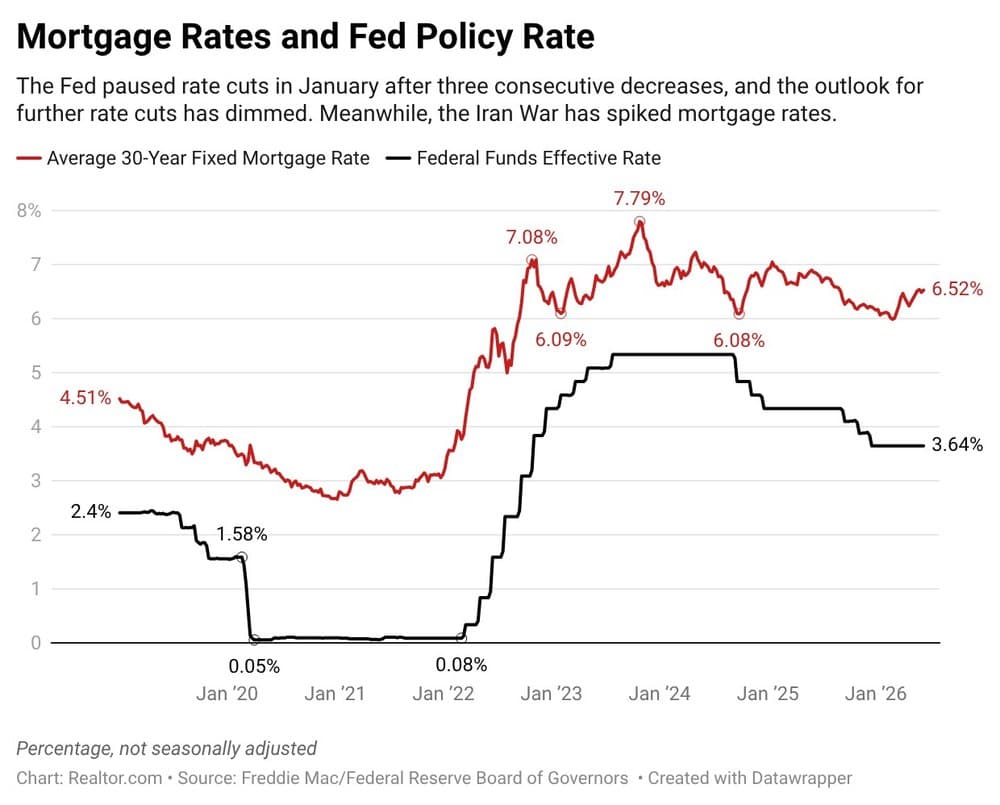
Several months of alarmingly hot inflation data have kept policymakers on guard, worried that cutting rates prematurely could reignite price pressures and undermine the progress made in bringing inflation down from its post-pandemic highs. The federal funds rate, which directly influences borrowing costs across the economy — from car loans and credit cards to business lines of credit and home mortgages — remains unchanged as a result.
"Warsh is the new, blunt voice of the Fed," Krimmel noted. "Heading into the meeting, the biggest question facing Warsh was one of credibility. He has nailed his credibility to the mast of taming inflation — albeit by his own standards that could change."
That last caveat is important. Markets are watching closely to see whether Warsh's inflation-fighting rhetoric is a durable commitment or a strategic opening position that could soften if economic conditions shift.
What This Means for Mortgage Rates and Homebuyers
For everyday Americans — particularly prospective homebuyers and homeowners looking to refinance — the Fed's decision to hold rates steady has real and immediate implications. Mortgage rates, while not directly set by the federal funds rate, are heavily influenced by expectations around Fed policy, Treasury yields, and overall economic conditions.
- No immediate relief on mortgage rates: With the Fed holding firm, there is little near-term catalyst for mortgage rates to drop significantly. Buyers who have been waiting for rates to fall before entering the housing market may need to recalibrate their timelines.
- Affordability challenges persist: Elevated borrowing costs continue to squeeze affordability, particularly for first-time buyers in high-cost markets. A sustained period of rate holds means the affordability crunch in the housing market is unlikely to ease quickly.
- Watch inflation data closely: The Fed's next moves will be heavily dependent on upcoming inflation reports. A meaningful and sustained decline in inflation could open the door to rate cuts later in the year — which would be a significant catalyst for housing market activity.
A New Era of Fed Communication?
Beyond the immediate rate decision, Wednesday's meeting may signal a broader transformation in how the Federal Reserve communicates with the public and markets. Under Powell, the Fed became increasingly transparent, with detailed press conferences, forward guidance, and dot plots that gave markets a clear window into policymakers' thinking.
Warsh's approach — stripped-down statements, blunt language, and an emphasis on results over promises — represents a potential departure from that model. Whether this new style builds or erodes market confidence will depend largely on whether the Fed's actions match its words in the months ahead.
What Comes Next: Eyes on Inflation and the Economy
With the June 2026 rate decision now in the books, attention immediately turns to what comes next. The Fed's future path will be determined by a few key factors:
- Inflation trends: If the Consumer Price Index (CPI) and the Fed's preferred PCE inflation measure show meaningful cooling, the door to rate cuts could open by late 2026.
- Labor market strength: A resilient job market reduces urgency for rate cuts, while any signs of significant softening could push the Fed toward easing policy.
- Political pressure: President Trump's public calls for lower rates are unlikely to stop. How Warsh navigates that pressure while maintaining the Fed's institutional independence will be one of the defining storylines of his chairmanship.
For now, the message from the Federal Reserve under Kevin Warsh is clear and unambiguous: price stability is the mission, and that mission will not be compromised — regardless of who is asking.