
Fed Official Sounds the Alarm: Interest Rates Could Rise Again in 2026
A senior Federal Reserve official has issued a stark warning: if inflation does not cool down soon, the central bank may have no choice but to raise interest rates once again. Dallas Federal Reserve President Lorie Logan, one of the most hawkish voices on the Federal Open Market Committee (FOMC), made the comments during a moderated event at the University of Texas at El Paso on Wednesday, June 3, 2026. Her remarks have rattled markets and reignited fears among consumers, homebuyers, and businesses who were hoping for rate relief in the near term.
What Lorie Logan Said — and Why It Matters
Logan did not mince words. "I'm increasingly concerned that higher interest rates could be necessary later this year to fully restore price stability," she stated. As a voting member of the FOMC — the body within the Federal Reserve responsible for setting the benchmark federal funds rate — her views carry significant institutional weight. When Logan speaks, markets listen.
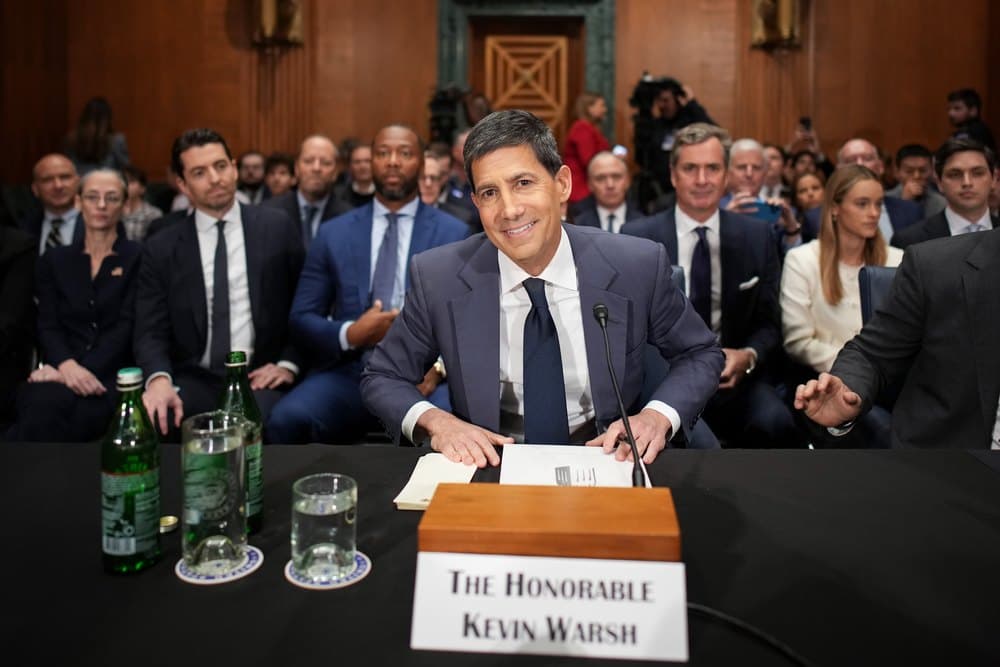
The timing of her remarks is particularly notable. They arrive just two weeks before new Fed Chair Kevin Warsh presides over his first FOMC meeting, an event already generating considerable anticipation across Wall Street and Main Street alike. Warsh is widely expected to eliminate the central bank's forward guidance, a communication strategy the Fed has long used to telegraph the likely future path of interest rates to investors, businesses, and the public. Removing that tool could introduce a new layer of uncertainty into financial markets that are already on edge.
Understanding the Inflation Concern
To appreciate the full significance of Logan's warning, it helps to understand the broader inflationary context the United States finds itself in. After the aggressive rate-hiking cycle of 2022 and 2023 — one of the fastest in the Fed's modern history — inflation did decline substantially from its peak. However, the path back to the Fed's 2% target has proven anything but smooth.
Supply chain pressures, elevated services inflation, ongoing geopolitical tensions, and the lingering effects of fiscal stimulus have kept price growth stubbornly above target. When inflation stalls at levels that remain above the Fed's comfort zone, officials like Logan who prioritize price stability above all else feel compelled to act — or at minimum, to warn that action may be coming.
For everyday Americans, this means the prospect of cheaper borrowing costs — something many households, homebuyers, and small business owners have been waiting on — may be further away than hoped.
What a Rate Hike Would Mean for Homebuyers and Borrowers
If the Fed does follow through on the possibility Logan outlined, the ripple effects would be felt across virtually every corner of the economy. Here is what a potential rate increase could mean for key groups:
- Homebuyers: Mortgage rates, which are closely tied to the broader interest rate environment, could climb higher. This would further reduce affordability in an already strained housing market, potentially pricing out first-time buyers and slowing home sales.
- Current homeowners with variable-rate debt: Those carrying adjustable-rate mortgages (ARMs) or home equity lines of credit (HELOCs) would likely see their monthly payments increase if rates rise.
- Credit card holders: The average credit card interest rate is already near record highs. A Fed rate hike would push those rates even higher, increasing the cost of carrying a balance.
- Auto loan borrowers: Already-elevated car loan rates could climb further, adding hundreds of dollars to the total cost of financing a vehicle.
- Small businesses: Companies that rely on variable-rate loans or lines of credit to fund operations would face higher financing costs, potentially squeezing margins and discouraging investment.
On the other hand, savers — particularly those holding money in high-yield savings accounts and certificates of deposit (CDs) — could benefit from higher returns if rates move upward.
The Arrival of Fed Chair Kevin Warsh
Adding another dimension of complexity to the current situation is the leadership transition at the top of the Federal Reserve. Kevin Warsh, a former Fed governor who served during the 2008 financial crisis, is stepping into the Chair role at a genuinely difficult moment. His expected decision to scrap forward guidance signals a potential shift in the Fed's communication philosophy — toward more meeting-by-meeting decision-making and away from the kind of predictive signaling markets have grown accustomed to over the past decade.
For investors and analysts trying to read the tea leaves, this could make the Fed's actions harder to anticipate, potentially amplifying market volatility around future FOMC meetings. Some economists argue that clearer communication is a stabilizing force; removing it at a moment when inflation concerns are resurfacing is a calculated risk.
What Should You Do Now?
While no rate decision has been made, Logan's comments are a reminder that the era of ultra-low interest rates is not returning anytime soon — and that the road ahead may actually get bumpier before it gets smoother. Here are a few practical steps worth considering:
- Lock in fixed rates where possible: If you are planning to buy a home or refinance, securing a fixed-rate mortgage sooner rather than later can provide protection against future rate increases.
- Pay down variable-rate debt: Reducing balances on credit cards, HELOCs, or adjustable-rate loans limits your exposure if borrowing costs rise.
- Build your emergency fund: Economic uncertainty makes having liquid savings more important than ever.
- Stay informed: The next FOMC meeting will be a critical inflection point. Monitor announcements closely and consider speaking with a financial advisor about how rate changes could affect your specific situation.
The Bottom Line
Lorie Logan's warning is not a guarantee of a rate hike — it is a signal that the door to further tightening remains very much open. With inflation still a persistent concern and a new Fed Chair about to take the helm under a different communication framework, 2026 is shaping up to be a pivotal year for U.S. monetary policy. Consumers, investors, and business owners would do well to prepare for multiple possible outcomes rather than assuming the Fed's next move will be a cut. Price stability remains the central bank's north star, and if inflation does not cooperate, policymakers have made clear they are willing to act.