
A Piece of American Architectural History Hits the Market
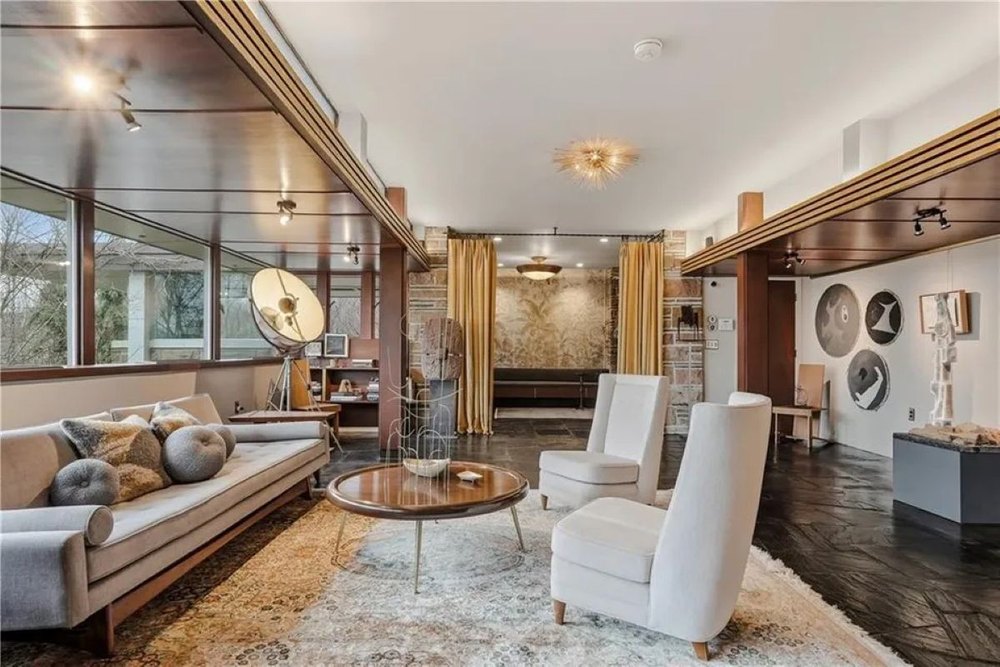
One of the most quietly significant homes in American architectural history has just been listed for $2.75 million in Port Allegany, Pennsylvania. The six-bedroom mountainside estate was conceived in 1935 by Walter J. Hall — the master craftsman who physically built Frank Lloyd Wright's iconic Fallingwater — and it stands today as one of the earliest surviving examples of Organic Modern architecture in the United States. Rescued from near-total abandonment and painstakingly restored, the property is now offering a rare opportunity for buyers who want not just a home, but a living piece of design heritage.
Who Was Walter J. Hall?
To understand the full weight of this listing, it is essential to understand the man behind it. Walter J. Hall was not a household name in the way that Frank Lloyd Wright was, but within the world of American craftsmanship and construction, his contributions were extraordinary. Hall was the master builder responsible for translating Wright's visionary blueprints for Fallingwater into a physical reality — a feat that required exceptional technical skill, creative problem-solving, and an intimate understanding of how architecture can exist in harmony with the natural landscape.
Fallingwater, completed in 1937 and cantilevered dramatically over a waterfall in the Pennsylvania wilderness, is widely regarded as one of the greatest buildings ever constructed. The fact that it still stands — and still stuns visitors — is in no small part a testament to Hall's craftsmanship. His work on that project placed him at the very heart of one of the most celebrated chapters in American architectural history.
The Dream Behind the Estate
Two years before Fallingwater was completed, Hall and his wife Beda had already begun dreaming up their own architectural vision. In 1935, the couple conceived a plan for a mountainside retreat in Port Allegany that would serve a dual purpose: a comfortable family home and an operational roadside restaurant, welcoming travelers and guests into a space defined by natural materials, organic forms, and a deep relationship with the surrounding landscape.
Tragically, Beda passed away just as construction was breaking ground, and she never lived to see their shared vision come to life. Yet Hall pressed forward, honoring the dream they had built together. The resulting property — completed one year before Fallingwater itself — is a stunning six-bedroom estate that reflects the very same design philosophy Hall would later help realize for Wright. He welcomed countless guests into the home over the years, running the roadside dining establishment and living out the life he and Beda had imagined together.
Allegheny Modernism and the Legacy of Raymond Viner Hall
The estate's story did not end with Walter Hall. In 1952, his son Raymond Viner Hall took over the property and ushered in a new chapter. Raymond closed the restaurant and transformed the structure into an architectural studio, where he mentored and apprenticed a generation of architects in a regional design tradition that has since come to be known as Allegheny Modernism.
Allegheny Modernism is a distinctive architectural philosophy rooted in the landscapes and building traditions of the Allegheny region of Pennsylvania. It emphasizes natural materials, site-sensitive design, and a rejection of the purely industrial aesthetic that dominated much of mid-century American building. Raymond's studio became a hub for this movement, and the Hall estate served as both its classroom and its greatest example.
Raymond Viner Hall continued his work until his death in 1981. After that, the property entered a period of painful decline.
Saved From Abandonment
When the next owner, Gary DeVore, discovered the property, it had been essentially frozen in time since the day Raymond Hall died. According to DeVore, who spoke with The Wall Street Journal about the acquisition, it was as though the residents had simply walked out the door and never returned. The home had been left to crumble, its interiors untouched, its architectural details slowly surrendering to neglect and the elements.
"The strangest thing is, it's like the day that the architect died, it's like people just walked out," DeVore described, capturing the eerie, time-capsule quality of the abandoned estate. Rather than demolish or drastically alter what remained, DeVore undertook the considerable task of rescuing and restoring the property, preserving its original Organic Modern character while making it livable once more.
What the Property Offers Today
Today, the restored Hall estate presents buyers with a genuinely singular offering in the Pennsylvania real estate market. The six-bedroom home sits on a scenic mountainside parcel, surrounded by the kind of natural landscape that inspired both Walter Hall and Frank Lloyd Wright throughout their careers. Its architectural vocabulary — natural stone, timber, horizontal lines that echo the horizon, interiors that flow into the outdoors — speaks directly to the Organic Modern tradition that Hall helped define.
- Six bedrooms across a thoughtfully designed floor plan rooted in 1930s Organic Modern principles
- Original architectural details preserved and restored throughout the interior
- Mountainside setting in Port Allegany, Pennsylvania, offering exceptional natural scenery
- Deep historical connection to Frank Lloyd Wright's Fallingwater and the broader American Modernist movement
- Association with the Allegheny Modernism design tradition established by Raymond Viner Hall
Why This Listing Matters Beyond Real Estate
Listings like this one are genuinely rare. The American architectural landscape is dotted with homes designed by famous names, but properties built by the craftsmen who actually shaped those iconic structures are far harder to find. Walter J. Hall's estate is not merely a historic home — it is a primary document of American design history, a place where the ideas that would culminate in Fallingwater were first tested, lived in, and passed on to future generations.
For architecture enthusiasts, historians, and buyers seeking a home with authentic cultural depth, the Hall estate represents the kind of opportunity that does not come along twice. At $2.75 million, it is a chance to own not just a beautifully restored piece of early Organic Modern architecture, but a direct link to one of the most celebrated buildings of the twentieth century.
A Living Monument to American Craftsmanship
The story of the Hall estate is ultimately a story about preservation — of a building, of a legacy, and of an architectural philosophy that continues to feel relevant and inspiring nearly ninety years after it was first imagined. Thanks to the efforts of those who recognized its value and refused to let it disappear, this remarkable piece of American architectural history is ready to welcome its next chapter. The question now is simply: who will be the one to carry it forward?