
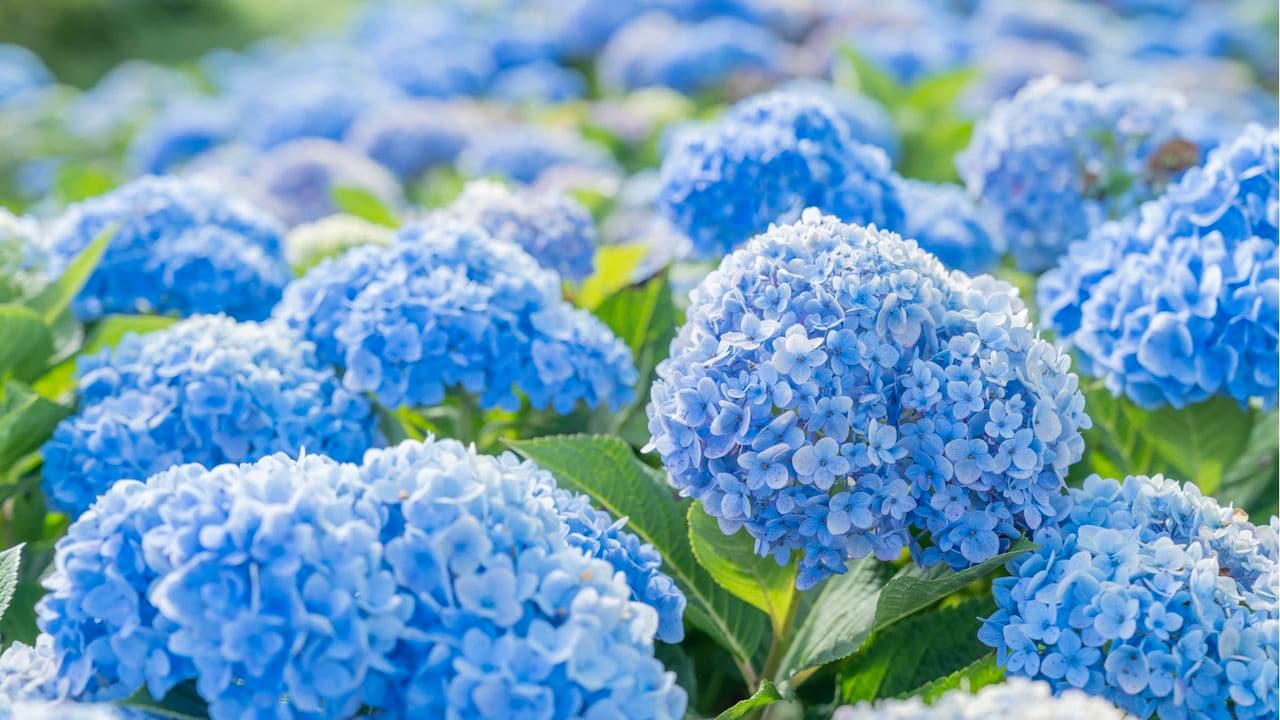
Why Do Hydrangeas Turn Blue in the First Place?
If you've ever stood in a garden center marveling at a pot of perfectly vivid blue hydrangeas, only to bring it home and watch it slowly fade to pink or purple over the following weeks, you are not alone. This is one of the most common frustrations among gardeners of all experience levels, and the good news is that it has a completely logical — and very fixable — explanation.
Hydrangeas, specifically the popular Hydrangea macrophylla (also known as bigleaf or mophead hydrangeas), are chemically unique among flowering plants. Their bloom color is not genetically fixed the way it is in most flowers. Instead, it is determined by the availability of aluminum ions in the soil. When aluminum is accessible to the plant's roots, it reacts with the flower's natural pigments — called anthocyanins — to produce that gorgeous, saturated blue color. Without sufficient aluminum uptake, those same pigments shift toward pink or red.
The reason aluminum availability fluctuates comes down almost entirely to soil chemistry. Understanding this is the foundation of everything that follows. Once you grasp the science, the three simple steps below will make perfect sense, and you'll wonder why keeping hydrangeas blue ever seemed complicated at all.
Step 1: Get Your Soil pH Into the Right Range
Soil pH is the single most important factor in determining whether your hydrangeas will be blue, pink, or somewhere frustratingly in between. Aluminum becomes soluble — meaning the plant can actually absorb it — when the soil is acidic, ideally with a pH between 4.5 and 5.5. Once the pH climbs above 6.0, aluminum binds tightly to other soil compounds and becomes inaccessible to the plant's roots, no matter how much of it is present in the ground.
The first thing you should do is test your soil. Inexpensive pH test kits are widely available at garden centers and online, and they take only a few minutes to use. Many local cooperative extension offices also offer free or low-cost soil testing services that give you a much more detailed picture of your soil's composition.
If your soil pH is too high — which is common in many parts of the country, particularly in areas with alkaline or clay-heavy soil — you'll need to lower it. The most reliable way to do this is by working elemental sulfur into the soil around your plants. Sulfur acidifies soil gradually as soil bacteria break it down, so apply it several weeks before you expect blooming if possible. You can also use acidifying fertilizers formulated specifically for acid-loving plants like azaleas, rhododendrons, and blueberries — these work perfectly for hydrangeas too.
Be patient with pH adjustment. Soil chemistry doesn't change overnight, and overcorrecting by dumping in large amounts of acidifier at once can stress your plants. Small, consistent applications over time are always more effective and safer than a single dramatic intervention.
Step 2: Add Aluminum to the Soil Directly
Even with perfectly acidic soil, some gardeners find that their hydrangeas still struggle to produce that deep, saturated blue. This is often because the soil itself doesn't contain enough aluminum to begin with. The solution is refreshingly simple: add aluminum sulfate directly to the soil.
Aluminum sulfate is inexpensive, widely available, and does double duty — it lowers soil pH while simultaneously delivering the aluminum your hydrangeas need. You can dissolve it in water and apply it as a drench around the root zone, or work granules lightly into the soil surface. A general starting rate is about one tablespoon per gallon of water, applied every few weeks during the growing season, but always follow the package directions for the product you use.
A word of caution: more is not better here. Excess aluminum can be toxic to plants and will damage roots if applied too heavily or too frequently. Stick to recommended doses, and watch your plants for signs of stress such as yellowing leaves or wilting, which can indicate over-application. When used correctly, aluminum sulfate is a safe and highly effective tool for maintaining vivid blue blooms.
Step 3: Water Consistently and Mindfully
The third piece of the puzzle is one that gardeners sometimes overlook because it seems too basic — but consistent, appropriate watering is absolutely critical to keeping your hydrangeas blue all summer long. Here's why it matters so much.
Water is the delivery system for everything your plant absorbs through its roots, including aluminum and the acidifying compounds you've worked into the soil. If the soil dries out too much between waterings, the plant's ability to uptake nutrients and minerals drops dramatically. Irregular watering also causes fluctuations in soil chemistry that can destabilize the pH balance you've worked hard to establish.
Hydrangeas are water-lovers by nature — their name literally comes from the Greek word for water. During summer, aim to keep the soil consistently moist but never waterlogged. A thick layer of mulch around the base of your plants (pine bark or pine needles are particularly good choices because they are naturally acidic) will help retain moisture, regulate soil temperature, and gradually contribute to lowering pH over time.
- Water deeply two to three times per week during hot, dry spells rather than shallow watering every day.
- Water at the base of the plant, not overhead, to reduce the risk of fungal disease on the leaves and blooms.
- Apply a 3- to 4-inch layer of acidic mulch to lock in moisture and reinforce your soil pH goals simultaneously.
- Check soil moisture by pressing a finger two inches into the ground — if it feels dry at that depth, it's time to water.
Putting It All Together: A Simple Seasonal Routine
The beauty of this approach is how naturally these three steps complement one another. Acidic soil makes aluminum available. Aluminum sulfate ensures that aluminum is present in sufficient quantity. Consistent watering keeps the whole system functioning smoothly so the plant can actually use what you've given it.
Start in early spring by testing your soil and adjusting pH if needed. Once the growing season begins, apply aluminum sulfate every two to four weeks as a drench. Mulch generously, water regularly, and watch your plants respond. Most gardeners who follow this routine report noticeably deeper, more stable blue color within a single growing season.
One final note: white hydrangeas will not turn blue no matter what you do to the soil, because they lack the pigments needed to produce color in the first place. This method applies specifically to varieties that are already capable of producing blue or pink blooms — most commonly the beloved bigleaf types. If you're shopping for new plants, look for varieties known for strong blue color such as 'Nikko Blue,' 'Endless Summer,' or 'Bluebird.'
Keeping hydrangeas brilliantly blue all summer long is genuinely one of the more achievable goals in the garden. A little soil science, a bag of aluminum sulfate, and a consistent watering schedule are all it takes. The reward — those lush, dreamy blooms holding their color from June straight through to September — is absolutely worth every bit of the effort.