
Why Proper Cleaning Matters for Laminate Floors
Laminate flooring has become one of the most popular choices for homeowners across the country. It combines the visual appeal of real hardwood or stone with a budget-friendly price tag, straightforward installation, and impressive durability. However, one common misconception is that laminate floors are virtually indestructible and can be cleaned with any product or method you have on hand. In reality, laminate floors have some important vulnerabilities that every homeowner should understand before reaching for a mop or a cleaning spray.
Unlike solid hardwood, laminate flooring cannot be sanded down and refinished once it shows wear. The surface layer is a photographic image sealed with a protective coating, meaning once it's damaged — whether from excess moisture, harsh chemicals, or heavy abrasion — that damage is essentially permanent. This is why learning how to wash laminate floors the right way is not just about aesthetics; it's about protecting a real investment in your home.
Whether you're moving into a new place, renovating your current home, or simply trying to maintain the floors you already have, these five tips will help you clean your laminate floors effectively while keeping them safe for the long term.
Tip 1: Sweep or Vacuum Before You Ever Apply Moisture
The first and most important step in any laminate floor cleaning routine is dry cleaning before wet cleaning. Grit, dust, sand, and small debris particles act like sandpaper under your feet and under mop heads. If you apply a damp mop directly over a floor covered in fine debris, you're essentially grinding those particles into the surface finish with every stroke.
Use a soft-bristle broom, a microfiber dust mop, or a vacuum cleaner with a hard-floor setting to sweep the entire surface before applying any liquid. If you use a vacuum, make sure the beater bar or rotating brush is turned off, as this spinning attachment is designed for carpet and can scratch laminate over time. A quick daily sweep in high-traffic areas will also dramatically reduce how often you need to do a deeper damp clean.
Tip 2: Use a Damp Mop — Never a Wet One
This is arguably the most critical rule of laminate floor care: laminate and standing water are enemies. Laminate flooring is made up of multiple compressed layers, and while the top surface has a protective coating, the core layers are typically made of high-density fiberboard (HDF). This material is highly susceptible to swelling, warping, and buckling when exposed to excess moisture.
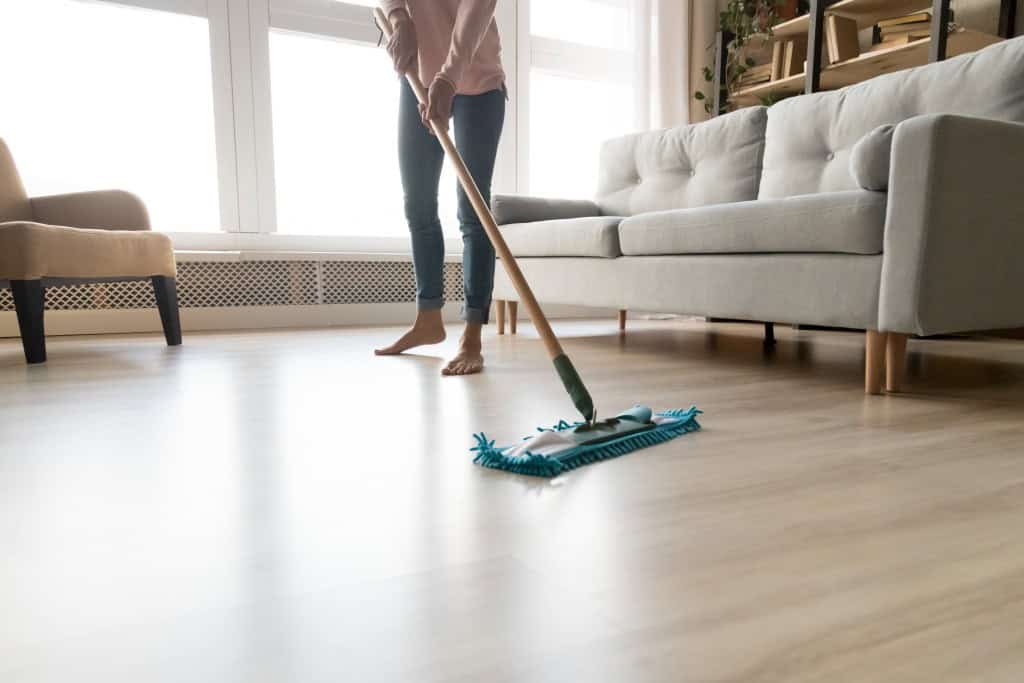
When it's time to wash your laminate floors with water, always use a well-wrung mop or a microfiber flat mop that is barely damp to the touch. The goal is to use just enough moisture to lift dirt and residue without leaving any water sitting on the floor. After mopping, the floor should dry in a matter of minutes. If puddles form or the floor remains wet for more than a few minutes, you've used too much water. Immediately dry the area with a clean towel or dry mop to prevent long-term damage.
Tip 3: Choose the Right Cleaning Solution
Not all cleaning products are safe for laminate floors, and using the wrong one can dull the finish, leave a sticky residue, or even cause structural damage over time. Here's what you should and shouldn't use:
- Safe options: Plain warm water works well for light cleaning. You can also use a pH-neutral cleaner specifically formulated for laminate flooring. A small amount of dish soap diluted in water is another gentle option for occasional deeper cleans.
- Avoid: Wax-based polishes, oil soaps, and steam cleaners. Wax and oil products build up on the surface and create a hazy, smeared appearance that is difficult to remove. Steam cleaners force moisture and heat into the seams between planks, which is one of the fastest ways to cause swelling and warping.
- Avoid: Harsh chemicals such as bleach, ammonia-based cleaners, and abrasive scrubbing powders. These strip the protective coating from the laminate surface, leaving it dull and exposed to further damage.
When in doubt, check your flooring manufacturer's recommendations. Many laminate brands provide a list of approved cleaning products, and using an unapproved cleaner may even void your warranty.
Tip 4: Tackle Spills and Stains Immediately
One of the best habits you can develop to protect your laminate floors is addressing spills the moment they happen. Because the core of laminate planks is moisture-sensitive, allowing a spill to sit — even for just a few minutes — increases the risk of liquid seeping into the seams and causing swelling from below.
For everyday spills like water, juice, or food, blot the area immediately with a clean cloth or paper towel. Avoid wiping in broad strokes, which can spread the liquid further across the floor. For sticky substances like syrup or grease, apply a small amount of your approved laminate cleaner to a cloth and gently work at the residue rather than scrubbing aggressively. For tougher stains such as dried paint, nail polish, or marker, a small amount of acetone applied carefully with a cotton ball can often lift the stain without damaging the finish, though this should always be tested in an inconspicuous area first.
Tip 5: Protect the Floor Before Cleaning Becomes Necessary
The best cleaning strategy is one that minimizes how much cleaning you need to do in the first place. A few simple preventive habits can dramatically extend the life and appearance of your laminate floors.
- Use furniture pads: Place felt pads under the legs of all furniture, including chairs, tables, and sofas. Moving furniture without pads can cause deep scratches that cannot be repaired.
- Place rugs and mats strategically: Entry mats at doorways catch dirt and moisture before they reach your floors. Area rugs in high-traffic zones like hallways and living rooms reduce daily wear significantly.
- Trim pet nails regularly: Pet claws are a common source of surface scratches on laminate floors. Keeping them trimmed reduces the risk considerably.
- Maintain indoor humidity: Laminate floors can expand and contract with changes in humidity. Keeping indoor humidity levels between 35% and 65% helps prevent the planks from gapping or buckling over time.
Final Thoughts: Keep It Simple, Keep It Dry
Laminate flooring rewards homeowners who treat it with a little care and consistency. The core principles of washing laminate floors come down to a straightforward routine: sweep often, mop sparingly with the right products, clean up spills right away, and take preventive steps to reduce daily wear. By following these five tips, you'll protect your investment and enjoy beautiful, clean floors for many years to come. Whether your laminate floors are brand new or have been in your home for years, it's never too late to adopt better cleaning habits.