
Why Laminate Floor Cleaning Requires Special Attention
Laminate flooring has become one of the most popular choices for homeowners across the country, and it's easy to see why. It delivers the warm, rich appearance of hardwood or stone without the steep price tag. It's durable, easy to install, and relatively forgiving in high-traffic areas. However, one thing many homeowners discover too late is that laminate is not as indestructible as it looks — especially when it comes to cleaning.
Unlike hardwood floors, laminate cannot be sanded down and refinished if it gets damaged. The surface layer is essentially a printed image sealed under a tough, clear protective coat, and once that layer warps, swells, or scratches badly, your only real option is replacement. That's why learning how to wash laminate floors the right way isn't just about keeping things tidy — it's about protecting a significant investment in your home.
Whether you've just installed laminate in a newly renovated space or you've had it for years and want to refresh your cleaning routine, the five tips below cover everything you need to know to keep your floors looking their best without causing accidental damage.
Tip 1: Always Start With Dry Cleaning Before Any Wet Method
The single most important rule of laminate floor maintenance is this: less moisture is always better. Before you ever reach for a mop or a spray bottle, your first step should always be a thorough dry clean. Use a microfiber dust mop, a soft-bristle broom, or a vacuum cleaner set to the hard floor setting — never the carpet beater setting, which can leave small scratches over time.
Dry cleaning removes loose dirt, dust, pet hair, and debris that would otherwise turn into a muddy, abrasive paste the moment liquid is applied. This paste can grind into the surface of your laminate and dull its finish far faster than normal foot traffic would. Aim to dry clean high-traffic areas daily and the entire floor at least two to three times per week.
When vacuuming, make sure the wheels and attachments are clean and free of grit. Even a small pebble caught in a vacuum attachment can leave a trail of fine scratches across your floor in seconds.
Tip 2: Use a Damp Mop, Never a Wet One
This tip cannot be overstated: water is laminate flooring's biggest enemy. The core layer of most laminate products is made from high-density fiberboard (HDF), which is highly absorbent. When excess water seeps into the seams between planks, it causes the core to swell, leading to buckling, warping, and gaps that are impossible to fix without replacing the affected boards.
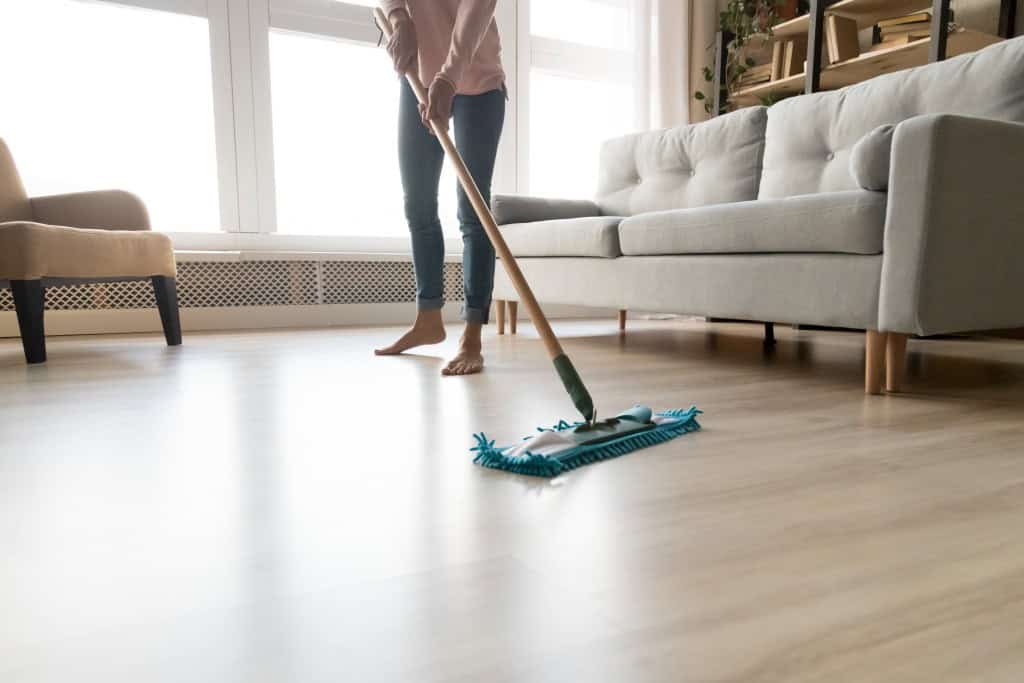
When it's time for a wet clean, wring out your mop until it is barely damp — it should feel almost dry to the touch. Microfiber flat mops work best for laminate because they release very little moisture and pick up dirt efficiently. Work in small sections, and never allow standing water to sit on the floor at any point. If you notice puddles or wet patches, dry them immediately with a clean, absorbent cloth.
Avoid steam mops entirely. Despite their popularity for tile and some hardwood surfaces, steam mops push hot moisture directly into the seams of laminate and can cause irreversible swelling and delamination.
Tip 3: Choose the Right Cleaning Solution
Not all floor cleaners are created equal, and many products that are safe for other floor types can actually harm laminate. Here's what to avoid and what to use instead:
- Avoid oil-based soaps and wax-based cleaners. These leave a residue that builds up over time, dulls the finish, and makes the floor look hazy or streaky.
- Avoid bleach, ammonia-based cleaners, and abrasive products. These can strip the protective coating and leave permanent marks or discoloration.
- Avoid vinegar solutions. While vinegar is a popular natural cleaner, its acidity can gradually break down the finish on laminate floors with repeated use.
- Use a pH-neutral laminate floor cleaner specifically formulated for the material. Many trusted brands offer spray-and-mop solutions that are diluted to the right concentration and safe for regular use.
- Plain water works well for light cleaning as long as the mop is sufficiently wrung out and you dry the surface promptly.
Always read the manufacturer's cleaning guidelines for your specific laminate product. Some brands have recommendations or even restrictions that could affect your warranty if not followed.
Tip 4: Tackle Stains Quickly and Carefully
Spills happen in every home, and how fast you respond makes all the difference on laminate. The moment a liquid hits the floor — whether it's coffee, juice, pet urine, or cooking oil — blot it up immediately with a clean, dry cloth or paper towel. Do not wipe or spread the liquid; always blot from the outside of the spill inward to contain it.
For tougher stains like dried food, nail polish, ink, or crayon marks, a small amount of acetone-based nail polish remover or rubbing alcohol applied to a cloth can work well. Apply it to the cloth first, not directly to the floor, and gently rub the stain. Then wipe the area clean with a damp cloth and dry it thoroughly.
For scuff marks from shoes, a clean tennis ball or a pencil eraser rubbed gently over the mark usually lifts it without any chemicals at all. Avoid steel wool or scouring pads, which will scratch the surface irreparably.
Tip 5: Prevent Damage Before It Starts
The best laminate floor cleaning strategy also includes a layer of prevention. A few simple habits can dramatically extend the life of your floors and reduce how often deep cleaning is needed.
- Place doormats at every entrance to capture dirt, sand, and moisture before they reach your floors.
- Use felt pads under all furniture legs to prevent scratching when chairs, tables, and sofas are moved.
- Trim pet nails regularly to minimize surface scratching from dogs and cats.
- Avoid walking on laminate in stiletto heels or cleated shoes, which concentrate enormous pressure on a tiny surface area and can dent or crack the wear layer.
- Control indoor humidity levels. Laminate performs best between 30% and 60% relative humidity. Extremes in either direction can cause expansion or contraction that loosens the planks over time.
Final Thoughts on Washing and Maintaining Laminate Floors
Laminate floors reward consistent, gentle care far better than occasional intensive scrubbing. The golden rules are simple: keep moisture to an absolute minimum, use the right products, clean up spills immediately, and take preventive steps to reduce wear and tear before it starts. Follow these five tips and your laminate floors will maintain their appearance and structural integrity for many years — making them one of the smartest investments you can make in any home.