
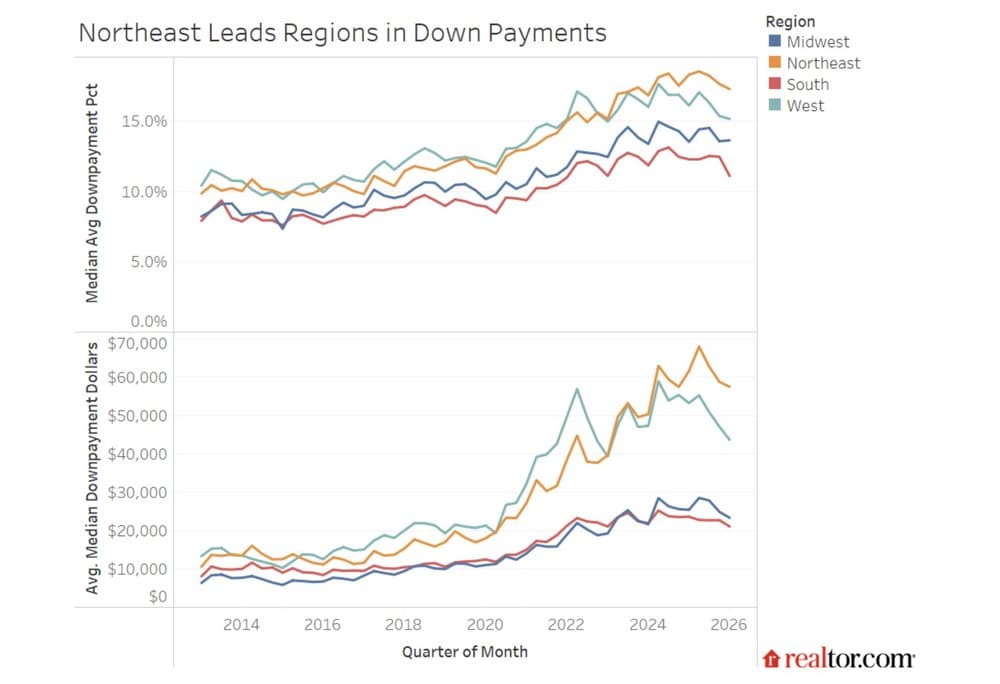
The Down Payment Dream Is Getting Harder to Reach
Saving for a home is already one of the most financially demanding goals an individual or family can take on. But in 2026, first-time homebuyers are facing a challenge that goes beyond just setting aside money each month—inflation is quietly eating away at the progress they're making. If your down payment savings are sitting in an account that isn't keeping up with rising prices, you may be falling behind without even realizing it.
This isn't just a feeling. The numbers back it up. And understanding what's happening—and what to do about it—could make a meaningful difference in how quickly you're able to step through the door of your first home.
What the Inflation Numbers Are Telling Us in 2026
The Consumer Price Index (CPI), one of the most closely watched measures of inflation in the United States, rose 4.2% in May 2026 compared to a year earlier, according to the latest data from the Bureau of Labor Statistics. That number is more than double the Federal Reserve's target inflation rate of 2% annually, and it marks a consistent upward trend that has been building since February 2026.
To put the climb in perspective: CPI stood at 2.4% in February, jumped to 3.3% in March, reached 3.8% in April, and has now hit 4.2% as of May. The primary driver behind this surge has been rising energy prices, largely tied to the ongoing conflict in Iran, which began in February and has continued to push energy costs higher across the board.
For everyday consumers, this means everything costs more. But for homebuyers specifically, it means something else: any savings account returning less than 4.2% annually is effectively losing purchasing power in real terms. Your balance might be growing on paper, but what that money can actually buy—including a home—may be shrinking.
How Inflation Erodes Your Down Payment Savings
Here's a straightforward way to think about it. Suppose you've saved $30,000 toward a down payment and you're keeping it in a traditional savings account earning around 0.5% interest. After one year, you'd have roughly $30,150. That sounds fine—until you account for 4.2% inflation. In real purchasing power terms, you've actually lost ground. That $30,150 effectively has less buying power than your original $30,000 did a year ago.
Even if you're in a higher-yield account earning, say, 3.5%, you're still not fully keeping pace with an inflation rate of 4.2%. Every percentage point gap between your savings rate and the inflation rate is money that's slipping through your fingers—silently, month by month.
For first-time buyers who may be saving over two, three, or even five years, these losses compound over time and can significantly delay their ability to reach a meaningful down payment target.
Why Financial Experts Still Recommend Cash Accounts for Down Payments
Despite the inflation challenge, most financial advisors continue to recommend keeping down payment savings out of the stock market. The reasoning is simple: stocks are volatile, and if the market drops significantly in the months before you're ready to buy, you could lose a substantial portion of what you've saved at exactly the wrong moment.
The goal with a down payment fund isn't to maximize growth—it's to preserve capital while earning a reasonable return. That's why cash-based vehicles like high-yield savings accounts and certificates of deposit (CDs) have long been the go-to recommendation. They're low risk, federally insured, and predictable.
The problem in 2026 is that "low risk" doesn't automatically mean "inflation-proof." With CPI running above 4%, even the better cash accounts are struggling to keep up.
Where to Park Your Down Payment Savings Right Now
The question on every aspiring homebuyer's mind is: where should the money actually go? Here are some options worth considering, each with its own trade-offs.
- High-Yield Savings Accounts (HYSAs): These continue to offer some of the most accessible and liquid options for savers. Rates vary widely across institutions, so it's worth shopping around. Some online banks and credit unions are offering rates above 4%, which means you may be able to keep pace with—or at least come close to—the current inflation rate while maintaining full flexibility to withdraw when you're ready to buy.
- Certificates of Deposit (CDs): CDs can lock in a competitive rate for a fixed term, which is beneficial if you know roughly when you plan to buy. However, early withdrawal penalties mean they're best suited for savers with a clear and committed timeline. Laddering CDs—splitting your savings across multiple CDs with different maturity dates—can help balance flexibility and return.
- Treasury Bills (T-Bills): Short-term U.S. government securities have become an increasingly popular option for savers looking for safety and competitive yields. T-Bills are backed by the U.S. government and can offer attractive rates in a high-inflation environment. They're available directly through TreasuryDirect.gov and carry terms ranging from a few weeks to one year.
- Money Market Accounts: Similar to HYSAs but sometimes offering slightly different rate structures or perks, money market accounts are another FDIC-insured option that can provide reasonable returns with easy access to your funds.
The Bottom Line for First-Time Homebuyers
Inflation at 4.2% is not something to ignore when you're working toward one of the biggest financial milestones of your life. The encouraging news is that there are legitimate, low-risk ways to fight back against inflation's erosion of your savings—you just have to be intentional about where your money is sitting.
Don't let inertia keep your down payment fund in an account earning a fraction of a percent. Take time to compare rates, explore your options, and make sure your savings strategy is working as hard as you are. In a market where every dollar counts, the account you choose could be the difference between hitting your down payment goal on time—or watching it quietly slip further out of reach.
Staying informed and proactive is the most powerful tool first-time buyers have right now. Inflation may be rising, but with the right savings approach, your homeownership timeline doesn't have to be pushed back because of it.