
When the Party Ends: Confronting the True Cost of Design Events
Every year, hundreds of thousands of designers, journalists, brand executives, and curious visitors descend on cities like Milan, London, and Helsinki for their celebrated design weeks. The streets fill with installations, the hotels sell out months in advance, and social media channels overflow with images of innovative furniture, provocative concepts, and exclusive brand experiences. Yet behind the spectacle lies a growing tension that the design industry has been reluctant to address directly: the environmental, social, and cultural toll of large-scale event tourism. The Redesigning Design Weeks programme is one of the first structured efforts to confront these downsides head-on, asking not just how design weeks can be improved, but whether their current format is fit for purpose at all.
What Is the Redesigning Design Weeks Programme?
Launched as a collaborative initiative involving cultural institutions, independent curators, and design organisations, the Redesigning Design Weeks programme sets out to critically examine the role that major design festivals play in the global creative economy. Rather than simply celebrating the achievements of these events, the programme invites honest reflection on their ecological footprint, their tendency to favour wealthy participants, and their often superficial engagement with the host cities and communities where they take place.
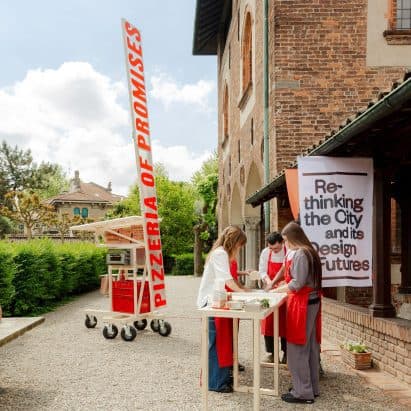
Among the key contributors to this conversation is the Nieuwe Instituut, the Netherlands' national institute for architecture, design, and digital culture. Through its participation in events such as Milan Design Week 2026, the institute has brought its Civicity exhibition to international audiences, using installations like the provocative Pizzeria of Promises to challenge the gap between design's stated ambitions and its real-world impact. These kinds of interventions are central to the Redesigning Design Weeks philosophy: using the platform of a major design event to question the very nature of that platform.
The Problem with Event Tourism in the Design World
To understand why a programme like this is necessary, it helps to consider what event tourism actually means in the context of design weeks. At its core, event tourism refers to the phenomenon of large numbers of people travelling specifically to attend a curated event, generating significant economic activity but also placing enormous strain on local infrastructure, housing costs, and environmental resources.
In the case of Milan Design Week, or Salone del Mobile, the numbers are staggering. The event routinely attracts over 300,000 visitors from more than 160 countries, generating carbon emissions from flights, rail journeys, and road transport that are difficult to quantify but impossible to ignore. Temporary installations are constructed at enormous cost and with significant material waste, only to be dismantled days later. Rental prices in host neighbourhoods spike, pushing out long-term residents and small businesses. And the benefits, critics argue, flow primarily to established brands and affluent participants rather than to the local communities that absorb the disruption.
Carbon Footprint and Material Waste
The environmental dimension of design event tourism is perhaps the most urgent. A single major installation at a design week can consume hundreds of kilograms of materials, many of which are not recycled or repurposed after the event. When multiplied across dozens or hundreds of installations, the cumulative waste is substantial. The Redesigning Design Weeks programme pushes for greater accountability in this area, encouraging participants to adopt circular material strategies, reduce reliance on air freight, and design with longevity and reuse in mind.
Social and Economic Inequality
Beyond the environmental costs, there is a social dimension that deserves equal attention. Design weeks can reinforce existing hierarchies within the profession, privileging well-funded studios, major brands, and participants from wealthy nations. Emerging designers from the Global South, independent practitioners without corporate backing, and community-based organisations frequently find themselves priced out of participation or rendered invisible within the main programme. The Redesigning Design Weeks initiative actively seeks to challenge these dynamics, creating space for voices that are typically marginalised in the design festival circuit.
Nieuwe Instituut and the Civicity Approach
The Nieuwe Instituut's Civicity project offers a compelling model for how design institutions can participate in major international events while maintaining critical integrity. Rather than showcasing finished products or aspirational brand narratives, Civicity uses speculative and participatory design methodologies to explore questions of collective urban life, civic responsibility, and the relationship between design and democratic values.
The Pizzeria of Promises, one of the standout elements of the Civicity exhibition at Milan 2026, is a particularly apt metaphor for the broader project of the Redesigning Design Weeks programme. The installation playfully but pointedly interrogates the culture of high-concept promises that characterise much of the design week landscape — the bold claims about sustainability, innovation, and social impact that too rarely translate into lasting change once the event ends and the installations are packed away.
Toward a More Responsible Model for Design Events
The Redesigning Design Weeks programme does not advocate for abolishing design weeks entirely. These events serve genuine purposes: they facilitate international exchange, spark creative collaboration, provide vital exposure for emerging talent, and generate cultural enthusiasm for design as a discipline. The question is how to preserve these benefits while meaningfully reducing the harms.
- Decentralisation: Spreading events across multiple cities and regions rather than concentrating them in a handful of global hubs can reduce travel distances and distribute economic benefits more equitably.
- Digital and hybrid formats: Investing in high-quality online programming allows broader participation without the carbon cost of international travel, while hybrid models can preserve the irreplaceable value of physical encounter for those who are able to attend.
- Mandatory sustainability reporting: Requiring participants and organisers to publish data on material use, carbon emissions, and community impact creates accountability and enables meaningful comparison over time.
- Community-centred programming: Prioritising collaborations with local designers, schools, and community organisations ensures that host cities are active participants rather than passive backdrops.
- Circular design mandates: Establishing clear expectations that temporary installations must be designed for reuse, recycling, or donation shifts the default away from disposable spectacle.
Why This Conversation Matters Now
The timing of the Redesigning Design Weeks programme is not accidental. As the design industry reckons with its responsibilities in the face of climate change, social inequality, and political instability, the cultural events that define its calendar are increasingly difficult to defend in their current form. Younger designers in particular are demanding greater coherence between the values their profession espouses and the practices it actually embeds in its most visible gatherings.
The programme also reflects a broader shift in how cultural institutions like the Nieuwe Instituut understand their role. Rather than being passive showcases for creative output, these institutions are positioning themselves as active agents of critical inquiry, using their platforms to ask uncomfortable questions and model alternative ways of operating.
Conclusion: Designing the Future of Design Weeks
The Redesigning Design Weeks programme represents a serious and timely attempt to bring the same critical rigour that design applies to products, systems, and cities to the events and institutions of design itself. By confronting the downsides of event tourism directly — the emissions, the waste, the inequalities, the broken promises — it opens up the possibility of a design week culture that is as thoughtful and responsible as the best work it celebrates. The challenge now is for the broader design community to engage with this conversation not as an abstract critique, but as a practical mandate for change.