
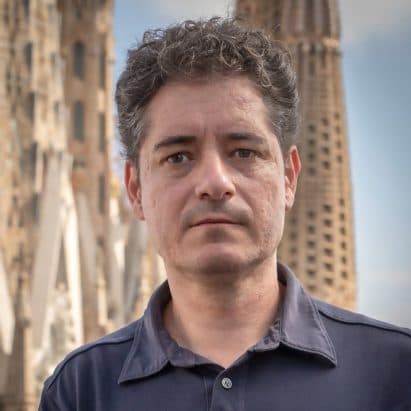
Sagrada Familia Faces a New Chapter as Lead Architect Warns of "Future Challenges"
Few buildings in the world carry the weight of history, devotion, and architectural ambition that Barcelona's Sagrada Familia does. After more than 140 years of continuous construction, the iconic basilica is finally approaching completion — but according to its lead architect Mauricio Cortés, the journey is far from over. Speaking ahead of the centenary of Antoni Gaudí's death, Cortés has candidly addressed the "future challenges" that lie ahead for one of the most visited and analysed structures on the planet.
The milestone is significant. 2026 marks one hundred years since Gaudí was struck by a tram on the streets of Barcelona in 1926 and died three days later, never having seen his masterwork completed. The centenary has prompted deep reflection not only on what has been achieved, but on the enormous responsibility that remains.
Who Is Mauricio Cortés?
Mauricio Cortés is the current lead architect of the Sagrada Familia, inheriting a role that traces back to Gaudí himself and has since passed through a careful lineage of architects committed to realising the original vision. It is not an easy post to hold. Cortés must simultaneously serve as custodian of Gaudí's legacy, interpreter of incomplete plans, and forward-looking architect capable of steering a living construction project through the complexities of the 21st century.
His position requires a rare combination of scholarly depth and practical expertise. The Sagrada Familia is not a ruin to be preserved or a finished monument to be maintained — it is an active construction site, employing stone masons, structural engineers, digital modellers, and dozens of specialist craftspeople. Cortés oversees all of it, and he is keenly aware of what that means going forward.
The Road to Completion: Progress and Pressure
The Sagrada Familia has seen remarkable progress in recent decades, accelerated by computer-aided design tools that Gaudí himself could never have imagined. Digital modelling has allowed architects and engineers to decode Gaudí's geometry — rooted in catenary arches, hyperboloids, and paraboloids — and translate those principles into buildable structures with a precision that was simply impossible in the early 20th century.
Several of the basilica's famous towers have now been completed, including the Tower of the Virgin Mary, which was finished in 2021 and topped with a radiant star that lit up the Barcelona skyline. The completion of the six towers of the Evangelists and, most critically, the central Tower of Jesus Christ — which will make the Sagrada Familia the tallest church in the world — remains the defining goal of this generation of builders.
Yet speed and accuracy must be balanced against something even more fundamental: fidelity to Gaudí's original intent. This tension sits at the heart of the challenges Cortés has described.
What Are the "Future Challenges" Cortés Is Warning About?
Cortés has been thoughtful and transparent in outlining the difficulties ahead. These challenges are both technical and philosophical, and understanding them helps explain why completion of the Sagrada Familia is not simply a matter of laying the final stone.
- Interpreting incomplete designs: Gaudí left behind plans, models, and written notes, but much of this material was destroyed during the Spanish Civil War in 1936. Reconstruction of those plans has been ongoing, but some interpretive decisions must still be made without definitive guidance from the original architect.
- Maintaining craftsmanship at scale: The Sagrada Familia is famous for the extraordinary quality of its carved stonework, stained glass, and decorative facades. As construction moves into its final phases, ensuring that artisanal quality is maintained under the pressure of a defined completion timeline is a genuine concern.
- Managing visitor impact: The basilica attracts millions of tourists every year — revenue from those visits actually funds the construction — but the sheer volume of footfall creates wear, logistical complexity, and pressure on the site that must be carefully managed as building work continues.
- Navigating the post-completion identity: Perhaps the most philosophically interesting challenge is the question of what the Sagrada Familia becomes once it is "finished." For over a century, it has been defined by its incompleteness. What does it mean to steward a building that has transitioned from perpetual construction site to completed cathedral?
Gaudí's Centenary and Its Symbolic Weight
The centenary of Gaudí's death in 2026 adds a profound layer of urgency and meaning to the current phase of construction. Efforts are also underway to advance Gaudí's beatification by the Catholic Church, a process that has been in motion for decades. Should he eventually be canonised, the Sagrada Familia would hold a unique dual status: both a consecrated basilica and a pilgrimage site honouring its own architect-saint.
Cortés has spoken about this centenary not as a moment of celebration alone, but as a prompt for honest assessment. The anniversary asks a fundamental question: are the decisions being made today ones that Gaudí would recognise and endorse? It is a question without a definitive answer, which is precisely what makes it so demanding.
A Legacy Built in Layers
What makes the Sagrada Familia extraordinary is not just its architecture, but its nature as a collective, multigenerational project. No single person has built it, and no single generation will complete it on their own terms. Architects like Cortés are participants in an ongoing cultural and spiritual act rather than authors of a finished work.
That humility, combined with technical rigour and creative courage, is what the role demands. As Cortés himself has made clear, the future challenges at Sagrada Familia are real — but so is the commitment of everyone involved to meeting them.
Why the World Is Watching
The Sagrada Familia is more than a Barcelona landmark. It is a global symbol of architectural perseverance, spiritual ambition, and the relationship between human creativity and the limits of time. As its completion draws closer, the conversations being led by architects like Mauricio Cortés become increasingly important — not just for the building itself, but for what it represents about how we build, why we build, and what we choose to leave behind.
With the Gaudí centenary upon us and the final towers rising on the Barcelona skyline, the world is paying close attention. The challenges ahead are real, but so is the determination to see one of history's greatest architectural visions finally realised.