
A Tiny Home Creates a Very Big Problem in Portland
Tiny homes have become one of the most talked-about housing trends in America. Affordable, minimalist, and eco-friendly, they promise a simpler way of living. But a case unfolding in Portland, Oregon, is casting a very different light on the tiny home movement — and it involves gas masks, a collapsed retiree, and a $200,000 lawsuit that has stunned the neighborhood.
John Benjamin, 77, and his wife Trudy Benjamin, 67, are suing their next-door neighbor Karen Ward for $200,000 in damages. Their claim? That a nauseating, overwhelming odor emanating from Ward's tiny home has made their own property virtually unlivable. For a couple who has spent 40 years building a life in their home, the situation has become nothing short of a nightmare.
What Exactly Is Happening Next Door?
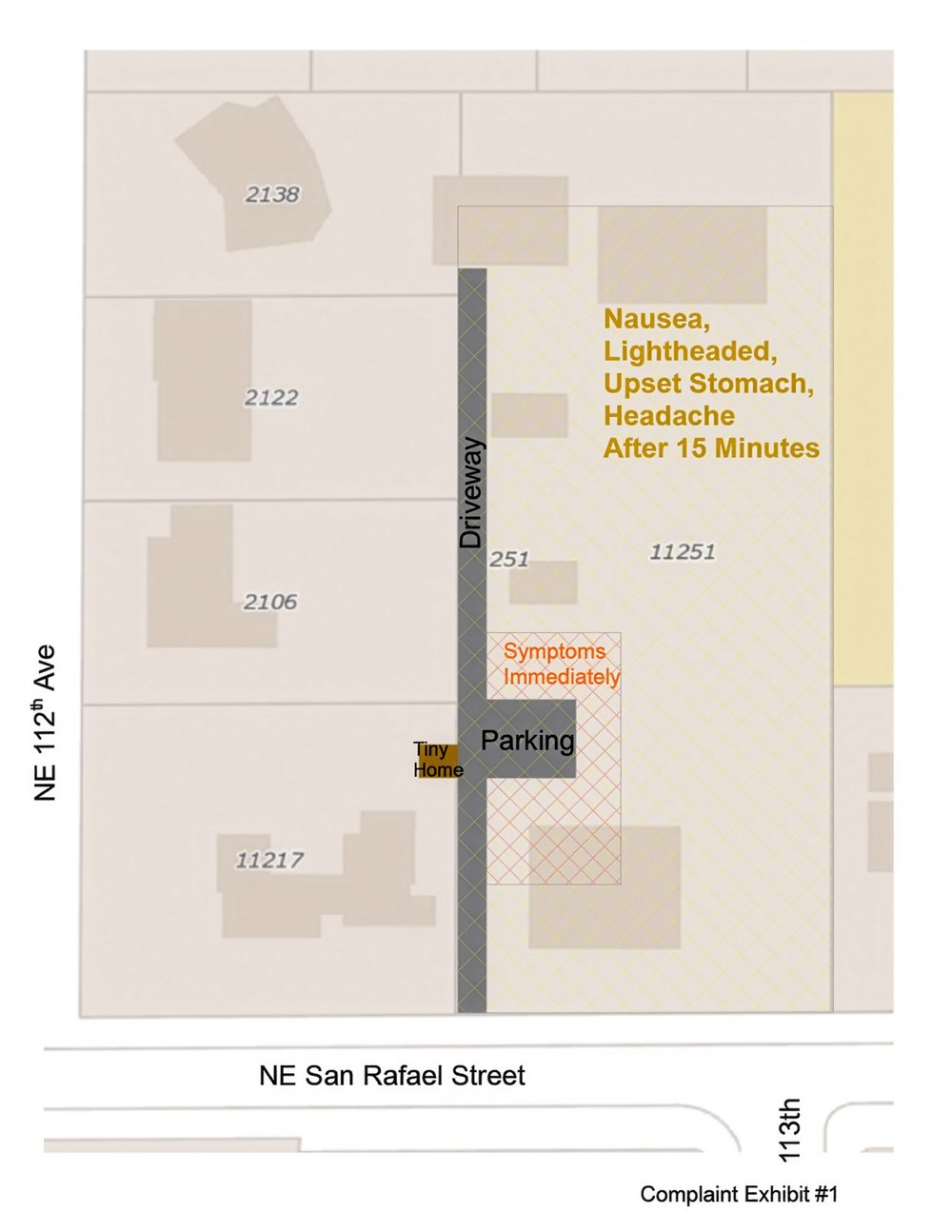
According to the legal complaint obtained by Realtor.com, Ward moved a tiny home on a wheeled trailer onto the back of her property sometime last year. The structure was placed directly adjacent to the fence separating her property from the Benjamins', and almost immediately, the couple began noticing a deeply unpleasant odor drifting across the property line.
The smell, described in the complaint as "nauseating," became so persistent and so intense that the Benjamins could no longer simply step outside without protection. The complaint states that the couple must wear gas masks — specifically, industrial-grade respirators — any time they travel between their driveway and their front door. For a retired couple hoping to enjoy their golden years in peace, this is an extraordinary and deeply troubling development.
The situation reached a critical point when John Benjamin reportedly became so overwhelmed by the noxious vapors in his own yard that he collapsed. The fall caused him to chip a bone on his kneecap, an injury that ultimately required surgery. What began as an unpleasant neighborly inconvenience had escalated into a serious physical health crisis.
The Human Cost Behind the Headlines
It's easy to focus on the dollar figure — $200,000 is a striking number — but the human story here is what makes this case genuinely heartbreaking. The Benjamins are not litigious people looking for a payday. According to their attorney, Karl G. Anuta, all the couple wants is to be able to live in their home of four decades without having to strap on industrial respirators every time they walk outside.
"All the Benjamins want is to be able to use and enjoy their home of 40 years, without having to wear industrial-grade respirators whenever they go outside," Anuta told Realtor.com. "They would also like to be able to tell their medical providers — who have been telling them that they need to stay somewhere else until this problem is resolved — that the problem has been resolved."
That detail is particularly striking: the couple's own doctors have advised them to temporarily relocate while the issue remains unresolved. Think about what that means. Two elderly people, one of whom recently had knee surgery, have been effectively pushed out of their home of 40 years by a smell coming from a neighbor's property. That is not a minor inconvenience. That is a fundamental disruption of their lives.
What Does This Case Mean for the Tiny Home Movement?
Tiny homes have surged in popularity over the last decade, and for understandable reasons. Housing costs have skyrocketed across the country, and the appeal of a smaller, more affordable footprint is real. Many municipalities have updated zoning laws to accommodate tiny homes, tiny home communities have sprung up nationwide, and entire television networks have devoted programming to the lifestyle.
But the Portland case highlights a tension that does not get discussed enough: the rights of tiny home owners versus the rights of their neighbors. When a structure on wheels is parked on a residential property, questions about waste management, sanitation, utility connections, and structural standards become very real — and very consequential for those living nearby.
In many jurisdictions, tiny homes on wheeled trailers occupy a regulatory gray area. They may not be subject to the same building codes, inspections, or sanitation requirements as permanent structures. That flexibility is part of their appeal, but it can also mean that problems — like whatever is causing the odor in Portland — are harder to address through standard municipal channels.
Neighbor Disputes and Tiny Homes: A Growing Legal Frontier
As tiny homes become more common, legal disputes like the one in Portland are likely to become more frequent. Attorneys and housing advocates are already noting an uptick in neighbor complaints related to tiny homes, particularly around issues such as:
- Improper waste or sewage management that creates odors or sanitation hazards
- Encroachment on shared fences, setbacks, or property lines
- Noise from generators or HVAC units used by off-grid tiny homes
- Concerns about property values in established residential neighborhoods
- Lack of clear zoning enforcement when tiny homes exist in regulatory gray areas
For homeowners considering their legal options in similar situations, the Benjamin case offers an important precedent to watch. If successful, the $200,000 claim could signal that courts are willing to treat severe nuisance-level odors from neighboring properties — regardless of the structure causing them — as actionable harm under established nuisance law.
What Homeowners Should Know
If you live next to a property where a tiny home or accessory dwelling unit has been installed and you are experiencing issues, there are several steps worth considering. First, document everything: dates, times, descriptions of the odor or problem, and any health impacts. Second, consult local zoning and code enforcement offices to determine whether the structure complies with applicable regulations. Third, speak with a real estate or nuisance attorney about your options before a situation escalates.
For potential tiny home buyers or owners, the Portland case is equally instructive. Proper sewage, waste, and sanitation planning is not optional — not legally, and certainly not ethically. Being a good neighbor matters, no matter how small your home is.
The Bottom Line
The case of John and Trudy Benjamin versus Karen Ward is still making its way through the courts, and the outcome remains to be seen. But the story has already sparked an important national conversation about the responsibilities that come with the tiny home lifestyle — and the very real consequences when those responsibilities are not met. A tiny home should never come at the cost of a neighbor's health, safety, or quality of life. For the Benjamins, 40 years of memories in their Portland home hang in the balance. That is not a small thing at all.