
Tropical Storm Arthur Officially Kicks Off the 2026 Atlantic Hurricane Season
The 2026 Atlantic hurricane season has arrived with a jarring opening act. As of the 10 a.m. advisory from the National Hurricane Center (NHC), Tropical Storm Arthur became the first named storm of the season, forming near the northwestern Gulf Coast and immediately drawing the attention of meteorologists, emergency managers, and homeowners across the Deep South.
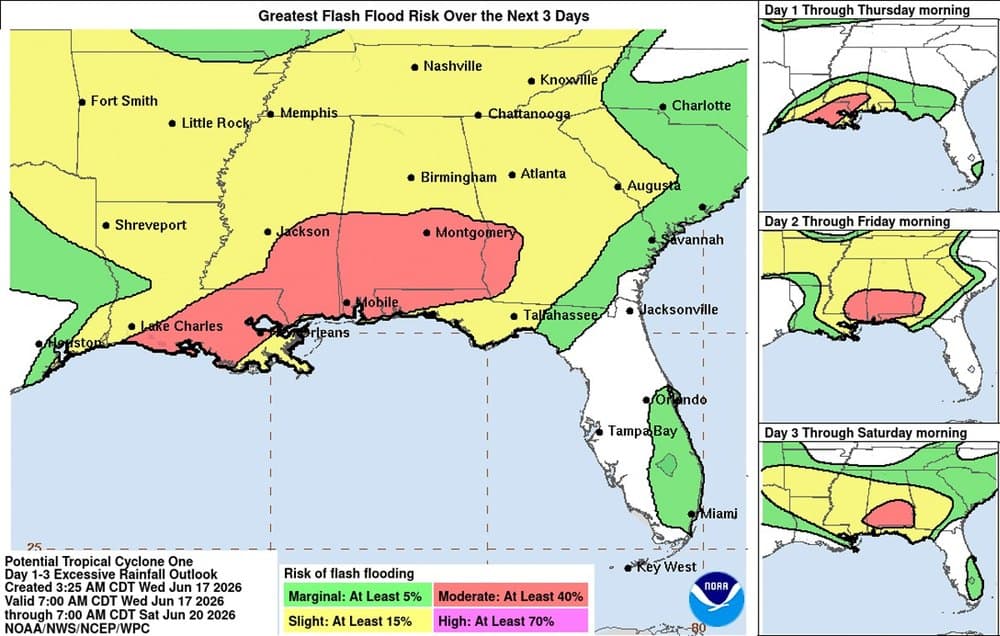
The NHC has issued tropical storm watches stretching from Sargent, TX, to Morgan City, LA, effective starting Wednesday, June 17. With dangerous, flood-inducing rainfall expected to persist through at least Friday, millions of residents across Texas and Louisiana are bracing for one of the most significant early-season flooding events in recent memory.
Where Is Tropical Storm Arthur Right Now?
Tropical Storm Arthur developed from a low-pressure system that had been gathering strength near the coastal regions of the northwestern Gulf of Mexico. Meteorologists recorded wind gusts reaching up to 45 mph lashing through parts of Texas, signaling a storm that, while not yet at hurricane strength, is more than capable of causing widespread and life-threatening damage through rainfall alone.
According to The Weather Channel, the storm is expected to move slowly through the region over the coming days, which dramatically increases the total rainfall accumulation potential. Slow-moving tropical systems are among the most dangerous precisely because they dump extraordinary volumes of water on the same areas over extended periods — and Arthur is showing every sign of following that pattern.
The FOX Forecast Center has warned that tropical downpours are already dropping water at a rate of 2 to 3 inches per hour in some locations. That pace of rainfall overwhelms storm drainage systems quickly, turning roads into rivers and low-lying neighborhoods into temporary retention ponds with little warning.
Houston, TX: Ground Zero for Flash Flooding
While the entire Gulf Coast is on high alert, Houston, TX, stands out as the city most likely to bear the brunt of Arthur's wrath. The National Weather Service has issued a Flash Flood Warning for the Houston metro area, and with good reason. Houston's geography — flat terrain, clay-heavy soils, and an extensive network of bayous — makes it uniquely vulnerable to rapid and severe flooding even during ordinary rainstorms. A tropical system of this magnitude raises the stakes considerably.
Houston has faced devastating floods before. Events like Hurricane Harvey in 2017 left an indelible mark on the city's collective memory, and emergency managers have long worked to improve flood preparedness and infrastructure. But infrastructure upgrades take time, and in the interim, heavy rainfall events continue to test the city's resilience. Tropical Storm Arthur is the latest and most serious test of the 2026 season.
Residents throughout the Houston metro area are being urged to avoid low-lying areas, refrain from driving through flooded roadways, and monitor local emergency alerts closely. The phrase "turn around, don't drown" is not merely a slogan — flooded roads account for a significant share of storm-related fatalities every year.
What Homeowners Should Do Right Now to Prepare
With flash flood warnings already in effect and rainfall intensifying, time is short for homeowners across the affected region. Here are critical steps to take immediately:
- Move valuables to higher ground. If you live in a flood-prone area or a low-lying neighborhood, move important documents, electronics, and irreplaceable items to upper floors or elevated shelves as quickly as possible.
- Check your flood insurance coverage. Standard homeowner's insurance policies typically do not cover flood damage. If you do not have a separate flood insurance policy through the National Flood Insurance Program (NFIP) or a private insurer, now is the time to understand what you are and are not covered for — and to document your property thoroughly with photos and video in case a claim becomes necessary.
- Inspect and clear drains and gutters. Blocked gutters and drainage pathways can accelerate water intrusion into your home. Clear any debris to allow water to flow away from your foundation.
- Prepare an emergency kit. Stock bottled water, non-perishable food, medications, flashlights, batteries, and a battery-powered or hand-crank radio. Be ready to evacuate quickly if local authorities issue an order.
- Know your evacuation route. Identify multiple routes out of your neighborhood in case primary roads become flooded or impassable.
- Stay informed. Monitor updates from the National Hurricane Center, the National Weather Service, and local emergency management agencies. Alerts can change rapidly as the storm evolves.
The Broader Impact Across the Deep South
While Houston is the focal point of concern, the danger extends well beyond city limits. The tropical storm watch zone running from Sargent, TX, to Morgan City, LA, encompasses coastal communities, fishing towns, and rural areas that may have fewer resources to respond to a major flooding event. Low-lying coastal parishes in Louisiana are particularly susceptible to storm surge in addition to rainfall-driven flooding.
Agricultural areas throughout the region also face significant risk. Fields already saturated from prior rainfall have little capacity to absorb additional water, and runoff from farms can compound urban flooding downstream. Livestock owners and farmers are being advised to move animals to higher ground and secure equipment where possible.
Looking Ahead: What to Expect Through the Rest of the Week
Forecasters expect the heaviest rainfall and most dangerous flooding conditions to persist through Friday across much of the Deep South. As Arthur continues to interact with the Gulf Coast, the storm's exact track and intensity will be closely monitored. Even a small shift in the storm's path can dramatically alter which communities receive the most severe conditions.
Homeowners, renters, and business owners throughout the Gulf Coast are encouraged to treat this storm with the seriousness it deserves. Tropical Storm Arthur may be the first named storm of the 2026 Atlantic hurricane season, but its potential to cause catastrophic flooding makes it a storm that demands full attention and thorough preparation. Stay safe, stay informed, and act now — before the next band of heavy rain arrives.