
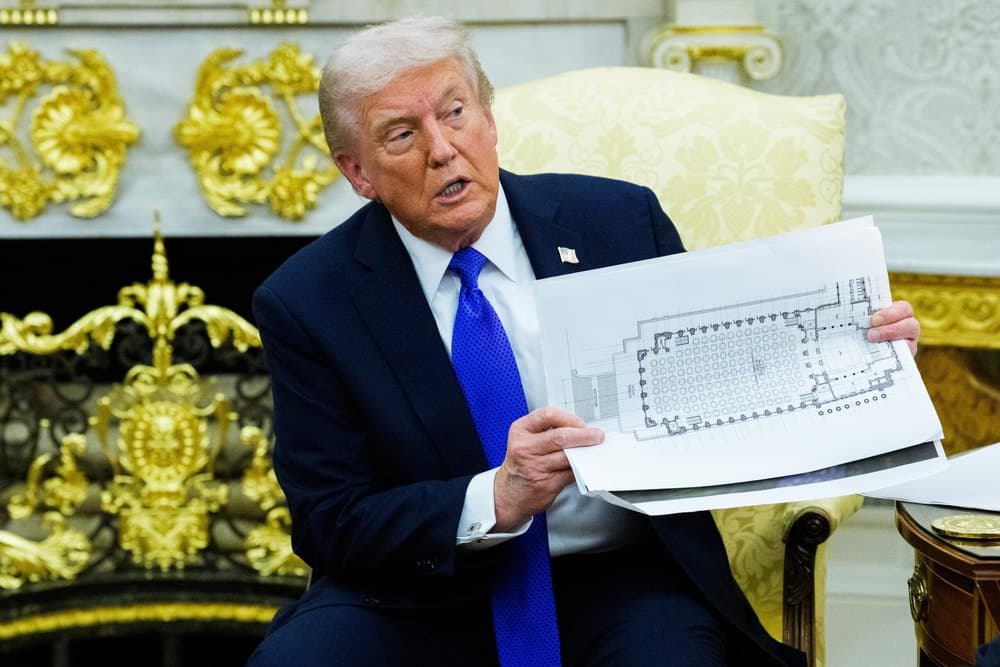
Trump's White House Ballroom Price Tag Soars to $600 Million, Leaked Documents Reveal
What began as a headline-grabbing announcement about a grand new White House ballroom has quietly evolved into one of the most controversial construction projects in recent American political history. Newly leaked cost projections suggest that President Donald Trump's proposed ballroom — set to replace the demolished East Wing of the White House — carries a staggering $600 million price tag. More troubling for many Americans: taxpayers could be responsible for covering more than half of that bill, directly contradicting Trump's repeated public assurances that the project would be entirely privately funded.
How the Cost Estimate Ballooned From $200 Million to $600 Million
The financial trajectory of the White House ballroom project has been steep, to say the least. President Trump initially floated a figure of around $200 million when the project was first announced, positioning it as a relatively contained, privately backed initiative to modernize and expand the White House's entertaining capacity. Within months, that estimate had already doubled to $400 million — a significant jump that drew scrutiny from fiscal watchdog groups and congressional critics alike.
Now, according to leaked internal documents, the real number may be far higher still. A formal cost estimate prepared by Clark Construction — the Virginia-based contracting firm hired to manage the project — reportedly placed the total cost at $600 million. That figure was communicated to the Trump Administration weeks before the president stood before reporters in the Oval Office and declared the project "taxpayer-free." The gap between what the administration apparently knew and what it publicly stated is at the center of the growing controversy.
Clark Construction and the East Wing Demolition
Clark Construction, a well-established government contractor headquartered in Bethesda, Virginia, was selected to spearhead the ballroom construction. The project requires building the new venue in the footprint left behind by the demolished East Wing of the White House — a historically significant structure whose removal itself generated considerable debate among preservation advocates and historians.
The East Wing, which was completed in 1942 and had served as home to the offices of the First Lady and various administrative staff, was torn down to make way for the new entertainment venue. Critics questioned whether demolishing a piece of American architectural and political history was justified, while supporters framed it as a necessary modernization of a facility that needed to better serve state functions and high-level diplomatic entertaining.
Clark Construction's $600 million estimate reflects not just the raw materials and labor involved in a major federal building project, but also the extraordinary complexity of constructing on the White House grounds — a site that demands the highest security protocols, specialized historical compliance measures, and logistical constraints that would drive costs well beyond those of a comparable commercial construction project.
Trump's "Taxpayer-Free" Claim Under the Microscope
Perhaps the most politically combustible element of the leaked projections is what they imply about statements made directly by President Trump. On March 31, during an Oval Office briefing with reporters, Trump was unequivocal: "This is taxpayer-free. We have no taxpayer putting up 10 cents."
The leaked Clark Construction estimate, however, reportedly indicates that taxpayers could be on the hook for more than $300 million of the total cost — a figure that represents a significant portion of the overall budget. If accurate, this means that American taxpayers may be funding a luxury ballroom at the White House to the tune of hundreds of millions of dollars, despite categorical assurances to the contrary from the president himself.
The discrepancy raises serious questions about transparency and accountability in the management of federal funds, and is likely to intensify calls from lawmakers for a full audit and independent review of the project's financing structure.
Why the White House Ballroom Project Matters Beyond Politics
Setting aside the political dimensions, the White House ballroom project touches on several broader issues that are deeply relevant to American taxpayers and citizens:
- Federal spending accountability: When major federal construction projects are announced with private funding promises, the public has a reasonable expectation that those promises are grounded in verified financial commitments. The apparent gap between the administration's public statements and internal cost projections highlights the need for independent oversight of such projects.
- Historic preservation: The decision to demolish the East Wing in favor of a new entertainment venue raises lasting questions about how future administrations will weigh modernization against the preservation of historically significant federal buildings.
- Government contracting transparency: The fact that a formal contractor estimate existed weeks before the president's public "taxpayer-free" declaration underscores the importance of timely and accurate public disclosure of cost projections on federally funded or federally associated projects.
- Budget prioritization: With ongoing debates about federal spending, social programs, and infrastructure funding, a $600 million ballroom project — especially one with possible taxpayer exposure — is poised to become a lightning rod in broader fiscal policy discussions.
What Happens Next?
The leak of the Clark Construction cost estimate is almost certainly not the end of this story. Congressional Democrats have already signaled interest in investigating the financing and authorization of the project, and several government accountability organizations have called for complete transparency regarding how the $600 million figure breaks down between private donations and public funds.
The General Services Administration (GSA), which typically oversees federal construction projects, may find itself under increased scrutiny as well, particularly regarding the timeline of internal communications and when various officials were briefed on the escalating cost projections.
For now, the White House has not publicly addressed the leaked estimate or provided a revised breakdown of funding sources. The administration's silence, in the context of a $300 million potential taxpayer liability, is itself a story that is unlikely to fade quickly from public attention.
The Bottom Line
The White House ballroom project, once framed as a privately funded prestige initiative to enhance America's premier official residence, is now at the center of a significant credibility controversy. With leaked documents suggesting a $600 million price tag and taxpayers potentially covering more than half of it, the gap between presidential assurances and on-the-ground financial reality has become impossible to ignore. As more details emerge from the Clark Construction estimates and internal administration communications, the public and their elected representatives will be demanding clear, verifiable answers about exactly who is paying for this project — and how much.