
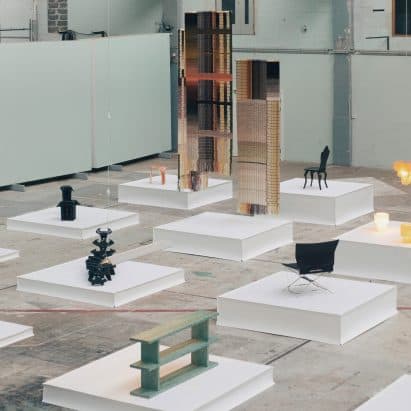
Ukurant Exhibition Brings Bold Material Experiments to 3 Days of Design 2026
One of the most talked-about showcases at this year's 3 Days of Design festival is the Ukurant exhibition, a craft-focused presentation that pushes the boundaries of what furniture and homeware can look, feel, and even behave like. Featuring standout pieces including squishy rubber tables and vases made from drywall — a construction material most people associate with office partitions and home renovations — the exhibition is generating significant buzz among design enthusiasts, collectors, and industry professionals alike.
3 Days of Design, Copenhagen's celebrated annual design festival, has long served as a launchpad for experimental and boundary-pushing creative work. In 2026, the Ukurant exhibition is cementing its place as one of the must-visit destinations of the event, offering visitors an immersive encounter with objects that challenge conventional notions of material value, craftsmanship, and domestic aesthetics.
What Is the Ukurant Exhibition?
Ukurant is a design platform and exhibition concept dedicated to spotlighting emerging and established designers who are willing to take genuine creative risks. Rather than defaulting to safe, commercially proven aesthetics, the exhibition consistently champions work that interrogates the relationship between materials, making processes, and the objects we invite into our everyday lives.
The 2026 edition is no different. Curated with a sharp focus on craft and materiality, the show brings together a compelling collection of pieces that are equal parts functional and thought-provoking. Visitors moving through the space quickly discover that almost nothing here is quite what it first appears to be — and that is very much the point.
Squishy Rubber Tables: Rethinking Rigidity in Furniture Design
Perhaps the most immediately striking pieces in the exhibition are the squishy rubber tables. At first glance, they read as conventional furniture — clean silhouettes, considered proportions, the kind of understated confidence that signals good design. But the moment you make physical contact, everything changes.
The tables are made with a pliable rubber compound that gives slightly under pressure, creating a tactile experience entirely at odds with what we expect from a stable, load-bearing surface. This sensory dissonance is not a novelty trick; it is a carefully constructed design statement about our assumptions regarding furniture's role in our lives.
Furniture, and tables in particular, are among the most taken-for-granted objects in the home. We expect them to be hard, fixed, and passive. By introducing softness and give into a table's physical character, the designer invites users to reconsider that relationship — to become aware of the object in a way that rigid, predictable furniture never demands. The result is a piece that straddles the line between sculpture and functional design in genuinely interesting ways.
From a material standpoint, the use of rubber also opens up conversations about sustainability and industrial byproducts. Rubber is a material with complex origins and a rich history in industrial manufacturing, and seeing it repurposed into domestic objects of this quality feels timely and relevant.
Drywall Vases: Elevating the Overlooked
If the rubber tables provoke through unexpected softness, the drywall vases provoke through unexpected elevation. Drywall — also known as plasterboard or gypsum board — is one of the most ubiquitous and deliberately invisible materials in contemporary construction. It lines the interiors of homes, offices, and commercial spaces across the world, yet almost no one ever stops to look at it. It exists to disappear.
The vases in the Ukurant exhibition take this most anonymous of materials and reimagine it as a vessel for beauty. Each piece is shaped and finished with evident care, the raw, chalky texture of the gypsum left exposed in places to assert the material's true identity while refined edges and considered proportions assert the designer's hand.
The result is a series of objects that are oddly compelling — humble and grand at the same time, industrial and domestic, rough and precise. Placing flowers or branches in a drywall vase creates a dialogue between the organic and the constructed, the found and the made, that feels very much in keeping with the broader currents running through contemporary craft and design.
There is also something quietly democratic about this choice of material. Drywall costs almost nothing. It is everywhere. By transforming it into a desirable object, the designer implicitly argues that the potential for beauty is not locked inside expensive or rare materials — it is available in everything, waiting to be unlocked by skill, vision, and intention.
Why the Ukurant Exhibition Matters in 2026
Exhibitions like Ukurant are important precisely because design fairs can sometimes skew toward the polished and the predictable. When an exhibition takes genuine risks with materials and form, it raises the quality of conversation across an entire event.
The craft-focused approach that defines Ukurant's curatorial identity also speaks to a broader shift happening in contemporary design culture. After years of mass production dominance and algorithm-driven aesthetics, there is a growing appetite — among both designers and consumers — for objects that carry evidence of human thinking and human hands.
Pieces like the rubber tables and drywall vases offer something that no generative design tool or factory output can replicate: the sense that a real person grappled with a problem, made decisions, took risks, and arrived somewhere genuinely new.
Visiting the Ukurant Exhibition at 3 Days of Design 2026
If you are attending 3 Days of Design in Copenhagen this year, the Ukurant exhibition should be firmly on your itinerary. Whether you are a design professional, a collector, or simply someone who appreciates objects that make you think and feel differently about the world, this is a showcase that rewards close attention.
- The exhibition is part of the broader 3 Days of Design festival program running across Copenhagen.
- Highlights include the squishy rubber tables and hand-finished drywall vases that have quickly become the most photographed and discussed pieces of the show.
- The craft-focused curatorial approach makes it a standout destination within an already rich festival lineup.
- The exhibition reflects wider conversations in contemporary design about materiality, sustainability, and the value of handmade processes.
In a design landscape that sometimes prizes novelty over substance, Ukurant manages to deliver both — objects that are genuinely surprising on first encounter and genuinely rewarding the longer you spend with them. That is a rare combination, and it is exactly why this exhibition is one of the defining moments of 3 Days of Design 2026.