
The Home Feature Nearly Every Buyer Wants — But Agents Are Hesitant to Mention
When Americans picture their ideal neighborhood, many imagine stepping out the front door and walking to a coffee shop, a park, or a grocery store. Walkability has become one of the most coveted qualities in residential real estate — rivaling updated kitchens and open floor plans. Yet increasingly, real estate agents across the country are pausing before they use the word "walkable" in a listing description or client conversation. The reason may surprise you.
What Is Walkability and Why Do Buyers Love It?
Walkability refers to how easily residents can access everyday destinations — shops, restaurants, schools, parks, and public transit — on foot from their home. It's a concept that has grown in popularity as more buyers prioritize lifestyle convenience, health benefits, and environmental consciousness when making purchasing decisions.
According to a 2023 survey by the National Association of Realtors® (NAR), approximately 8 in 10 Americans say walkability is either "very" or "somewhat" important when choosing a neighborhood. Nearly the same number report they would be willing to pay a premium for a home in a walkable area. That's an enormous share of the buying market placing high value on a single neighborhood characteristic.
For sellers and agents, walkability has traditionally been a powerful marketing asset. Homes in walkable neighborhoods often command higher prices, spend less time on the market, and attract a broader pool of motivated buyers. Walk Score ratings, proximity to transit hubs, and nearby amenities have become standard talking points in listing descriptions and agent pitches.
So Why Are Some Agents Afraid to Use the Word?
Here is where things get complicated. Some real estate professionals and fair housing advocates have raised concerns that the term "walkability" — despite its widespread use and positive connotations — may inadvertently run afoul of fair housing laws.
The argument goes like this: not everyone can walk. Millions of Americans live with disabilities that affect their mobility, including those who use wheelchairs, walkers, or other mobility aids. When an agent enthusiastically promotes a neighborhood as "walkable," the implicit message may be that the area is best suited for those who are physically able to walk. Critics suggest this framing could discourage people with mobility impairments from considering a property, or signal — even unintentionally — that they are not the intended buyer.
This concern surfaced publicly during a recent meeting of the Smart Growth Advisory Board at NAR's annual Legislative Meetings. During discussions about survey data highlighting the importance of walkability, at least one agent spoke up to draw attention to the potential conflict between promoting walkable communities and upholding fair housing principles.
"I must speak out right now about the nexus between fair housing and our smart growth principles," the agent said, urging the committee to revisit its language and examine the "implicit bias" embedded in how the industry talks about walkability. The tension is notable given that "creating walkable neighborhoods" is listed as one of the Smart Growth Advisory Board's own core principles.
What Does the Law Actually Say?
Jan Bozeman, an attorney at Williams Teusink, is among the legal voices working to clarify where the line actually falls. Fair housing law in the United States — primarily governed by the Fair Housing Act of 1968 and its amendments — prohibits discrimination in housing based on race, color, national origin, religion, sex, familial status, and disability. The law forbids agents from steering buyers toward or away from neighborhoods based on these protected characteristics.
The concern is that enthusiastically marketing a home as ideal for walkers could, in practice, function as a subtle form of steering — implicitly suggesting the home is better suited for able-bodied buyers. However, most legal experts agree that simply describing a neighborhood's walkable features does not, by itself, constitute a fair housing violation. The key issue is intent and pattern. Using "walkable" as a factual descriptor of proximity to amenities is generally considered acceptable; using it in a way that deliberately targets or excludes buyers based on disability status is not.
The safer approach, many agents and legal professionals suggest, is to describe the specific amenities and their proximity in concrete terms rather than relying on blanket descriptors. Rather than calling a neighborhood "highly walkable," an agent might note that the home is two blocks from a grocery store, a short stroll to a community park, and within half a mile of public transit.
How Agents Can Navigate This Carefully
For real estate professionals looking to market neighborhood convenience without inadvertently crossing any legal or ethical lines, a few practical strategies can help:
- Use specific, factual language. Instead of labeling a neighborhood "walkable," describe the actual distances and destinations: "0.3 miles from Main Street shops," or "steps from the local farmers market."
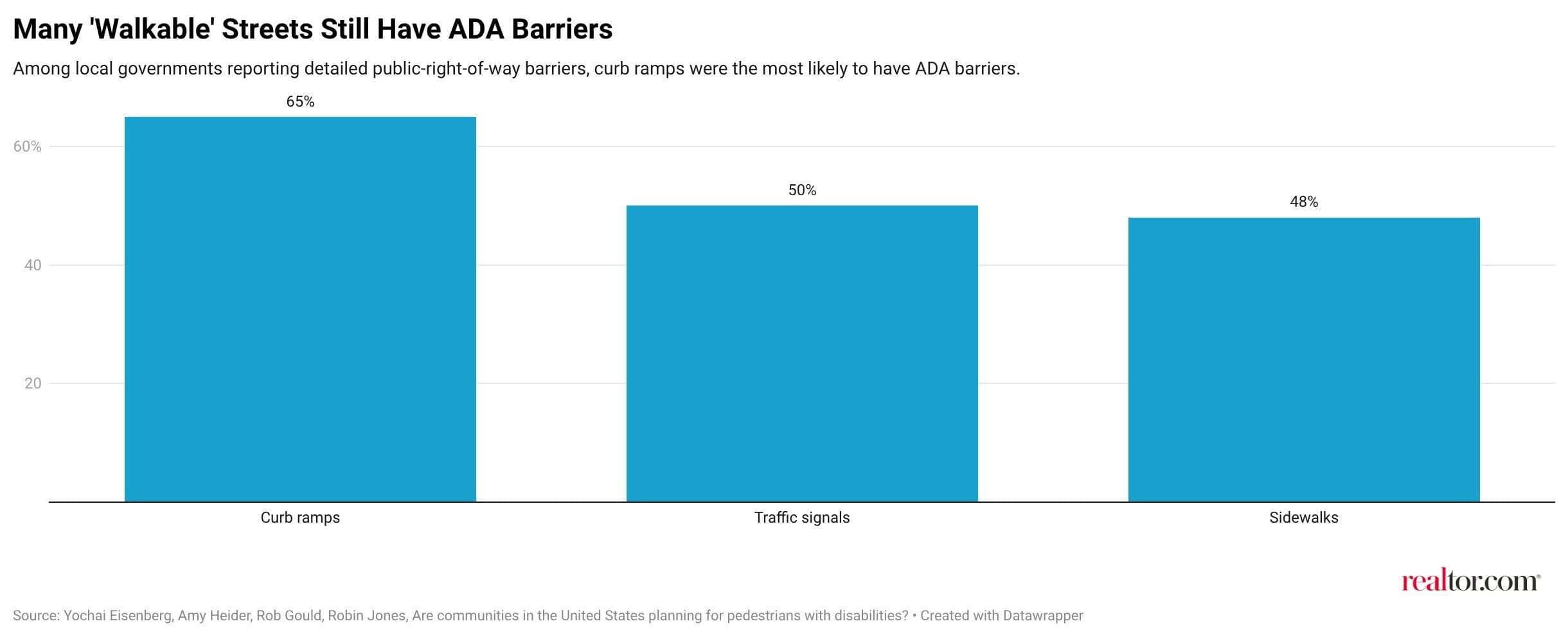
- Highlight accessibility features alongside walkability. Mention curb cuts, accessible pathways, elevator access, or ADA-compliant routes where they exist. This signals inclusivity rather than exclusion.
- Avoid language that implies a buyer must be able to walk. Framing conveniences as broadly appealing — easy access to amenities for everyone in the household — is both more inclusive and more legally defensible.
- Stay educated on fair housing guidelines. NAR and state associations regularly update guidance on advertising language. Agents should review these resources and consult legal counsel when uncertain.
The Bigger Picture: Inclusive Communities for All Buyers
This debate ultimately points to a broader and more important conversation about what makes a neighborhood genuinely desirable — and for whom. Walkable communities have real, documented benefits: lower rates of obesity, reduced car dependency, stronger social ties, and higher property values. But the full promise of smart growth is only realized when those communities are accessible and welcoming to everyone, regardless of physical ability.
The goal for agents, developers, and urban planners alike should not be to abandon the concept of walkability, but to expand it. A truly great neighborhood is one where residents of all abilities can access shops, parks, and services with ease — whether on foot, by wheelchair, by bicycle, or by transit.
For homebuyers, the takeaway is straightforward: ask your agent specifically about proximity to the amenities that matter most to you, and ask about accessibility features if they are relevant to your household. The best neighborhoods are the ones that work for everyone — and the best agents are the ones who know how to describe them that way.