
Zac Efron Is Leaving Hollywood Behind for an Off-Grid Hemp House in Australia
When most people picture a celebrity home, they imagine sprawling marble floors, infinity pools, and gated megamansions tucked into the hills of Los Angeles. Zac Efron, however, has a very different vision for his next chapter. The 38-year-old actor — best known for his breakout role in High School Musical — has traded Hollywood glamour for something far more grounded: a handcrafted, off-grid retreat made almost entirely from hemp, set on a vast stretch of Australian bushland. He's calling it the "Futurecave," and it may just be one of the most ambitious eco-construction projects a celebrity has ever undertaken.
How It All Started: A 128-Hectare Plot in New South Wales
The story of the Futurecave begins in 2020, when Efron quietly purchased an enormous 128-hectare parcel of bushland in New South Wales, Australia. That's roughly 316 acres of raw, remote land — a world away from the manicured lawns of Los Feliz, where he once owned a stylish mid-century home. The property sits approximately one hour outside of Byron Bay, a coastal town long associated with a laid-back, nature-conscious lifestyle that seems to align perfectly with Efron's evolving personal philosophy.
Efron, who was born and raised in Arroyo Grande, California, has spoken publicly over the years about his desire to reconnect with nature and live more intentionally. This project appears to be the most concrete expression of that desire yet — not just a vacation home, but a full-scale experiment in sustainable living and forward-thinking architecture.
Meet the Team Behind the Futurecave
Building a hemp house from scratch on a remote bushland property is no small feat, and Efron has assembled a notable team to make it happen. He partnered with Joost Bakker, a Melbourne-born designer widely described as an "environmental innovator," who has made a career out of pioneering waste-free, regenerative design. Joining Bakker is architect Frank Burride, who is helping to bring the structural and aesthetic vision of the Futurecave to life.
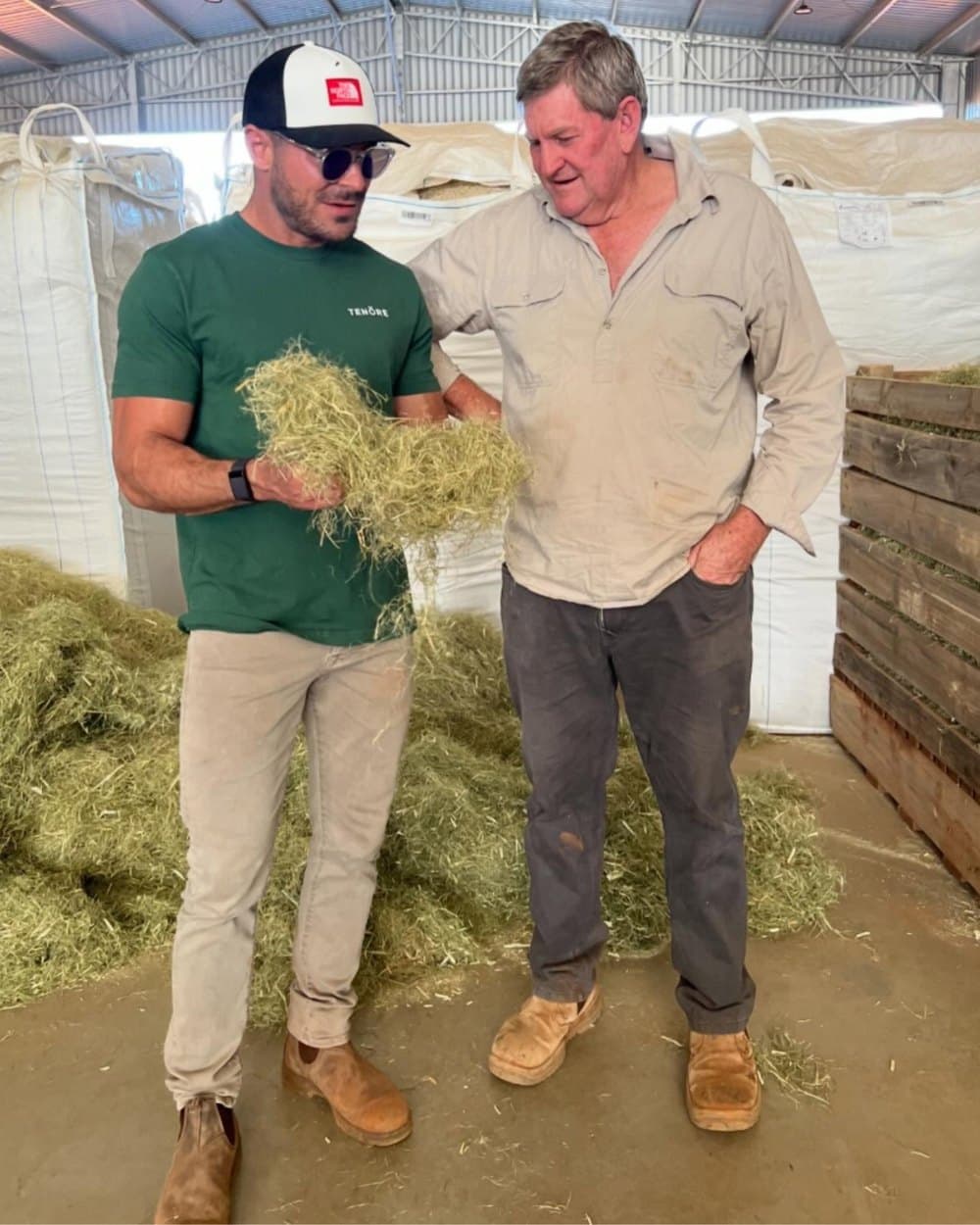
Bakker has been particularly vocal about the project on social media, sharing behind-the-scenes glimpses of the materials and methods being used. His involvement signals that this is far more than a vanity project — it is a serious attempt to push the boundaries of what sustainable residential construction can look like in the 21st century.
What Makes the Futurecave So Unique?
The Futurecave is a six-bedroom, two-story dwelling, but what truly sets it apart is the near-total commitment to sustainable and natural building materials. According to Bakker, virtually every element of the structure has been carefully chosen with environmental impact in mind. Here is a closer look at what goes into building a home like this:
- Hemp blocks: The primary building material, hemp blocks are made from the woody core of the hemp plant mixed with a lime binder. They are lightweight, breathable, and have excellent thermal and acoustic properties.
- Recycled oyster shells: Used as part of the material palette, oyster shells are a natural byproduct that would otherwise go to waste, repurposed here as a building component.
- Agricultural waste: Rather than sourcing virgin raw materials, the project incorporates agricultural byproducts, reducing the overall waste footprint of the build.
- Sustainable particle boards: Hundreds of eco-friendly particle boards are being used as internal bricks, providing structure while keeping the carbon footprint of the build as low as possible.
The result is a home designed to be genuinely anti-mold and naturally fire-resistant — two qualities that are particularly important in the Australian climate, where heat, humidity, and bushfire risk are ever-present concerns. The design also prioritizes clean air circulation throughout the entire property, ensuring that the indoor environment is as healthy as the surrounding landscape.
The Cost: $2.7 Million for a Greener Future
According to reporting from the Daily Mail, the total construction cost for the Futurecave is expected to come in at around $2.65 million — a figure that reflects both the complexity of the build and the premium that comes with sourcing genuinely sustainable materials at scale. While that number may sound steep, it is worth noting that for a six-bedroom, architecturally designed property set on over 300 acres of land in regional New South Wales, it represents a relatively modest investment by celebrity real estate standards.
More importantly, the long-term value proposition of a home built from natural, breathable materials with off-grid capabilities could far outweigh the upfront costs — both financially and environmentally.
Off-Grid Living: What That Actually Means
The term "off-grid" gets thrown around loosely in lifestyle media, but in the context of the Futurecave, it carries real weight. An off-grid home is one that operates independently of public utility networks — meaning no connection to the municipal electricity grid, no reliance on town water supplies, and no tie-in to sewage infrastructure. Instead, off-grid homes typically rely on solar panels, rainwater collection systems, composting toilets, and other regenerative technologies to meet their energy and resource needs.
For a property of this scale in a rural Australian setting, achieving true off-grid functionality is both a practical necessity and a philosophical statement. It means that Efron's Futurecave will leave the lightest possible footprint on the land around it — something that feels entirely in keeping with the ethos behind the project.
Why This Matters Beyond Celebrity Real Estate
It would be easy to file this story under "celebrity does something eccentric" and move on. But the Futurecave deserves to be taken more seriously than that. Hemp-based construction, often referred to as hempcrete when combined with lime, is a genuinely promising building technology that has been gaining traction among architects and sustainability advocates for years. It sequesters carbon during growth, regulates humidity naturally, and produces structures with impressive longevity.
When a figure with Zac Efron's public profile invests millions of dollars and years of planning into a hemp home, it sends a signal to the broader market — developers, architects, and homebuyers alike — that sustainable construction is not a fringe idea. It is a viable, desirable, and increasingly mainstream approach to how we build the places we live.
A New Chapter, Built From the Ground Up
From his early days as a teen idol in Arroyo Grande to his years as a Hollywood leading man, Zac Efron has always been in the process of reinventing himself. The Futurecave feels like his most personal reinvention yet — a deliberate, values-driven choice to build something lasting, responsible, and deeply connected to the natural world. Whether it becomes a blueprint for a new wave of celebrity eco-homes or simply a quiet retreat for one actor who wanted something different, the Futurecave is a project worth watching closely.