
A Bipartisan Housing Bill With Nowhere to Go
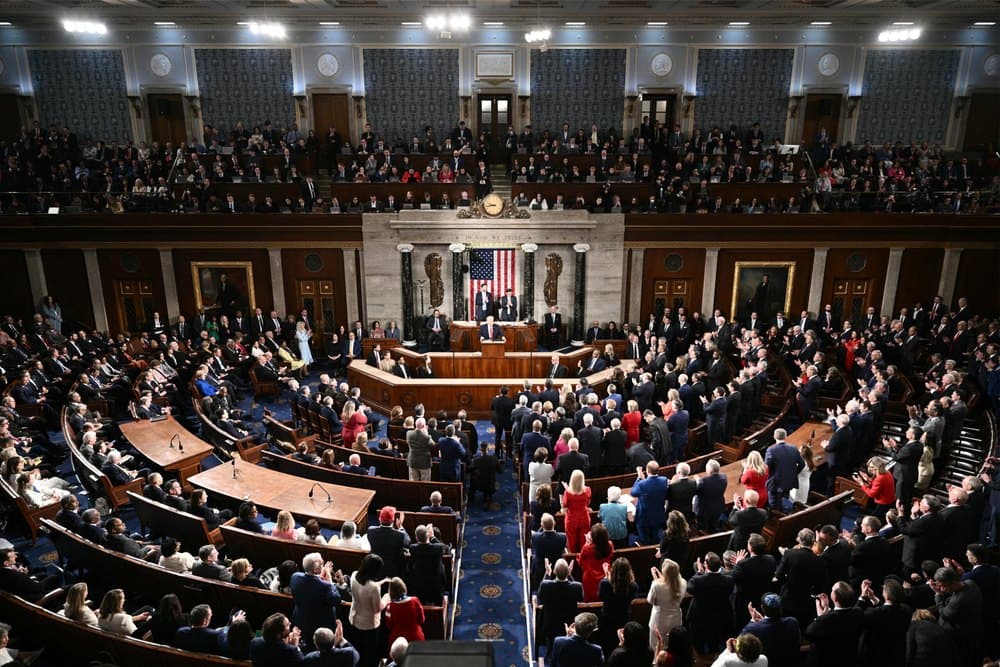
In today's deeply polarized political landscape, true bipartisan cooperation feels almost like a relic of a forgotten era. That's what makes the story of the 21st Century Road to Housing Act so remarkable — and so frustrating. The bill passed the House of Representatives with a staggering 396 votes in favor, one of the most lopsided bipartisan margins seen on major legislation in years. And yet, despite that overwhelming show of unity, the bill is stuck. It hasn't become law. It hasn't even cleared Congress. It sits gridlocked in a stalemate between the House and Senate, held hostage by relatively minor technical disagreements that most Americans would never notice or care about.
For millions of Americans struggling with soaring home prices, shrinking inventory, and a housing market that feels permanently out of reach, this kind of legislative paralysis is more than just a political curiosity — it has real consequences. Understanding why such a popular, broadly supported bill can still get stuck is an important window into how Congress works, and more importantly, how it sometimes doesn't.
What Is the 21st Century Road to Housing Act?
The 21st Century Road to Housing Act is being described as the largest housing legislation package in decades. It is designed to tackle the United States housing crisis head-on by attacking the problem from multiple angles simultaneously. At its core, the bill aims to cut through the layers of regulatory red tape that have long slowed housing development and driven up construction costs across the country.
Among its key provisions, the legislation would expand access to and use of more affordable housing construction methods, including modular homes and manufactured housing. These types of homes can be built faster and at significantly lower cost than traditional site-built construction, and proponents argue that scaling their use could meaningfully increase the nation's housing supply within a relatively short period of time. The bill also addresses issues related to institutional homebuyers — large investors whose bulk purchasing of single-family homes has drawn intense scrutiny from both sides of the political aisle in recent years.
The breadth and ambition of the legislation is one reason it drew such extraordinary bipartisan support in the House. Housing affordability is one of the few issues where Republican and Democratic voters agree: something needs to be done, and it needs to happen soon.
So Why Is It Still Stuck?
If the bill is so popular, why hasn't it become law? The answer lies in the structural tensions between the House and the Senate — and in a series of relatively minor but stubbornly contested technical differences between the two chambers' versions of the bill.
Joe Harris, the National Association of Realtors' (NAR) vice president of Government Advocacy, put it plainly at a conference held this week in Washington, DC. The situation is, in his words, "perplexing" and "unlike anything in 25 years in DC" that he has personally witnessed.
"It's not even a party issue; it's a Senate-versus-House issue, pure and simple," Harris said. "And very rarely, particularly when one party controls both the House and the Senate, do you have the lead Republican in the House and lead Republican in the Senate not able to get on the same page."
That last point is especially striking. With Republicans holding majorities in both chambers of Congress, the usual partisan excuses for gridlock simply don't apply here. The stalemate is instead an institutional one — a clash between two bodies of government that each have their own procedures, priorities, and egos. The specific sticking points reportedly involve technical provisions related to banking regulations and rules around large institutional homebuyers, details that may seem arcane but carry significant weight for different stakeholder groups in each chamber.
NAR Turns Up the Pressure on Capitol Hill
Harris made his remarks during the National Association of Realtors' annual Legislative Meetings, a major event that draws NAR members from across the country to Washington, DC, specifically to lobby lawmakers on the real estate industry's top priorities. This year, moving the housing bill forward is unquestionably at the top of that list.
NAR Chief Advocacy Officer Shannon McGahn reinforced this message directly to conference attendees, signaling that the organization is applying full-court pressure on Congress to break the logjam and get the legislation across the finish line. With a membership base that spans every congressional district in the country, NAR is one of the most powerful lobbying forces in Washington — and when it decides to push hard on something, lawmakers tend to feel it.
The organization's members understand better than almost anyone what the real-world cost of legislative inaction looks like. Realtors work every day with buyers who are priced out of the market, with sellers who can't find their next home, and with communities where new construction has slowed to a crawl because the economics simply don't work under current regulatory conditions.
What's at Stake for the Housing Market
The stakes of this legislative deadlock are difficult to overstate. The United States is widely estimated to be short millions of housing units relative to demand, a gap that has built up over more than a decade of under-building following the 2008 financial crisis. That shortage has pushed home prices and rents to historic highs in markets across the country, making homeownership increasingly out of reach for first-time buyers and working families.
- Inventory shortages continue to limit buyer options in nearly every major metro area, keeping prices elevated even as mortgage rates remain relatively high.
- Regulatory barriers at the local and federal level add time and cost to new construction projects, discouraging developers from building the entry-level homes that are most needed.
- Manufactured and modular housing remain underutilized despite their potential to deliver quality homes at lower price points, partly due to outdated regulations and financing limitations that the bill aims to fix.
- Institutional investor activity in the single-family home market has reduced the supply of homes available to individual buyers in certain markets, a problem the bill's provisions seek to address.
Each of these issues has a direct impact on everyday Americans trying to build financial stability through homeownership. And each of them is addressed, at least in part, by the 21st Century Road to Housing Act — which is precisely why its continued stagnation is so difficult for housing advocates to accept.
Signs of a Possible Breakthrough
Despite the frustration, there are cautious reasons for optimism. According to reporting from this week's NAR meetings, there are emerging signals that the impasse may be nearing its end. Movement behind the scenes suggests that negotiations between House and Senate leaders may be progressing, and that the pressure being applied by groups like NAR — combined with growing public awareness of the housing crisis — may finally be creating the conditions for a deal.
Whether that optimism proves warranted remains to be seen. Congress has a long history of letting popular legislation die in the gap between ambition and action. But the sheer scale of bipartisan support for this bill, the severity of the housing crisis it is meant to address, and the intensity of advocacy from the real estate community all suggest that the political cost of continued inaction is rising.
The Bottom Line
The 21st Century Road to Housing Act represents a rare moment of genuine legislative consensus in an era when such things are increasingly hard to find. Nearly 400 members of the House voted for it. Voters on both sides of the aisle want relief from a housing market that has become brutally unaffordable. The industry is lobbying hard for its passage. And yet it sits, stalled, over differences that most Americans would struggle to care about if they understood them at all.
The housing crisis is not waiting for Congress to resolve its internal turf battles. Every month of delay is another month of rising rents, frustrated homebuyers, and communities without enough homes to meet the needs of their residents. The question now is whether the people elected to solve exactly this kind of problem will finally find a way to do so — or whether one of the most popular housing bills in recent memory will quietly expire without ever becoming law.