
The 21st Century Road to Housing Act Is Heading to President Trump's Desk
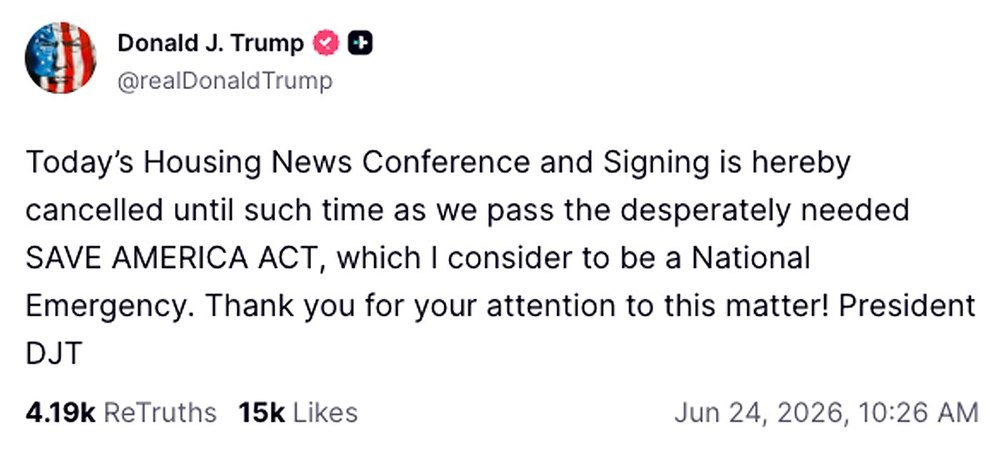
After a surprising last-minute cancellation, the landmark 21st Century Road to Housing Act is officially being sent to President Donald Trump for his signature. House Speaker Mike Johnson (R-LA) confirmed through a spokesperson that he will formally submit the bill to the president, setting in motion a critical 10-day window that could reshape the American housing landscape for years to come.
Whether Trump signs it, vetoes it, or simply takes no action while Congress remains in session, the outcome of this bill will have far-reaching consequences for homebuyers, renters, builders, and investors across the country. Given the historic bipartisan support it received in both chambers, all eyes are now squarely on the White House.
What Is the 21st Century Road to Housing Act?
Described by many analysts and lawmakers as one of the most comprehensive housing bills passed in decades, the 21st Century Road to Housing Act is a sweeping piece of legislation designed to address the United States' persistent and worsening housing shortage. The bill contains 45 individual provisions, each targeting a different barrier that has historically slowed housing production, driven up costs, or made homeownership inaccessible for millions of Americans.
At its core, the bill is built around two primary goals: cutting bureaucratic red tape that delays or prevents new housing construction, and actively encouraging developers, municipalities, and lenders to build and finance more homes. These goals may sound straightforward, but achieving them requires reforming systems that have been entrenched for decades — from local zoning rules to federal banking regulations.
How Did the Bill Pass With Such Overwhelming Support?
In a political climate defined by partisan gridlock, the passage of this bill stands out as a remarkable display of bipartisan cooperation. The Senate passed the bill by a vote of 85 to 5, a margin that reflects near-universal agreement that the housing crisis demands urgent federal action. The following day, the House passed it 358 to 32, further cementing its broad appeal across party lines.
This level of support is almost unheard of for major economic legislation in the modern Congress. It signals that lawmakers on both sides of the aisle recognize that the housing shortage is not a political issue — it is a national crisis affecting working families, young professionals, seniors, and communities of every size and demographic.
Key Provisions: What the Bill Actually Does
While the full bill encompasses 45 provisions, several key measures are drawing the most attention from housing industry experts, economists, and consumer advocates.
Constraints on Institutional Investors
One of the most talked-about elements of the bill involves placing new restrictions on institutional investors in the housing market. In recent years, large investment firms and corporate buyers have purchased tens of thousands of single-family homes, reducing the available inventory for individual buyers and contributing to rising prices. The bill aims to level the playing field by limiting how aggressively these institutional players can acquire residential properties, particularly in already competitive markets.
New Banking Rules to Promote Mortgage Lending
The legislation also introduces updated banking regulations designed to make mortgage lending more accessible. By adjusting certain financial rules and requirements that have made lenders overly cautious in recent years, the bill hopes to unlock credit for more potential homebuyers — especially first-time buyers and those in lower- to middle-income brackets who have struggled to qualify for loans under existing standards.
Red Tape Reduction for Home Builders
Builders and developers have long complained that local and federal permitting processes are slow, expensive, and unnecessarily complex. The 21st Century Road to Housing Act directly targets these bottlenecks by streamlining federal permitting and approval processes, encouraging faster construction timelines, and creating incentives for municipalities to adopt more housing-friendly zoning policies. Less red tape means more homes built faster — and ultimately, more supply to meet surging demand.
Why Did Trump Cancel the Signing — and What Happens Now?
The last-minute cancellation of the bill's signing ceremony caught many observers off guard, particularly given the enormous bipartisan momentum behind it. No official reason was immediately provided for the abrupt change of plans, fueling speculation among political analysts and housing advocates about what might have given the president pause.
However, the constitutional process is now moving forward regardless. Once Speaker Johnson formally submits the bill, President Trump has 10 days to sign or veto it. If he neither signs nor vetoes the legislation while Congress remains in session, it will automatically become law — a provision of the Constitution that effectively limits the president's ability to simply ignore a bill that has already cleared both chambers with overwhelming support.
Housing advocates and industry groups are urging the president to sign the bill without further delay, emphasizing that every week without action translates into continued hardship for millions of Americans struggling to find affordable places to live.
Why This Bill Matters for the American Housing Market
The United States has been grappling with a severe housing shortage for well over a decade. Experts estimate that the country is millions of housing units short of what is needed to meet current demand, let alone accommodate projected population growth. This imbalance between supply and demand has driven home prices and rents to historic highs, making homeownership an increasingly distant dream for younger generations and straining household budgets nationwide.
The 21st Century Road to Housing Act represents the most ambitious federal attempt in a generation to confront this crisis directly. By addressing supply-side barriers, reining in speculative investment, and expanding access to mortgage credit simultaneously, the bill takes a multi-pronged approach that housing economists say is essential for meaningful, lasting change.
What Homebuyers and Renters Should Watch For
If signed into law, the effects of this legislation will not be felt overnight. Building more homes, reforming banking practices, and reshaping investor behavior all take time. However, the direction of change would be clear and significant. Prospective homebuyers may find it easier to qualify for mortgages. Renters in tight urban markets may see some relief as new housing inventory gradually increases. And communities struggling with affordability crises may find new federal tools at their disposal to encourage responsible, sustainable development.
For now, the nation waits to see whether President Trump will put his signature on a bill that Congress has already delivered to his desk with one of the most decisive votes in recent memory. The clock is ticking — and for millions of Americans waiting to find a home they can afford, so is hope.
- Bill name: 21st Century Road to Housing Act
- Senate vote: 85–5 in favor
- House vote: 358–32 in favor
- Number of provisions: 45
- Presidential deadline: 10 days to sign or veto once formally received
- If no action taken: Automatically becomes law while Congress is in session