
A Dutch Farm Reborn: Bastiaan Jongerius Architecten's Bold Longhouse Farm Renovation
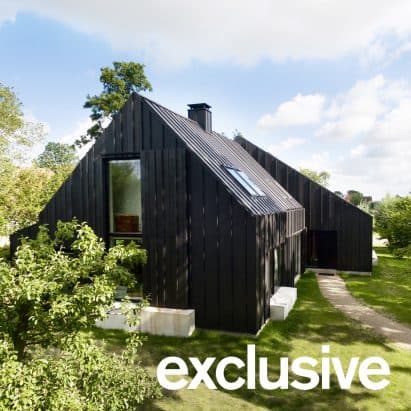
When we think of rural architecture in the Netherlands, images of red-brick farmhouses and steeply pitched roofs often come to mind. Bastiaan Jongerius Architecten, however, has taken a dramatically different approach with their renovation of Longhouse Farm — cloaking the traditional Dutch agricultural structure in dark, brooding black timber and metal to create a residence that is simultaneously rooted in its landscape and defiantly contemporary. The result is a project that has captured international attention for its boldness, restraint, and deep sensitivity to rural heritage.
The Philosophy Behind the Dark Facade
The decision to envelop Longhouse Farm in black timber cladding and metal is not merely an aesthetic choice — it is a deliberate architectural statement. Dark exteriors have a long tradition in Scandinavian and Dutch rural building culture, where charred or tar-treated timber was historically used to protect wooden structures from the harsh northern European climate. Bastiaan Jongerius Architecten draws on this vernacular tradition while pushing it into a thoroughly modern vocabulary.
By unifying the entire exterior in a consistent dark palette, the studio visually consolidates what might otherwise appear as a fragmented agricultural complex. The building reads as a single, coherent volume against the flat Dutch landscape, its silhouette clean and powerful. Far from imposing on its surroundings, the dark tones allow the structure to recede into the fields and sky, particularly during the low-light hours of a Dutch autumn or winter morning.
Black Timber and Metal: Material Choices That Matter
The material selection for Longhouse Farm reflects the studio's careful attention to both longevity and character. Black timber cladding, when properly treated, develops a patina over time that deepens its connection to the agricultural land around it. Weathered, aged, and textured, it speaks the same slow language as the surrounding fields and hedgerows.
The metal elements — applied to key structural and detailing areas — introduce an industrial counterpoint to the warmth of the timber. Together, these two materials create a layered facade that rewards close inspection. The interplay between the roughness of the wood grain and the precision of the metalwork gives the building a richness that purely mono-material structures sometimes lack.
- Black timber cladding draws on traditional Dutch and Northern European preservation techniques, evoking centuries of rural building practice.
- Metal detailing introduces structural clarity and visual precision, anchoring the more organic qualities of the wood.
- The unified dark palette reduces visual noise across the building's multiple volumes and rooflines.
- Both materials age gracefully, meaning the building will continue to evolve in appearance as it weathers into its setting.
Respecting the Longhouse Typology
The longhouse is one of the most enduring building typologies in European agricultural history. In the Netherlands, the traditional boerderij — a combined farmhouse and barn under a single elongated roof — served as both family dwelling and working farm space for generations. Renovating such a structure demands respect for its proportions, its spatial logic, and its cultural memory.
Bastiaan Jongerius Architecten has approached this challenge with evident care. Rather than gutting the original form and replacing it with something unrecognizable, the studio has worked with the existing typology, reinforcing its characteristic long, low profile while introducing contemporary spatial arrangements within. The renovation honours the building's agricultural past while making it fully functional as a modern rural residence.
This dialogue between old and new is one of the most compelling aspects of the project. The black cladding does not pretend to be original fabric — it is clearly contemporary — yet it does not fight against the historical bones of the structure. Instead, it provides a unifying skin that allows the building's age and its renewal to coexist without contradiction.
Architecture in the Dutch Landscape
The Netherlands presents a particular challenge and opportunity for rural architecture. The flat, open polder landscape offers few natural features to anchor a building. Structures must earn their place in the countryside through strong formal decisions and an acute awareness of how they sit against the horizon.
Longhouse Farm handles this beautifully. Seen from a distance across the fields, it presents a composed, horizontal silhouette — low to the ground, dark against the sky, its roofline echoing the flat land that surrounds it. There is nothing gratuitously dramatic about the composition, and yet it possesses a quiet authority that few rural renovation projects achieve.
Bastiaan Jongerius Architecten has developed a recognizable design sensibility across their body of work: an interest in material honesty, a preference for restraint over spectacle, and a consistent commitment to situating their buildings within the ecological and cultural context of the Dutch landscape. Longhouse Farm is perhaps one of their most resolved expressions of this approach to date.
A New Standard for Rural Renovation
Projects like Longhouse Farm are important because they demonstrate what thoughtful rural renovation can achieve. Rather than abandoning historical agricultural structures to decay — or worse, demolishing them in favour of generic new-builds — this approach shows that existing buildings can be transformed into contemporary homes without sacrificing either architectural quality or cultural continuity.
The use of durable, low-maintenance materials like black treated timber and metal also speaks to a growing awareness of sustainability in contemporary architecture. By working with the existing structure and choosing materials that will last and age well, Bastiaan Jongerius Architecten has built a home that should stand for another generation or more without requiring constant upkeep or replacement.
As rural areas across Europe face increasing pressure from population shifts, agricultural change, and the challenge of maintaining heritage buildings, projects like Longhouse Farm offer a compelling and replicable model. They prove that good architecture does not require abandoning context — and that sometimes the most powerful design move is not to shout, but to speak quietly in a language the land already understands.
Conclusion
Bastiaan Jongerius Architecten's Longhouse Farm renovation is a masterclass in rural architectural transformation. Through the disciplined use of black timber cladding and metal, the studio has created a building that honours the deep traditions of Dutch agricultural architecture while presenting a confidently modern identity. It is a project that wears its restraint as a virtue, and in doing so, achieves something genuinely lasting: a home that belongs completely to its landscape while standing apart from everything ordinary within it.