
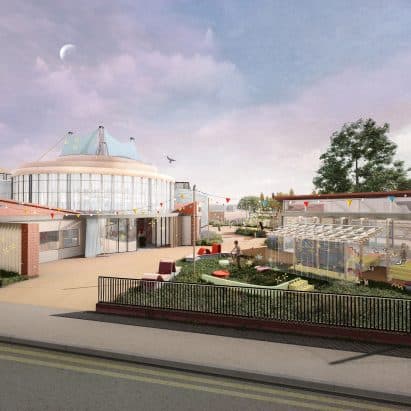
Birmingham City University Students Reimagine Urban Space with Bold Architectural Vision
Architecture and design students at Birmingham City University (BCU) have once again demonstrated that the future of urban living lies not in demolition and new construction, but in reimagining what already exists. Among the most striking projects to emerge from the university's latest school show is a community makers hub designed to breathe new life into an abandoned car park — a concept that encapsulates a growing movement in architecture toward adaptive reuse, sustainability, and community-centered design.
The project, titled PlayPark – A Makers Hub for Play and conceived by student Rejaul Karim, transforms a neglected multi-storey car park into a vibrant creative workshop space. It is one of several compelling student concepts showcased as part of the Dezeen School Shows, an ongoing platform that highlights the best graduate and student work from architecture and design schools around the world.
What Is PlayPark? A Makers Hub Designed for Community Creativity
At its core, PlayPark is a concept for a community-oriented creative space housed within the structural shell of an unused car park. Rather than seeing the redundant building as a problem to be knocked down, Karim's design treats it as an opportunity — a ready-made framework that can be repurposed into a series of flexible workshop and making spaces open to people of all ages and backgrounds.
The idea of a "makers hub" is central to the project. Makers hubs are shared workspaces that provide access to tools, machinery, and resources that most individuals could not afford or accommodate independently. Think 3D printers, woodworking tools, ceramics kilns, textile equipment, and electronics workbenches — all housed under one roof and made accessible to the wider public. By locating such a space within an existing urban structure, the design eliminates the need for new materials and construction while simultaneously addressing the issue of urban blight caused by empty or underused buildings.
The car park format lends itself particularly well to this kind of repurposing. Its open floor plates, robust concrete structure, and generous ceiling heights create naturally flexible spaces. Natural light can be introduced through the open sides of the car park levels, and the building's existing ramps and circulation routes become part of the architectural experience rather than obstacles to be overcome.
Why Adaptive Reuse Matters in Contemporary Architecture
The PlayPark project is not just a compelling student exercise — it reflects one of the most important conversations happening across the architecture and urban planning profession today. Adaptive reuse, the practice of repurposing existing buildings for new functions, is increasingly being recognised as a vital strategy for reducing the environmental impact of the built environment.
Construction is one of the largest contributors to global carbon emissions, accounting for nearly 40 percent of energy-related CO2 output worldwide when both building operations and materials are considered. Demolishing and rebuilding consumes enormous quantities of energy and raw materials, much of which goes to waste. By contrast, working with existing structures significantly reduces embodied carbon — the emissions associated with the production and transportation of building materials.
Beyond the environmental argument, adaptive reuse also carries powerful social and cultural value. Repurposed buildings retain a connection to their history and context, giving communities a sense of continuity and place. A car park turned creative hub tells a story about how a neighbourhood has evolved, and about the ingenuity of the people who shaped its future.
The Broader Context: BCU's School Show and Student Design Innovation
The PlayPark project sits within a wider showcase of student talent from Birmingham City University, a university with a strong track record in producing graduates who think ambitiously about architecture's role in society. The Dezeen School Shows platform provides vital visibility for this kind of work, placing student projects in front of a global audience of design professionals, critics, and potential employers.
BCU's architecture and design programmes consistently encourage students to engage with real urban challenges rather than purely theoretical briefs. Projects like PlayPark demonstrate what happens when students are asked to look at their own cities with fresh eyes — to see potential where others see problems, and to propose solutions that are simultaneously practical, sustainable, and socially meaningful.
Other projects from BCU featured in the same showcase tackle issues ranging from housing affordability and inclusive public space to the integration of nature into dense urban environments. Together, they paint a picture of a generation of designers who are deeply aware of the challenges facing cities and committed to addressing them through creative, evidence-based design thinking.
The Future of Urban Space: From Car Parks to Creative Destinations
The timing of projects like PlayPark is particularly significant. Across the UK and beyond, town centres and urban areas are grappling with the legacy of car-centric planning. As car ownership patterns shift, electric vehicles reshape infrastructure needs, and remote working reduces commuter traffic in city centres, multi-storey car parks are increasingly becoming redundant. Many sit empty or half-used, occupying prime urban land that could serve communities in far more meaningful ways.
Designers and planners are increasingly asking what these structures could become. Housing, hotels, vertical farms, and community spaces have all been proposed and, in some cases, realised. Projects like PlayPark add makers hubs and creative workshops to that growing list of possibilities, demonstrating that with the right vision, even the most utilitarian of structures can become a place of imagination, learning, and community connection.
Conclusion: Student Architecture as a Blueprint for Urban Renewal
What makes the work coming out of Birmingham City University so compelling is not just its technical ambition, but its social conscience. PlayPark is a reminder that great architecture does not always mean building anew — sometimes it means looking at what we already have and finding the courage and creativity to see it differently. As cities continue to evolve and the pressure to build sustainably intensifies, the ideas emerging from university studios today may well become the regeneration strategies of tomorrow.
For anyone interested in the future of urban design, adaptive reuse, and community-centered architecture, the BCU Dezeen School Show projects offer an inspiring and thought-provoking glimpse of what is possible when young designers are given the freedom to reimagine the world around them.