
Berkshire Hathaway's Taylor Morrison Acquisition: A Strategic Masterstroke or the Beginning of Something Much Bigger?
When Berkshire Hathaway announces a major acquisition, the investing world pays attention. But the planned purchase of Taylor Morrison—one of the United States' most recognized publicly traded homebuilders—is drawing attention for reasons that extend far beyond a typical deal announcement. Industry analysts, housing investors, and competitive builders alike are asking the same question: is this simply Warren Buffett's conglomerate buying a well-run homebuilder, or does this transaction signal a fundamental shift in how the housing industry will be structured, financed, and competed in for the next decade?
The answer, increasingly, appears to be both. And for anyone operating in homebuilding, residential development, or housing investment, the implications deserve careful study.
Why Taylor Morrison? Understanding the Strategic Logic
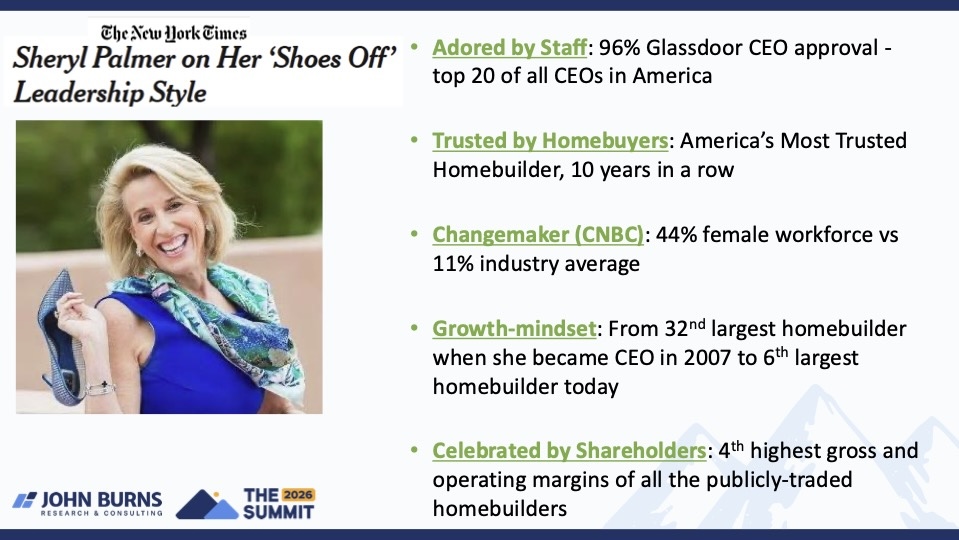
Taylor Morrison is not just any homebuilder. Under the leadership of CEO Sheryl Palmer, the company has built a reputation for operational discipline, customer-centricity, and a clear-eyed strategy focused on long-term scalability. While many builders chased volume during the post-pandemic boom, Taylor Morrison remained deliberate—investing in systems, relationships, and capabilities that would compound over time.
Berkshire Hathaway's interest, then, is not merely in the land positions or the backlog of home orders. It is almost certainly in the operating platform, the leadership team, and the strategic architecture that Taylor Morrison has quietly assembled over the past decade. For Berkshire, which prizes durable competitive advantages and management quality above nearly everything else, Taylor Morrison represents exactly the kind of business that fits its long-term ownership model.
This is a critical distinction. Berkshire is not buying a commodity homebuilder. It is acquiring a scalable, operationally sophisticated enterprise with a proven leadership team at its helm—a combination that has historically been the foundation of Berkshire's most successful investments.
The Scale Question: Is 20,000 Annual Closings the New Minimum?
One of the most consequential questions this deal raises is whether Taylor Morrison's long-stated ambition of reaching 20,000 annual home closings now represents a meaningful threshold—not just an internal goal, but a new industry benchmark for competitive relevance.
Housing markets have always rewarded scale to some degree, but the mechanisms are changing. Larger builders can negotiate better pricing from suppliers, invest more heavily in proprietary technology, absorb land acquisition costs more efficiently, and develop captive financial services that create recurring revenue streams. As construction costs remain elevated and affordability constraints reshape demand, builders who can leverage true economies of scale will enjoy structural advantages that smaller competitors simply cannot replicate.
If Berkshire's investment thesis is partly built around Taylor Morrison's path to 20,000 closings—or beyond—it could redefine what investors, partners, and capital markets expect from a "major" homebuilder. The bar for relevance may be rising, and this acquisition may be the clearest signal yet.
The Ecosystem Thesis: Connecting Capital, Land, Technology, and Services
Perhaps the most forward-looking dimension of this deal is what it suggests about the future of competitive advantage in housing. For years, the most sophisticated homebuilders have been quietly building what might best be described as vertically integrated housing ecosystems—platforms that connect capital sourcing, land acquisition, manufacturing, building products, construction technology, distribution logistics, mortgage finance, title services, and homeowner insurance under a single strategic umbrella.
Taylor Morrison has been among the leaders in this ecosystem-building effort. Its financial services division, its investment in digital homebuying tools, and its disciplined approach to land banking all reflect a company that sees the home transaction not as a single event, but as the beginning of a long-term customer relationship with multiple value-creation touchpoints.
Berkshire Hathaway, with its vast portfolio spanning insurance (GEICO), financial services, building products (Acme Brick, Johns Manville, Clayton Homes), and capital markets access, is perhaps the single entity best positioned to supercharge that ecosystem vision. The combination of Taylor Morrison's homebuilding expertise with Berkshire's capital depth and cross-portfolio synergies could produce something genuinely new in American housing: a fully integrated housing enterprise with the financial resilience of a conglomerate and the operational agility of a top-tier builder.
Who Comes Next? Expanding the Field of Potential Acquirers
The Berkshire-Taylor Morrison deal may also reshape expectations about who the next wave of homebuilding acquirers might be. For the past several years, the most anticipated consolidation scenarios in housing involved either the largest public builders absorbing smaller regional players or Japanese housing enterprises—such as Sekisui House or Daiwa House—expanding their U.S. footprints.
Berkshire's move suggests a third category: global capital allocators and asset management giants who view integrated housing platforms as long-duration, inflation-resistant assets worthy of permanent ownership. If that thesis proves sound, it could attract sovereign wealth funds, infrastructure-focused asset managers, and other institutional players who have historically stayed on the sidelines of direct homebuilder ownership.
The competitive implications for publicly traded builders are significant. Valuation benchmarks may shift. Strategic partnerships may accelerate. And the pressure to build ecosystem capabilities—rather than simply adding lots and closings—will intensify across the industry.
The Leadership Legacy of Sheryl Palmer
No analysis of this transaction would be complete without acknowledging the role of Sheryl Palmer, Taylor Morrison's longtime CEO. Under her leadership, the company has navigated multiple market cycles, made disciplined acquisitions, and consistently prioritized customer experience at a time when many builders treated homebuyers as an afterthought.
Berkshire Hathaway has a well-documented philosophy of acquiring companies whose leaders it wants to keep. Palmer's track record—and the culture she has built at Taylor Morrison—likely figured prominently in Berkshire's due diligence. Her legacy is not merely the company she built, but the template she created for what customer-centric, operationally excellent homebuilding can look like at scale.
What This Means for the Broader Housing Industry
The Berkshire-Taylor Morrison transaction will not change the housing market overnight. Land is still scarce. Labor is still constrained. Affordability remains a generational challenge. But this deal may accelerate several trends that were already underway.
- Consolidation among large and mid-size builders will likely intensify as the capital and ecosystem advantages of scale become clearer.
- Investment in vertically integrated services—mortgage, title, insurance, technology—will become a strategic imperative rather than an optional enhancement.
- New categories of acquirers will enter the space, raising valuations and competitive pressure simultaneously.
- The definition of a "homebuilder" will continue to evolve toward something closer to a full-spectrum housing enterprise.
In that sense, Berkshire Hathaway's acquisition of Taylor Morrison is more than a transaction. It may be, as observers have noted, an early chapter in the roadmap of where American homebuilding is headed next—a roadmap defined by scale, ecosystems, long-term capital, and the enduring value of exceptional leadership. For everyone in the industry, the time to study that roadmap carefully is now.