
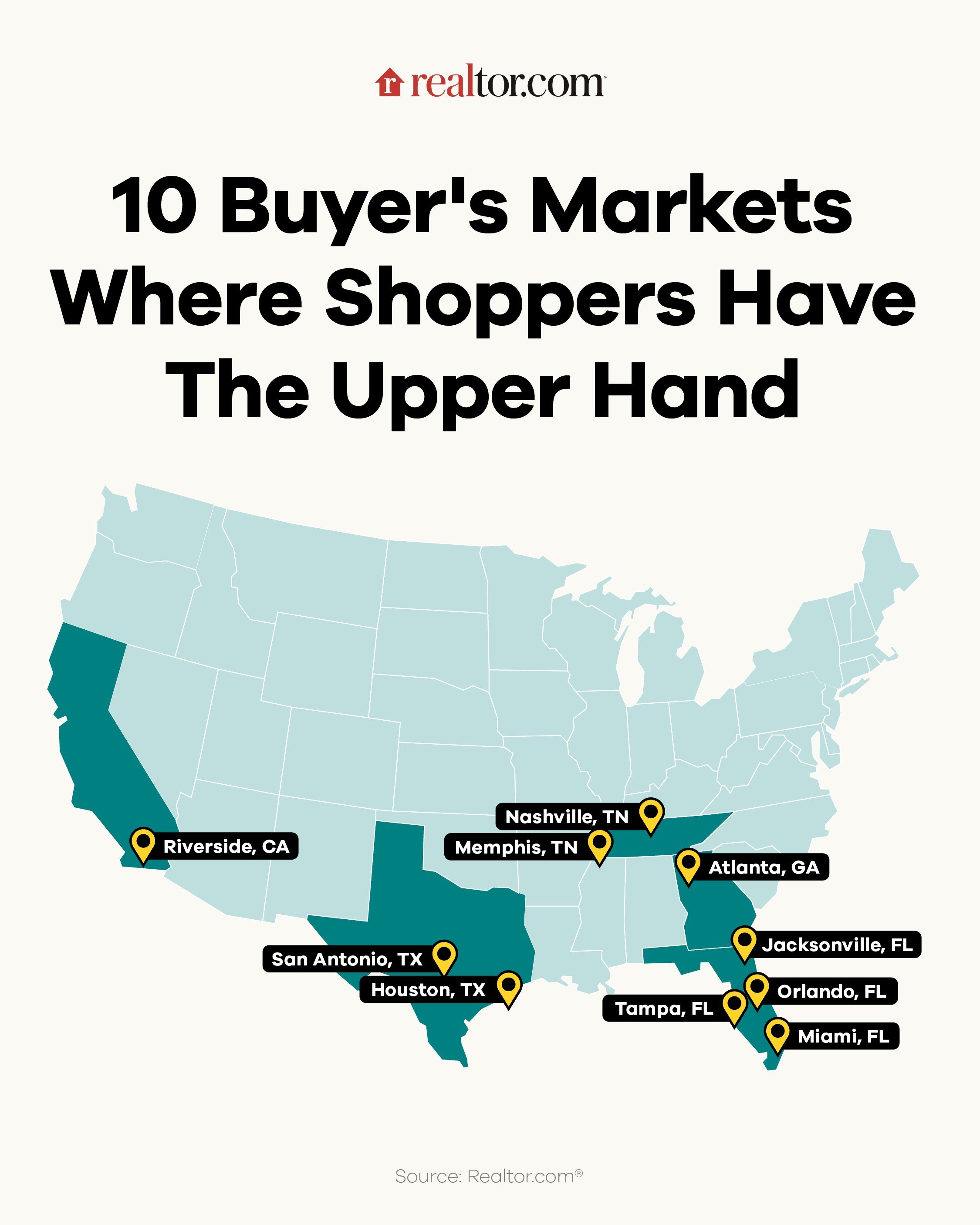
The Buyer's Market Landscape Is Expanding — Just in Time for Summer
If you've been waiting for the right moment to make your move in the housing market, that moment may finally be arriving — at least in certain parts of the country. Heading into the peak summer homebuying season of 2025, the number of confirmed buyer's markets among the nation's largest metropolitan areas has grown to 10, up from eight just a month ago. That's according to the latest update to the Realtor.com Market Clock, a data-driven tool that tracks shifts in supply, demand, and pricing dynamics across major U.S. metro areas.
While the expansion of buyer-friendly conditions is welcome news for house hunters, the picture is far from uniform across the United States. Regional divides remain stark, and where you're searching for a home matters enormously when it comes to how much negotiating power you'll actually hold at the closing table.
Where the Buyer's Markets Are — and Aren't
Of the 10 confirmed buyer's markets identified in the current Market Clock update, nine are located in the South, and one is in the West. That's a meaningful concentration that tells a broader story about sunbelt housing dynamics in the post-pandemic era. Meanwhile, the Northeast and Midwest currently have zero buyer's markets among the nation's largest metros — a stark contrast that reflects ongoing inventory shortages and persistent demand in those regions.
For buyers in cities like Boston, New York, Chicago, or Minneapolis, conditions remain firmly tilted in sellers' favor. Competition is still strong, inventory is constrained, and homes are often receiving multiple offers. The story is very different, however, if you're shopping in the South or certain parts of the West.
New Additions and Notable Departures
Since the first Market Clock quarterly report was released in early April 2025, the lineup of buyer's markets has shifted. One notable change: Austin, Texas — long considered one of the most overheated markets in the country during the pandemic boom — has actually dropped out of the confirmed buyer's market group. This suggests that even Austin's correction may be stabilizing somewhat, though it remains more affordable relative to its recent peak.
Replacing Austin and then some are three new additions to the buyer's market list:
- Houston, TX — The nation's fourth-largest city has seen a significant influx of new housing inventory, giving buyers more choices and more room to negotiate on price, contingencies, and closing costs.
- San Antonio, TX — Another major Texas metro, San Antonio has experienced a cooling in demand relative to the supply growth of recent years, shifting leverage toward buyers in a meaningful way.
- Memphis, TN — The addition of Memphis signals that the buyer-friendly trend is spreading beyond Texas and into other parts of the broader South, reflecting both affordability pressures and rising local inventory levels.
These additions bring the total to 10 confirmed buyer's markets, representing a notable expansion of opportunity for those who have been waiting on the sidelines.
Why Are Southern Markets Shifting Toward Buyers?
The emergence of buyer's markets across the South is no accident. Several interconnected factors have driven this trend over the past 12 to 18 months. First and foremost, new home construction accelerated dramatically across sunbelt metros during the pandemic era, as builders responded to surging demand and record-low interest rates. That wave of new supply is now hitting the market, creating a situation where inventory significantly outpaces current buyer demand in several cities.
At the same time, affordability pressures have become acute in many Southern metros. Rapid price appreciation during 2020 through 2022, combined with elevated mortgage rates that have persisted well into 2025, has stretched budgets to their limits for many would-be buyers. This softening of demand, meeting a surge in supply, is the classic recipe for a buyer's market.
Additionally, remote work trends that drove massive migration to sunbelt cities have moderated. Many companies have returned to in-office or hybrid models, reducing the urgency of relocation to lower-cost metros in the South.
What a Buyer's Market Actually Means for Home Shoppers
Being in a buyer's market means more than just having more homes to choose from. In practical terms, buyers in these 10 metros can expect a range of advantages that simply don't exist in more competitive environments. These include:
- More negotiating room on price: Sellers in buyer's markets are more likely to accept offers below asking price, particularly for homes that have been sitting on the market for several weeks or longer.
- Seller-paid concessions: It has become increasingly common in buyer's markets for sellers to offer to cover closing costs, buy down the buyer's mortgage rate, or include appliances and repairs as part of the deal.
- More time to make decisions: Unlike the frenzy of 2021 and 2022, when buyers often had hours to submit offers, buyer's markets allow for thoughtful due diligence, proper inspections, and careful financing comparisons.
- Contingency acceptance: Buyers can once again include financing and inspection contingencies in their offers without fear of being passed over, providing crucial protections that were largely abandoned during the peak seller's market years.
What This Means If You're Shopping Outside a Buyer's Market
If you're searching for a home in the Northeast or Midwest, the competitive dynamics are fundamentally different. In these regions, inventory remains tight, days on market are short, and sellers continue to hold considerable leverage. Buyers in these areas should still work with experienced agents, get pre-approved for financing early, and be prepared to move decisively when the right property becomes available.
It's also worth watching the Market Clock data closely over the coming months. Given that the list of buyer's markets has already grown from eight to ten in a single month, conditions could continue to evolve. Some markets currently on the border may tip in either direction as summer progresses and seasonal inventory patterns play out.
Timing Your Move This Summer
Summer is traditionally the busiest season for real estate transactions, and 2025 is shaping up to be no exception. For buyers in the 10 confirmed buyer's markets — which now include major Texas cities, Memphis, and metros in the broader South and West — the conditions are about as favorable as they've been in years. Home prices in many of these areas have stabilized or pulled back from their peaks, inventory is plentiful, and sellers are motivated.
If you've been hesitating because the market felt too competitive or prices seemed out of reach, this summer may offer a genuine window of opportunity. Working with a knowledgeable local real estate agent, getting your financing in order early, and using data-driven tools like the Realtor.com Market Clock to understand your specific market can make all the difference between a stressful experience and a successful home purchase.
The bottom line: buyer power in the U.S. housing market is real and growing — at least in the right zip codes. Know where you stand before you make your move.