
Summer Electricity Bills Are Breaking Household Budgets — Here's What Renters Can Do
If your electricity bill has felt like a second rent payment every summer, you are not imagining things. Energy costs are climbing at a pace that is putting real pressure on everyday households, and renters are bearing the brunt of it. But a small, innovative gadget is quietly changing the game for people who lease their homes — and it could save you serious money before the next heat wave arrives.
How Bad Have Summer Energy Costs Gotten?
The numbers are striking. A new analysis from the National Energy Assistance Directors Association (NEADA) estimates that Americans will spend an average of nearly $800 on electricity between June and September alone. That figure represents a 10.5% increase compared to the same four-month stretch last year — a jump that is straining budgets that are already stretched thin.
The situation is especially difficult for lower-income households. According to the same NEADA report, nearly 40% of households earning less than $50,000 per year report difficulty paying their energy bills. Even more alarming, 1 in 6 U.S. households is currently behind on utility payments altogether.
"For families already struggling to make ends meet, higher cooling costs can force difficult choices between paying utility bills and covering other necessities such as food, rent, or medicine," said Mark Wolfe, executive director of the NEADA.
In other words, staying cool in the summer is no longer a simple comfort question. For millions of Americans, it is a financial crisis in slow motion.
Why Renters Face a Unique Cooling Challenge
Homeowners have options that renters typically do not. They can install central air conditioning, upgrade insulation, add solar panels, or make structural changes that improve energy efficiency. Renters, however, are limited by what their landlords allow and what they can realistically take with them when they move.
Most renters rely on window air conditioner units — affordable, portable, and landlord-approved in most situations. The downside is that these units can be energy-hungry, especially when running throughout a hot afternoon or evening. And because peak electricity demand drives up rates during the hottest parts of the day, running a window AC unit at 4 p.m. in August can cost significantly more than running it at midnight.
That is exactly the problem that one small gadget is designed to solve.
The Plug-In Battery Hack That Renters Are Talking About
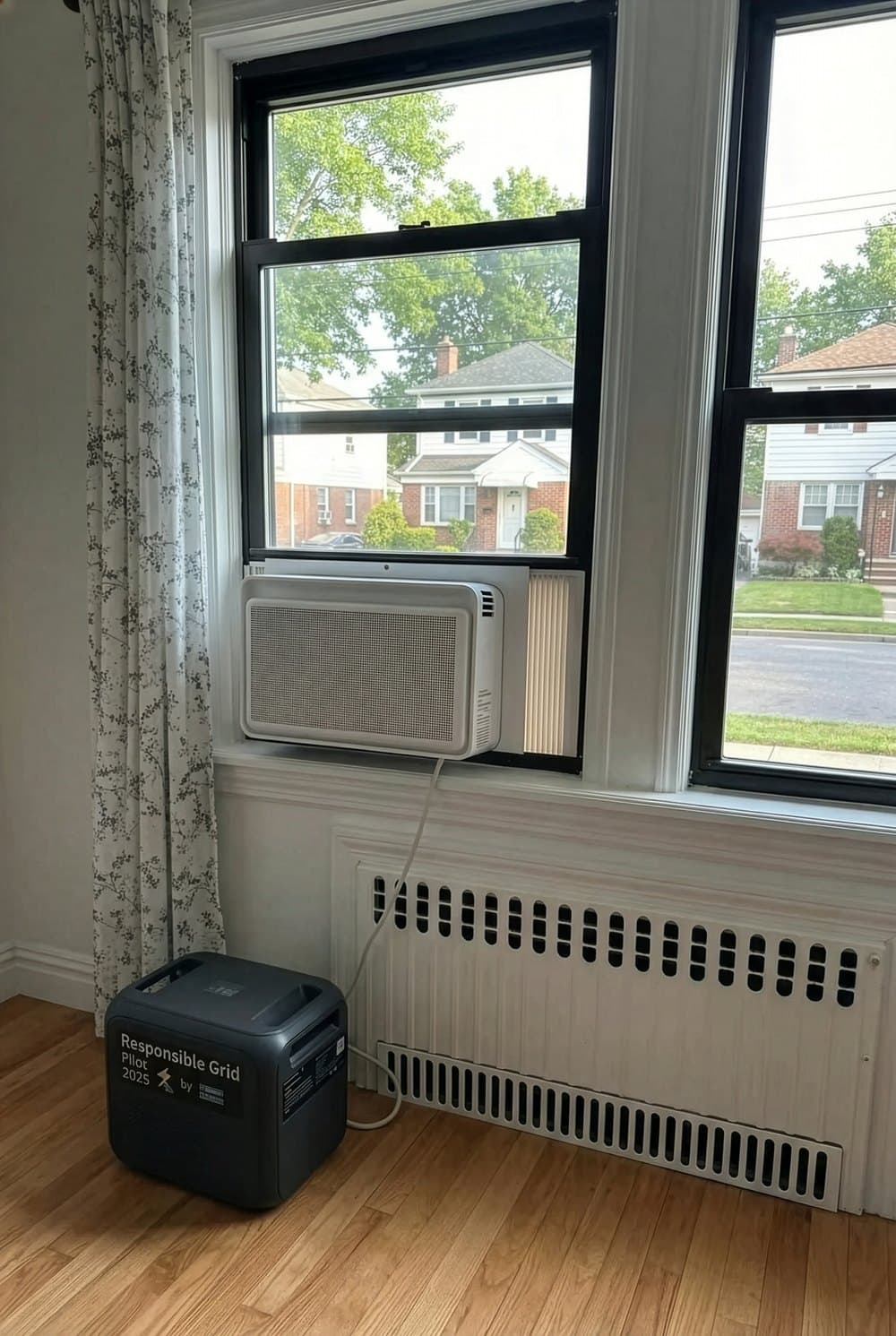
Think of it as a power bank — but for your air conditioner. A pilot program in New York City is currently deploying plug-in battery units that connect directly to window air conditioner systems. These batteries charge during off-peak hours when electricity is cheaper, then discharge that stored energy to power the AC unit during peak demand periods when grid electricity is at its most expensive.
"It's basically a souped-up version of the power bank that you would use to charge your phone when you go out," said Andrew Wang, the chief executive officer of Every Electric, the company behind the pilot program. Every Electric has partnered with Con Edison, New York City's primary energy utility, to bring the technology to residents.
The concept is elegant in its simplicity. No installation crew needed. No landlord permission required for structural changes. No solar panels on a rooftop you do not own. Just a plug-in device that quietly manages when and how your air conditioner draws its power — shifting consumption away from expensive peak hours and toward cheaper off-peak windows.
Benefits Beyond Just Saving Money
The financial savings for individual renters are compelling on their own, but the benefits of this technology extend further than just lower monthly bills. There are several reasons why plug-in battery solutions represent a meaningful step forward for renters and communities alike.
- Reduced grid strain: When thousands of air conditioners run simultaneously on the hottest afternoons, the strain on the electrical grid can cause outages or require utilities to fire up expensive and often polluting backup power plants. Battery units that shift demand away from those peak periods help stabilize the grid for everyone.
- Renter-friendly design: Because these devices simply plug in, they require no modifications to the apartment or building. Renters can take the unit with them when they move, making it a true long-term investment rather than a fixed upgrade left behind for the next tenant.
- Lower carbon footprint: By reducing consumption during peak periods — when grid electricity tends to be generated by the least efficient and most polluting sources — these batteries can contribute to a cleaner overall energy mix.
- Utility incentives: Programs like the Con Edison pilot in New York City suggest that utility companies themselves see value in this technology and may be willing to support or subsidize its adoption. Renters who participate in such programs could benefit from rebates or reduced rates.
Is This Technology Available in Your City?
As of now, the most visible deployment of this specific renter-focused battery technology is the NYC pilot program run by Every Electric in partnership with Con Edison. However, the success of programs like this one tends to attract attention from other utilities and city governments looking for affordable, scalable ways to manage grid demand and help residents cope with rising energy costs.
If you live outside of New York City, it is worth checking with your local utility provider to see whether similar demand-response programs or battery incentive programs exist in your area. Many utilities across the country offer some form of time-of-use rate pricing, which rewards customers who shift their energy consumption to off-peak hours — and a plug-in battery solution is one of the most practical ways to take advantage of those savings without changing your daily routine.
Practical Steps Renters Can Take Right Now
While plug-in battery technology is still rolling out more broadly, there are steps every renter can take today to reduce their summer cooling costs and prepare for a smarter energy future.
- Check whether your utility offers time-of-use rates and, if so, schedule high-energy tasks like laundry and dishwashing during off-peak hours.
- Use a programmable smart thermostat or smart plug with your window AC unit to automatically reduce cooling during the most expensive parts of the day.
- Seal gaps around windows and doors with removable weather stripping to keep cool air in without making permanent modifications.
- Use blackout curtains or thermal blinds to block direct sunlight and reduce how hard your AC has to work during afternoon hours.
- Follow pilot programs and utility announcements in your area to be among the first to access plug-in battery incentives when they become available near you.
The Bottom Line for Renters This Summer
Rising electricity bills are not just an inconvenience — for a growing number of American households, they represent a genuine financial hardship. The good news is that innovative, renter-friendly solutions are emerging to meet this challenge head-on. Plug-in battery gadgets that power window air conditioners using off-peak electricity are a practical, portable, and promising answer for the millions of people who rent their homes and want real control over their energy costs.
Keeping an eye on programs like the NYC pilot, staying connected with your local utility, and adopting smart energy habits in the meantime can all add up to meaningful savings — and a cooler, more financially stable summer season.