
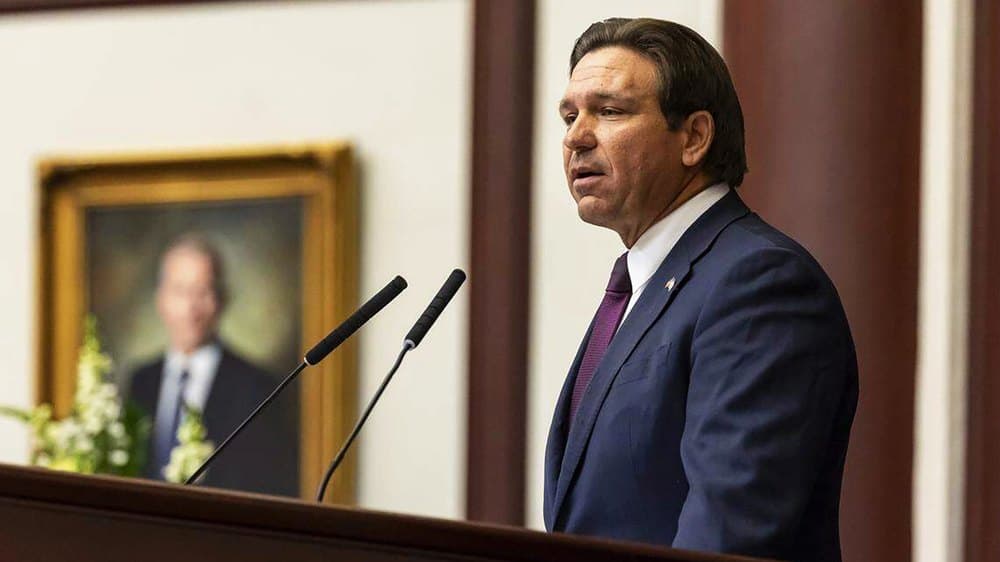
Florida's Property Tax Revolution: What Homeowners Need to Know
Florida voters are heading to the polls this November to decide on one of the most ambitious property tax overhauls in the state's history. Governor Ron DeSantis has championed a proposal to massively expand the homestead exemption, promising relief for millions of homeowners. But buried beneath the headline savings figures lies a consequence that almost no one is talking about: a looming public health threat that could make living in Florida far more uncomfortable—and expensive—than the tax cut is worth.
The measure, officially titled Save Our Homes From Excessive Property Taxes, passed the Florida House 75-26 and the Senate 30-9 during a special legislative session. If voters approve it, Florida's current $50,000 homestead exemption would expand to $150,000 in 2027 and then balloon to $250,000 in 2028. DeSantis has stated the expanded exemption would eliminate property taxes entirely for 60% of Florida homeowners, though independent analysis puts the actual figure closer to 28%.
Either way, the savings are real for many residents. But so is the projected fallout.
The $8 Billion Hole in Local Government Budgets
The most immediate and concrete consequence of this plan is a projected $8 billion shortfall for Florida's local governments. Counties, municipalities, and special districts depend on property tax revenues to fund a vast array of essential services—from roads and libraries to emergency response and, critically, public health programs. When that funding disappears, every line item on the local budget becomes vulnerable.
Among the least glamorous but most vital of those services is mosquito control. Florida's warm, humid climate makes it one of the most mosquito-dense states in the nation, and the specialized districts that manage mosquito populations operate almost entirely on local tax funding. A dramatic reduction in property tax revenue doesn't just mean fewer potholes get filled—it could mean fewer aerial spray runs, reduced larvicide treatments, and skeleton crews at mosquito control districts across the state.
For homeowners who just celebrated a lower tax bill, the trade-off may arrive in a less welcome form: more mosquitoes, more disease risk, and potentially lower property values in neighborhoods where outdoor life becomes unbearable during peak season.
Why Mosquito Control Matters More Than You Think
Florida is home to over 80 species of mosquitoes, several of which are known vectors for serious illnesses. West Nile virus, Eastern equine encephalitis, dengue fever, and Zika virus have all had documented cases in the state. The primary line of defense against outbreaks of these diseases is not a vaccine or a medication—it's the coordinated, well-funded work of local mosquito control programs that monitor breeding sites, deploy larvicides in standing water, and conduct aerial and ground-level spraying operations when adult mosquito populations spike.
These programs are not cheap. Equipment maintenance, pesticide procurement, staff training, and the aircraft used for aerial treatments all require sustained, reliable funding. A sudden $8 billion reduction in the tax base that supports local governments puts every one of these operational costs at risk.
Florida's mosquito control districts have already faced budget pressures in recent years. An additional funding shock of this magnitude could force many districts to scale back operations dramatically, extend treatment intervals, or eliminate proactive monitoring programs entirely—leaving residents exposed during the very months when the threat is highest.
What the Homestead Exemption Expansion Actually Covers
To understand the full picture, it helps to know exactly what the proposal changes. Florida's existing homestead exemption shields the first $50,000 of a primary residence's assessed value from most local property taxes. The new plan would raise that threshold to $150,000 in 2027 and $250,000 in 2028, meaning a significantly larger portion of most homes' assessed values would be completely shielded from taxation.
First-time homeowners seeking the full benefit of the new exemption would need to establish five years of Florida residency to qualify, a requirement that takes effect after January 1, 2027. The amendment applies to most local property taxes, though certain levies—such as those specifically tied to debt service—may be treated differently depending on how the final language is interpreted.
The political appeal is obvious. For a homeowner with a modestly valued property, the savings could be substantial. But the broader fiscal math is what troubles local officials, public health administrators, and housing economists who have studied the proposal closely.
The Hidden Cost to Florida Homeowners
Property values in Florida are deeply connected to the quality of local services. Neighborhoods with strong schools, well-maintained infrastructure, and effective public health programs command premium prices. When local government funding evaporates, those quality-of-life factors tend to erode—and home values often follow.
Homeowners who celebrate a lower tax bill in 2027 may find themselves facing a different kind of financial pain by 2029 or 2030: a home that has declined in market value because the surrounding community's services have deteriorated. In that scenario, the nominal savings from the expanded homestead exemption could easily be offset by lost equity.
Mosquito-related concerns add another layer to this calculation. Outdoor spaces are a core part of Florida's lifestyle appeal and a major driver of property desirability. Backyards, patios, and screened porches lose their value—literally and figuratively—when mosquito pressure becomes unmanageable. In communities where mosquito control programs have been defunded or severely reduced, outdoor living deteriorates, which can translate directly into reduced buyer interest and lower sale prices.
What Voters Should Weigh Before November
The November ballot measure presents Florida voters with a genuine dilemma. The savings are tangible and, for many middle-income homeowners, meaningful. But the downstream consequences deserve equal attention before casting a vote.
Local governments will need to make difficult choices if the $8 billion shortfall materializes. Some may raise other fees or non-homestead tax rates to compensate. Others may simply cut services. In either case, homeowners are unlikely to escape the fiscal impact entirely—they will simply experience it differently than they would have through a property tax bill.
Understanding the full scope of what property taxes actually fund—including the unglamorous but essential work of keeping Florida's mosquito populations in check—is critical context for any voter weighing this decision. The promise of tax relief is real. So are the risks that come with it.
The Bottom Line for Florida Homeowners
DeSantis' property tax expansion plan is bold, politically popular, and genuinely consequential for millions of Florida homeowners. But the $8 billion funding gap it creates for local governments is not an abstract number—it represents real services, real public health infrastructure, and real protections that residents currently take for granted. Mosquito control is just one example of what could be lost, but it is a particularly vivid one in a state where the stakes of falling behind on vector management are measured in human health outcomes.
Before November, every Florida homeowner should ask not just what they stand to save on their tax bill, but what they stand to lose when local governments are forced to make cuts they simply cannot avoid.