
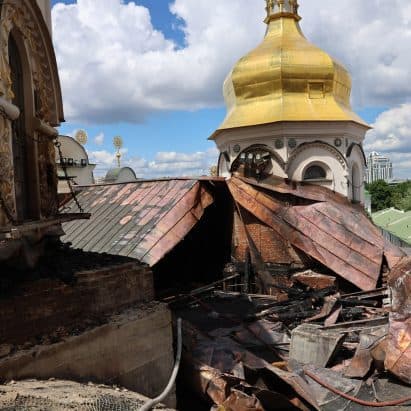
UNESCO-Listed Dormition Cathedral in Kyiv Damaged by Russian Attack
In one of the most devastating cultural losses of the ongoing war in Ukraine, the Dormition Cathedral in Kyiv — a UNESCO World Heritage Site of immense historical and architectural significance — was set alight following a Russian military strike. The attack has sent shockwaves through the global heritage and architecture communities, raising urgent questions about the protection of irreplaceable cultural monuments in active conflict zones. For many Ukrainians, the cathedral is not merely a building; it is a living symbol of national identity, spiritual heritage, and centuries of resilience.
What Is the Dormition Cathedral and Why Does It Matter?
The Dormition Cathedral, also known as the Cathedral of the Assumption, is located within the Kyiv-Pechersk Lavra — the famous Cave Monastery complex in the Ukrainian capital. This sprawling Orthodox Christian monastery is one of the oldest and most revered religious sites in Eastern Europe, with roots stretching back to the eleventh century. Together with Saint-Sophia Cathedral and the surrounding historic district, the Kyiv-Pechersk Lavra was inscribed on the UNESCO World Heritage List in 1990, recognising its outstanding universal value to humanity.
The cathedral's architecture is a stunning example of Ukrainian Baroque style, characterised by its gleaming white façade, ornate gilded domes, and intricate interior frescoes. Though the original structure was tragically destroyed during World War II — blown up in 1941 under disputed circumstances — it was meticulously reconstructed and reconsecrated in 2000, standing once again as a powerful testament to Ukrainian craftsmanship and cultural endurance. The loss of even a portion of this restored landmark to fire represents an incalculable blow to world heritage.
The Russian Attack on Kyiv: What Happened
According to reports, Russian forces launched another wave of aerial attacks targeting Kyiv, continuing a pattern of strikes that has periodically devastated the city's infrastructure and civilian areas throughout the conflict. During this latest bombardment, debris or direct impact resulted in fire breaking out at or near the Dormition Cathedral within the Kyiv-Pechersk Lavra complex. Images and footage shared from the scene showed flames and heavy smoke rising from the historic site, prompting immediate emergency responses from Ukrainian firefighters and authorities.
Ukrainian officials were swift to condemn the strike as a deliberate act of cultural destruction. While Russian military statements routinely claim their attacks target only military infrastructure, the evidence on the ground — including repeated damage to hospitals, residential districts, and now UNESCO-listed monuments — paints a very different picture for much of the international community.
A Pattern of Cultural Heritage Destruction
The attack on the Dormition Cathedral is not an isolated incident. Since the full-scale Russian invasion of Ukraine began in February 2022, cultural institutions, historic monuments, museums, and places of worship across Ukraine have suffered significant damage or total destruction. UNESCO itself has documented hundreds of verified incidents of damage to cultural sites across the country, including:
- Museums and galleries stripped, looted, or bombed in cities including Mariupol and Kharkiv.
- Historic churches and Orthodox cathedrals damaged during shelling in eastern and southern Ukraine.
- Libraries, theatres, and cultural centres reduced to rubble in frontline towns and cities.
- Ancient archaeological sites disturbed or destroyed by military activity and the digging of trenches.
International law, including the 1954 Hague Convention for the Protection of Cultural Property in the Event of Armed Conflict and its subsequent protocols, explicitly prohibits attacks on cultural heritage. Ukraine and its allies have repeatedly called for accountability, though enforcement remains deeply challenging in an active warzone.
The International Response
News of the fire at the Dormition Cathedral drew swift condemnation from cultural organisations, governments, and heritage advocates around the world. UNESCO issued a statement expressing deep concern and calling for the immediate protection of Ukrainian World Heritage Sites. Architecture and preservation organisations echoed these calls, emphasising that the destruction of heritage sites constitutes an attack not only on Ukraine but on the shared memory of all humanity.
European leaders and officials from various countries also voiced outrage, with many pointing to the incident as further evidence of a broader strategy to erase Ukrainian cultural identity. Historians and architects have noted that targeting heritage sites — whether deliberately or through reckless disregard — carries a profound psychological impact on civilian populations, severing communities from their sense of history and belonging.
Can the Cathedral Be Saved and Restored?
The immediate priority in the aftermath of the fire was damage assessment. Ukrainian firefighters worked swiftly to bring the blaze under control, and authorities began the difficult process of determining the full extent of structural and artistic damage. Heritage experts have noted that the outcome for the cathedral will depend heavily on how quickly the fire was contained, which parts of the building were affected, and whether key interior elements — including frescoes, iconostases, and liturgical artefacts — survived.
Restoration of UNESCO heritage sites following conflict damage is a complex, long-term undertaking requiring international expertise and funding. Precedents such as the reconstruction of the Old Bridge in Mostar, Bosnia, and ongoing restoration efforts at sites damaged by ISIS in Syria and Iraq offer some hope, though each case presents unique architectural and logistical challenges. Ukraine has already been working with international partners to document and safeguard its heritage throughout the war, but active conflict makes sustained preservation efforts extraordinarily difficult.
Why the World Must Take Cultural Destruction Seriously
The burning of the Dormition Cathedral in Kyiv is a stark reminder that war's casualties extend far beyond human lives. Historic architecture and cultural heritage carry the stories, beliefs, and collective memory of entire peoples across generations. When these sites are damaged or destroyed, something irreplaceable is lost — not only for Ukraine, but for the entire world.
Monuments like the Dormition Cathedral took centuries to build and decades to rebuild after previous catastrophes. They stand as physical proof that human civilisation aspires to beauty, meaning, and continuity even in the face of destruction. The international community's response to their loss — through documentation, advocacy, legal accountability, and eventual restoration — reflects how seriously we value that shared aspiration.
As the conflict in Ukraine continues, the protection of its cultural heritage must remain a central concern of the global response, alongside the protection of human lives. The flames that threatened the Dormition Cathedral are a call to action: to document, to advocate, and to ensure that those responsible for cultural destruction are held to account.