
Former DC Housing Official Admits to Inventing Fake Veterans Program in $15 Million Mortgage Fraud
A former District of Columbia housing official has pleaded guilty to one of the more brazen mortgage fraud schemes in recent memory — one that exploited the name and sacrifice of American veterans to steal millions of dollars from unsuspecting lenders. Richard Cunningham, 55, admitted in federal court to fabricating an entirely fictional federal housing assistance program for veterans, using it as a vehicle to defraud mortgage lenders out of approximately $15 million.
The case highlights the serious consequences that await those who abuse positions of public trust, and it raises urgent questions about oversight within government-adjacent real estate operations. For veterans, housing advocates, and the lending industry alike, the story of Cunningham's scheme is a cautionary tale about how fraud can be disguised beneath the veneer of legitimate government programs.
Who Is Richard Cunningham?
Richard Cunningham is not an unknown figure in Washington, DC's real estate and housing landscape. He worked for the District of Columbia Housing Authority before departing in 1999 to pursue a career as a private real estate developer. Leveraging his insider knowledge of how housing programs operate, he eventually founded Cunningham Real Estate Management LLC, a company that would later become central to his fraudulent activities.
His background in public housing gave him a detailed understanding of federal voucher systems, documentation processes, and the language of government-backed housing assistance — knowledge he is accused of weaponizing to deceive mortgage lenders and financial institutions for personal gain.
The Phony 'Veterans Assistance Payments' Program
At the heart of Cunningham's scheme was a program that simply did not exist. According to court documents, he invented a fictitious initiative he called the "Veterans Assistance Payments" program, designed to make lenders believe that veterans were receiving federally backed housing subsidies to pay rent on properties Cunningham controlled in Washington, DC.
To make the scheme appear legitimate, Cunningham went to extraordinary lengths. He fabricated federal voucher documents and forged signatures of government officials to create a paper trail that would withstand initial scrutiny from lenders. By presenting these fake documents, he was able to convince financial institutions that his properties were generating income from a real, government-sponsored program — and that this income stream justified significant mortgage financing.
The fraudulent documentation made it appear as though veterans were housed in his properties under the financial support of a legitimate federal program, creating a false sense of security for lenders who had no reason to question what looked like official government paperwork.
How the Fraud Worked
Mortgage lenders make lending decisions based on the income a property generates and the reliability of that income. By presenting fabricated vouchers suggesting his properties were receiving consistent payments through a veterans assistance program, Cunningham was able to secure mortgages and financing that he otherwise would not have qualified for.
The scheme involved lying to lenders about the financial performance of properties he controlled across Washington, DC. The proceeds from those fraudulently obtained loans — totaling approximately $15 million — have since been described in court filings as "dissipated" by Cunningham, meaning the money has been spent and cannot be recovered or located. This creates a deeply troubling situation for the defrauded lenders, who may never see restitution.
The Guilty Plea and Potential Consequences
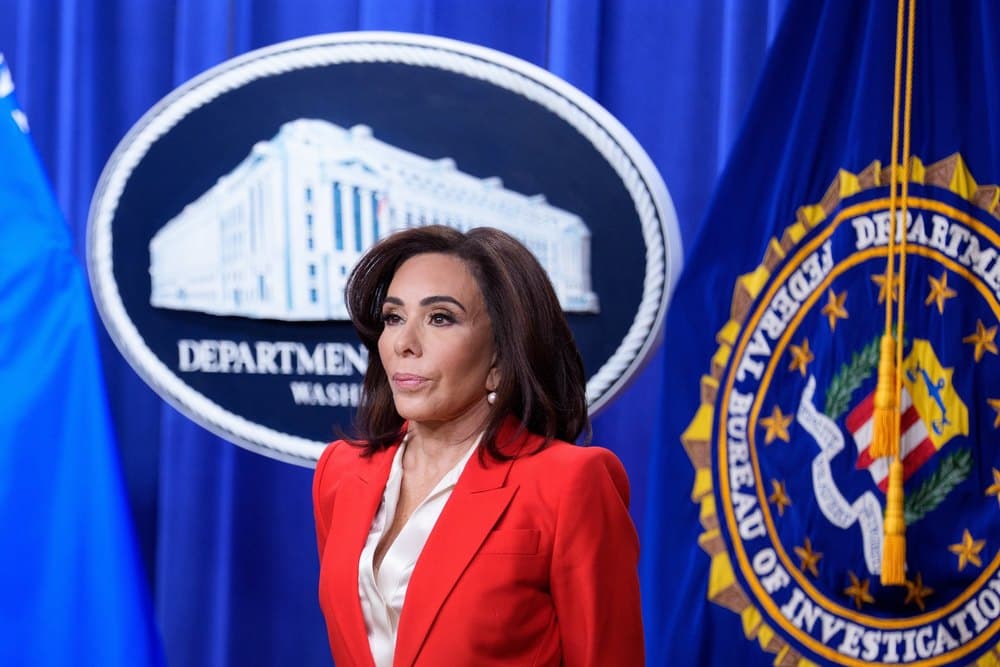
Cunningham pleaded guilty to making false statements to a mortgage lending business, a federal charge that carries severe penalties. Under the terms of his plea agreement, he faces up to 20 years in federal prison and a fine of up to $1 million. His sentencing is scheduled for December 4, according to information released by DC District Attorney Jeanine Pirro.
Pirro was unequivocal in her condemnation of Cunningham's actions, issuing a pointed public statement about the nature of the offense. "Richard Cunningham didn't just defraud lenders, he fabricated federal voucher documents, forged signatures, and invented a veterans housing program that never existed, all to line his own pockets," Pirro said. "Exploiting the name and sacrifice of American veterans to commit fraud is particularly offensive, and my office will pursue those abuses with the full weight of federal law."
The DA's statement underscores the particular moral gravity of using veterans — a group already vulnerable to housing instability — as props in a financial crime. Veterans' housing challenges are a well-documented national issue, and programs designed to address those challenges depend on public trust. Schemes like Cunningham's erode that trust and make it harder for legitimate programs to function effectively.
Why This Case Matters Beyond the Courtroom
The Cunningham case is significant for several reasons that extend beyond the criminal proceedings themselves. Consider the following broader implications:
- Veterans' housing credibility: By attaching his scheme to a fictitious veterans program, Cunningham potentially increased skepticism toward real veteran housing assistance initiatives, making lenders and institutions more guarded about programs designed to genuinely help former servicemembers.
- Insider knowledge as a tool for fraud: Cunningham's prior role at the DC Housing Authority gave him specific, specialized knowledge that a typical fraudster would not have. This raises questions about how government agencies track and monitor the activities of former employees who later operate in adjacent industries.
- Document forgery at scale: The fabrication of federal vouchers and the forgery of official signatures represent a sophisticated level of criminal planning that required sustained effort over time — pointing to the need for stronger document verification processes in the mortgage lending industry.
- Dissipated proceeds: The fact that the $15 million in fraudulently obtained funds has been spent and cannot be located leaves lenders with little hope of financial recovery, highlighting the real-world economic damage mortgage fraud inflicts on legitimate financial institutions.
A Warning to the Mortgage and Real Estate Industry
This case serves as a stark reminder for mortgage lenders, real estate professionals, and housing agencies to maintain rigorous due diligence processes — particularly when evaluating income streams tied to government assistance programs. Verifying the legitimacy of voucher documents directly with the issuing agency, rather than relying solely on paperwork presented by a borrower, is one practical step that could help prevent similar schemes.
Federal prosecutors have made clear that mortgage fraud — especially when it exploits the reputations of veterans or other vulnerable populations — will be pursued aggressively. As the Cunningham case moves toward its December sentencing, it stands as a powerful example of how federal law enforcement takes these crimes seriously and what can happen when those in positions of knowledge and trust choose to abuse them.
For anyone with information about suspected mortgage fraud or the misuse of veterans' housing programs, the Department of Justice and the Department of Housing and Urban Development both maintain reporting channels for tips and complaints.