
The Enduring Legacy of Arts and Crafts Architecture
In an age of mass production and algorithmic design, the Arts and Crafts movement feels more relevant than ever. Born in Victorian Britain as a direct reaction against the dehumanising effects of industrialisation, the movement championed skilled craftsmanship, honest use of materials, and a deep respect for the natural world. At its heart was a simple but radical idea: that well-designed, beautifully made objects and buildings could improve the lives of ordinary people. Nowhere is this philosophy more powerfully expressed than in the movement's houses — structures that combine functional design with extraordinary artistry to create what historians and architects now call "the humanisation of the handmade."
From the rolling Surrey hills to the sun-drenched California coast, Arts and Crafts houses have left an indelible mark on architectural history. They continue to inspire homeowners, designers, and preservationists alike. Here, we explore ten of the most iconic examples of Arts and Crafts architecture, each one a testament to the enduring power of handcraft and human ingenuity.
What Defines an Arts and Crafts House?
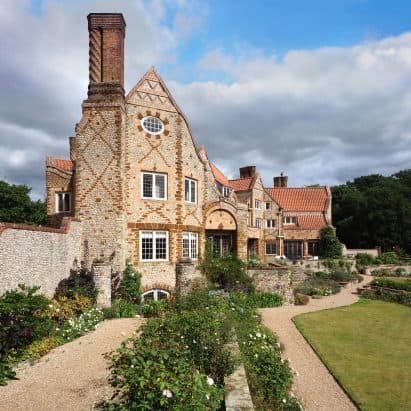
Before diving into the buildings themselves, it helps to understand what sets an Arts and Crafts house apart. Influenced by the writings of John Ruskin and the designs of William Morris, Arts and Crafts architects rejected the ornate excess of High Victorian style in favour of simplicity, regionalism, and truth to materials. Key characteristics include steeply pitched roofs, exposed timber framing, handmade tiles, rough-hewn stonework, and open floor plans that blur the boundary between interior and exterior.
Prominent architects associated with the movement include Philip Webb, Richard Norman Shaw, Charles Voysey, Edwin Lutyens, and — across the Atlantic — Charles and Henry Greene, as well as Bernard Maybeck. Each brought their own regional sensibility to the movement's shared principles, producing an extraordinary variety of houses that nonetheless feel unmistakably united by a common ethos.
Ten Iconic Arts and Crafts Houses Worth Knowing
1. Red House, Bexleyheath, England (1860)
Perhaps no Arts and Crafts house is more famous than Red House, designed by Philip Webb for William Morris himself. Built from red brick at a time when stucco-covered facades were fashionable, the house was groundbreaking in its celebration of honest materials and vernacular forms. Every detail — from the pointed arches to the hand-painted wall tiles — was conceived as part of a unified artistic vision. Red House is now managed by the National Trust and remains a place of pilgrimage for lovers of design and architecture.
2. Standen, West Sussex, England (1894)
Designed by George Jack and Philip Webb for the Beale family, Standen is one of the best-preserved Arts and Crafts interiors in existence. The house is filled with original Morris & Co. textiles, wallpapers, and furnishings, giving visitors an unparalleled sense of how an Arts and Crafts interior was meant to look and feel. The surrounding gardens, designed in harmony with the house, add another layer of beauty to an already extraordinary property.
3. Blackwell, Cumbria, England (1900)
Designed by M.H. Baillie Scott as a holiday retreat overlooking Lake Windermere, Blackwell is celebrated for its stunning interiors, particularly the White Drawing Room with its peacock friezes and inglenook fireplace. The house brilliantly demonstrates how Arts and Crafts design could be both luxurious and rooted in nature, with views of the Lake District landscape framed through carefully positioned windows.
4. The Gamble House, Pasadena, California (1908)
Designed by Greene and Greene for the Gamble family of the Procter & Gamble fortune, this masterpiece of American Arts and Crafts architecture takes the movement's love of natural materials to breathtaking extremes. Every inch of the house — from its overhanging eaves and sleeping porches to its hand-rubbed teak joinery and iridescent glass — reflects a meticulous attention to craft that has few parallels in domestic architecture anywhere in the world.
5. Wightwick Manor, West Midlands, England (1887)
Built for paint manufacturer Theodore Mander, Wightwick Manor is a treasure trove of Pre-Raphaelite art and Morris & Co. decorative work. The house's half-timbered exterior and richly furnished interiors make it one of the most atmospheric Arts and Crafts properties in Britain. Now in the care of the National Trust, it houses an important collection of paintings by Dante Gabriel Rossetti, Edward Burne-Jones, and others.
6. Voysey's The Orchard, Chorleywood, England (1900)
Charles Voysey designed this modest white-rendered house as his own home, and it perfectly encapsulates his stripped-back approach to Arts and Crafts design. With its low ceilings, horizontal emphases, heart-shaped motifs, and cosy inglenooks, The Orchard shows how the movement could express warmth and humanity through the simplest of means. Voysey's work was enormously influential, anticipating the clean lines of early Modernism by decades.
7. Sunningdale Park, Berkshire, England (1901)
A lesser-known gem in the Arts and Crafts canon, Sunningdale Park demonstrates the movement's capacity for grand domestic architecture without sacrificing its commitment to handcraft. The property features extensive use of local materials, intricate carved woodwork, and garden spaces designed as outdoor rooms — a concept that was central to the Arts and Crafts vision of the house as a complete environment.
8. Pasadena's Craftsman Bungalows, California
Not every iconic Arts and Crafts house is a grand country estate. The Craftsman bungalows of Pasadena and greater Los Angeles represent the movement's democratic ambitions at their finest. Adapted from British Arts and Crafts principles by architects like the Greenes and popularised through publications like The Craftsman magazine, these modest homes brought handcrafted details — exposed rafter tails, river-rock chimneys, built-in furniture — to ordinary American families. Entire neighbourhoods of these bungalows survive and are fiercely protected by local preservation groups.
9. Deanery Garden, Berkshire, England (1901)
Designed by Edwin Lutyens with gardens by Gertrude Jekyll, Deanery Garden represents the perfect synthesis of Arts and Crafts architecture and landscape design. The house, built for Edward Hudson, founder of Country Life magazine, is renowned for its dramatic great hall, its use of local brick and tile, and the seamless way in which it flows into the surrounding garden. It remains one of Lutyens's most celebrated early works.
10. Mariemont Historic District, Ohio, USA
Planned in the early 1920s as a model town inspired by English Arts and Crafts villages, Mariemont near Cincinnati is a remarkable example of how the movement's ideals were applied at an urban planning scale. Designed by John Nolen with architecture by a range of firms including Ferris & Callister, the town features a cohesive collection of Arts and Crafts and Colonial Revival homes built around a central village green, embodying the movement's vision of community, craft, and quality of life.
Why Arts and Crafts Houses Still Matter Today
The enduring appeal of Arts and Crafts architecture lies in its insistence that beauty and function are not opposites, and that the places where we live have a profound effect on how we feel and who we become. In an era increasingly defined by digital abstraction and disposable construction, the movement's emphasis on natural materials, skilled craftsmanship, and human scale offers a compelling alternative vision of what domestic architecture can achieve.
Whether you are a homeowner seeking inspiration for a renovation, a traveller planning a heritage itinerary, or simply an admirer of exceptional design, the houses explored here offer rich rewards. Each one tells a story about a moment in history when architects, craftspeople, and their clients dared to believe that everyday life deserved to be beautiful — and then set about making it so. That belief, as timeless as the houses themselves, is the true legacy of the Arts and Crafts movement.
- Red House (1860) — the founding statement of Arts and Crafts domestic architecture
- Standen (1894) — the finest surviving Arts and Crafts interior in Britain
- Blackwell (1900) — a lakeside masterpiece of spatial poetry
- The Gamble House (1908) — American Arts and Crafts at its most refined
- Wightwick Manor (1887) — a living gallery of Pre-Raphaelite art and Morris design
- The Orchard (1900) — Voysey's quietly revolutionary personal home
- Sunningdale Park (1901) — grand Arts and Crafts executed with regional sensitivity
- Pasadena Craftsman Bungalows — the democratic face of the movement
- Deanery Garden (1901) — Lutyens and Jekyll's greatest collaboration
- Mariemont (1920s) — Arts and Crafts principles applied to an entire community