
A New Era at the Federal Reserve: Kevin Warsh Takes the Helm
A significant shift is underway at the United States' most powerful financial institution. Federal Reserve policymakers convened their two-day meeting this week to deliberate on interest rate policy — and it was the first such gathering presided over by the newly appointed Kevin Warsh. While markets and homeowners alike were hoping for signs of relief in the form of a rate cut, the early signals suggest that borrowing costs will remain where they are, at least for now.
Warsh's arrival at the top of the Federal Reserve has been anything but quiet. He came into the role with a pointed message: the central bank is overdue for what he calls "regime change." That phrase alone was enough to put Wall Street, mortgage lenders, and everyday homebuyers on high alert, wondering what exactly this new chapter in Fed history will look like — and what it might mean for their wallets.
What Does "Regime Change" Actually Mean?
When Kevin Warsh invokes the term "regime change," he isn't talking about dramatic policy reversals overnight. Instead, he appears to be signaling a philosophical shift in how the Federal Reserve operates, communicates, and positions itself in the broader economic landscape.
One of the first and most immediately visible changes Warsh made was reverting his official title back to "Fed Chairman" — a departure from the gender-neutral "Fed Chair" designation preferred by his two immediate predecessors, Jerome Powell and Janet Yellen. While this may seem like a minor stylistic choice, it underscores Warsh's desire to put his own stamp on the institution from day one.
But the changes don't stop at titles. Warsh has indicated he believes the Federal Reserve places far too much emphasis on public forecasts, projections, and forward guidance. In his view, the Fed has become overly reliant on telegraphing its moves to financial markets, potentially constraining its own flexibility and contributing to excessive market dependency on central bank signals. Expect changes to the frequency, tone, and style of the Fed's public communications in the months ahead.
Interest Rates: The One Thing That Isn't Changing — Yet
Despite all the talk of transformation, there is one area where continuity reigns — at least for this meeting. The Fed's benchmark interest rate is widely expected to remain unchanged. The reason? Persistent inflationary pressures have effectively taken any near-term rate cut off the table.
Recent inflation readings have come in hotter than anticipated, reducing the appetite among the 12-member Federal Open Market Committee (FOMC) — the body responsible for setting interest rate policy — to move toward easing. For the majority of committee members, a cautious "wait and see" approach is the only defensible position given the current economic data.
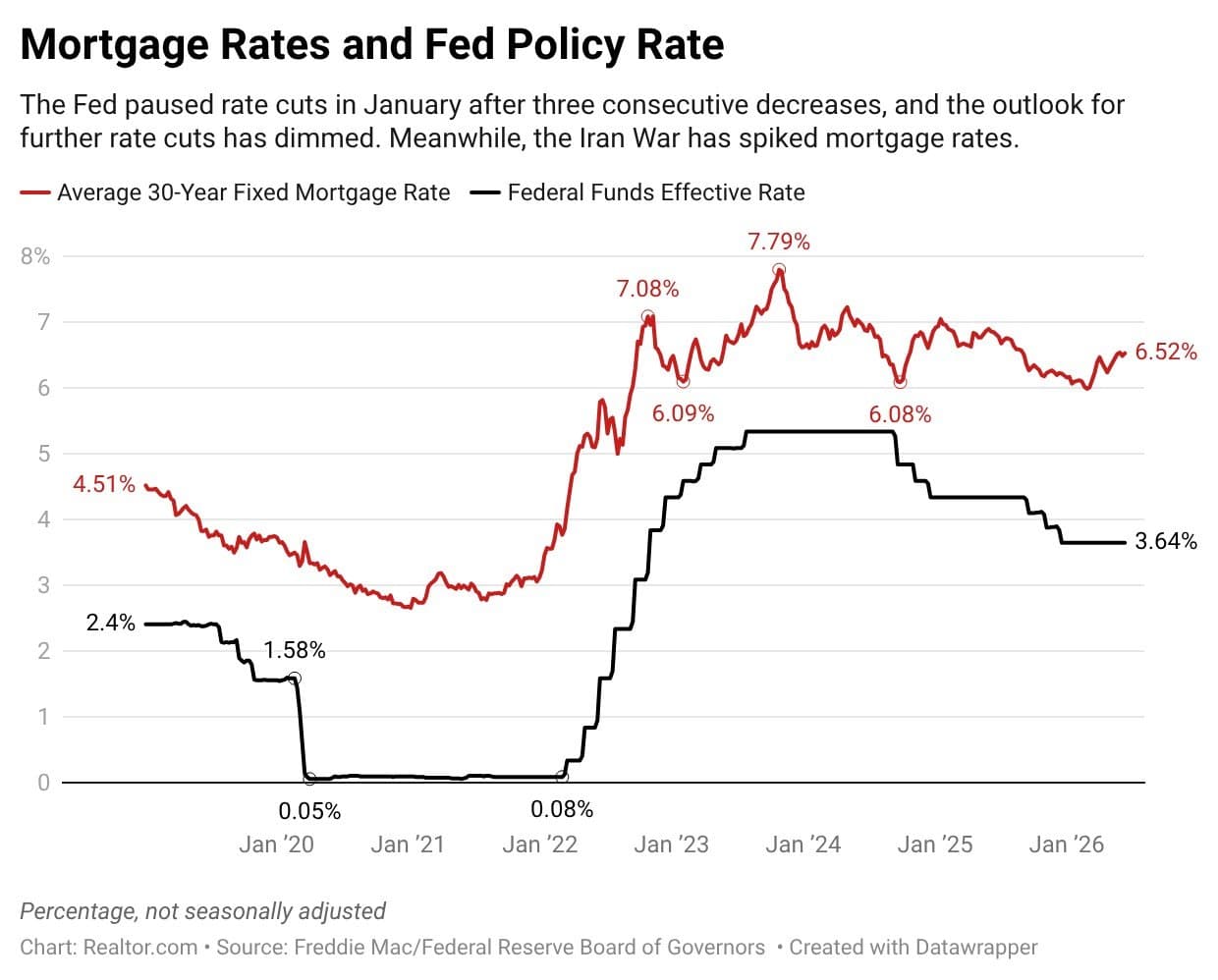
This is a frustrating reality for prospective homebuyers who have been hoping that falling rates would improve affordability. Mortgage rates remain elevated, and with the Fed holding firm, there is little immediate relief on the horizon. However, understanding the dynamics at play can help buyers and homeowners plan more strategically for the months ahead.
What This Means for the Housing Market
The connection between Federal Reserve policy and the housing market is direct and consequential. When the Fed holds its benchmark rate steady — especially at elevated levels — mortgage rates tend to follow suit. For buyers already stretched by high home prices and limited inventory, this prolonged period of higher borrowing costs continues to weigh heavily on affordability.
- Mortgage rates remain high: With no rate cut imminent, 30-year fixed mortgage rates are unlikely to see significant downward movement in the near term, keeping monthly payments elevated for new buyers.
- Refinancing opportunities limited: Homeowners who purchased or refinanced during the low-rate environment of 2020–2021 have little incentive to refinance, while those who need to may face sticker shock at current rates.
- Buyer demand may stay suppressed: Elevated borrowing costs continue to price out segments of first-time and move-up buyers, keeping overall transaction volumes below historical norms.
- Sellers remain reluctant to list: The so-called "lock-in effect" — where existing homeowners are disincentivized to sell because they'd lose their low-rate mortgages — continues to constrain housing supply.
When Could Rate Cuts Finally Happen?
The big question on everyone's mind is: when will the Fed finally cut rates? Under Kevin Warsh's new leadership, predicting the Fed's next move may actually become harder, not easier. If Warsh follows through on his intention to reduce forward guidance and public forecasting, markets will have fewer clear signals to work with.
What is clear is that the Fed will need to see consistent, convincing evidence that inflation is returning sustainably to its 2% target before it moves to cut rates. Until that data materializes, patience is the operative word — both for the Fed and for anyone hoping that lower mortgage rates will revitalize the housing market.
Economists and market watchers will be scrutinizing every word of the post-meeting statement and any subsequent press conference for hints about the Fed's direction under its new leadership. The tone, language, and framing under Warsh may differ meaningfully from what markets became accustomed to under Powell.
The Bottom Line for Homebuyers and Homeowners
Kevin Warsh's debut as Fed Chairman signals that change is coming to the central bank — but not necessarily the kind of change that brings immediate financial relief to borrowers. With inflation still running warm and a new Fed chief who values independence over market hand-holding, the path to lower interest rates may be longer and less predictable than many had hoped.
For homebuyers, the advice remains consistent: focus on what you can control. Work on strengthening your credit score, building a larger down payment, and exploring all available loan products. For homeowners, consider whether your current financial position warrants action regardless of rate movements. The housing market moves in cycles, and those who plan carefully — rather than waiting for the perfect rate environment — are often best positioned to succeed.
As the Warsh era at the Federal Reserve officially begins, one thing is certain: the next several months will be closely watched by anyone with a stake in where interest rates, and by extension mortgage rates, are headed next.