
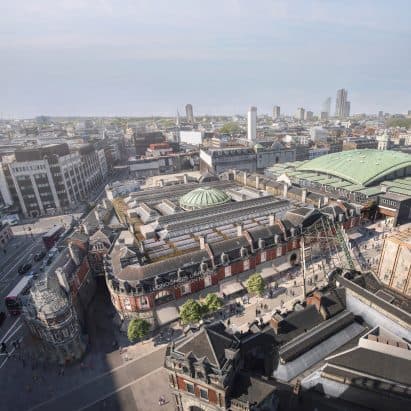
London Museum's Bold New Chapter: First Images Revealed for the Smithfield Relocation
One of London's most anticipated architectural projects has finally stepped into the spotlight. The first detailed images of the relocated London Museum — to be housed within the historic General Market building at Smithfield in the City of London — have been officially revealed, offering the public an exciting glimpse into what promises to be a transformative cultural landmark. The design, spearheaded by acclaimed practices Stanton Williams and Asif Khan, blends sensitive heritage conservation with bold contemporary vision, setting a new benchmark for museum design in the United Kingdom.
Why the London Museum Is Moving to Smithfield
The London Museum has long been located at London Wall in the Barbican area, a site that, while functional, has increasingly struggled to accommodate the museum's growing ambitions and visitor numbers. The decision to relocate to Smithfield represents far more than a change of address — it signals a new era for one of the world's great civic museums, one dedicated to telling the story of London and its people across thousands of years of history.
Smithfield itself carries enormous historical weight. The area has served as a livestock market, a site of public execution, and a hub of Victorian commercial activity. The General Market building, a Grade II listed structure dating from the late nineteenth century, provides not only a spectacular architectural shell but also a deeply layered narrative context that aligns powerfully with the museum's mission to explore the city's complex identity. Breathing new life into this underused heritage building also contributes to the ongoing regeneration of the wider Smithfield and Farringdon district.
The Design Vision: Stanton Williams and Asif Khan
The creative partnership behind the project brings together two practices with very different but complementary strengths. Stanton Williams is widely respected for its rigorous, detail-led approach to architecture, particularly in the cultural and heritage sectors — having previously worked on major projects including the Sainsbury Laboratory in Cambridge and the transformation of Somerset House. Asif Khan, meanwhile, has built an international reputation for creating experiential, emotionally resonant spaces that challenge conventional ideas about how buildings communicate with people.
Together, the two practices have developed a design language that respects the grandeur and materiality of the Victorian General Market while introducing distinctly contemporary interventions that will redefine how visitors move through, experience, and emotionally connect with the space. The revealed images show sweeping interior volumes where original ironwork and masonry are celebrated rather than concealed, sitting alongside new insertions in lighter, more translucent materials that allow natural light to flood previously dark market halls.
Key Architectural Features of the New London Museum
- Preserved Victorian Structure: The Grade II listed General Market building will retain its iconic facade and much of its interior iron framework, with the design team going to considerable lengths to conserve original materials and craftsmanship wherever feasible.
- New Public Courtyards: One of the most dramatic interventions involves the creation of generous covered public courtyards within the building's footprint, providing weather-protected civic space that will be freely accessible to Londoners and tourists alike, regardless of museum entry.
- Flexible Gallery Spaces: The internal layout has been conceived to offer maximum flexibility, allowing the museum to host large-scale temporary exhibitions alongside its permanent collection in spaces that can be reconfigured over time.
- Rooftop Terraces and Views: Images reveal plans for accessible rooftop areas that will offer remarkable views across the City of London skyline, integrating the museum experience with the urban landscape it seeks to interpret.
- Sustainability Credentials: The project places significant emphasis on environmental performance, with the adaptive reuse of the existing building forming the cornerstone of the team's sustainability strategy — avoiding the carbon cost of demolition and new construction wherever possible.
Cultural and Community Significance
Beyond the architectural spectacle, the relocated London Museum carries profound social significance. The museum's leadership has been vocal about its intention to make the new building genuinely welcoming to all Londoners — not simply those who already feel comfortable in traditional museum settings. The design reflects this ambition through the provision of generous free public spaces, accessible entrances from multiple directions, and a spatial sequence that does not privilege any single approach to engaging with the building or its contents.
Asif Khan, in particular, has spoken about the importance of designing spaces that feel emotionally alive — places where people sense that their own story is part of the larger narrative on display. At a museum dedicated to the lives of Londoners past and present, this philosophy carries particular resonance. The revealed images suggest a building that is simultaneously monumental and intimate, capable of inspiring awe while also feeling deeply human in scale and detail.
Timeline and What to Expect Next
The London Museum's relocation project is currently moving through detailed design and planning stages, with construction anticipated to be a multi-year endeavour given the complexity of working within a protected heritage structure. The museum has indicated its ambition to open the new Smithfield site later this decade, though precise opening dates remain subject to the progress of planning approvals and the construction programme.
In the meantime, the release of these detailed design images represents a significant milestone — giving Londoners and architecture enthusiasts around the world their clearest picture yet of what the finished building will look and feel like. The project has already attracted considerable attention within the architecture and heritage communities, with many observers noting that it has the potential to join the ranks of Europe's great museum transformations.
A Museum Fit for London's Future
The revealed images of the relocated London Museum at Smithfield confirm what many had hoped: that this is a project of genuine architectural and cultural ambition. In entrusting the design to Stanton Williams and Asif Khan, the museum has chosen a team capable of honouring the weight of the site's history while imagining a building that feels relevant, welcoming, and alive for twenty-first century London. As the city continues to evolve at remarkable speed, a museum that can hold the past and the present in productive dialogue is more valuable than ever. The new London Museum looks set to be exactly that.