
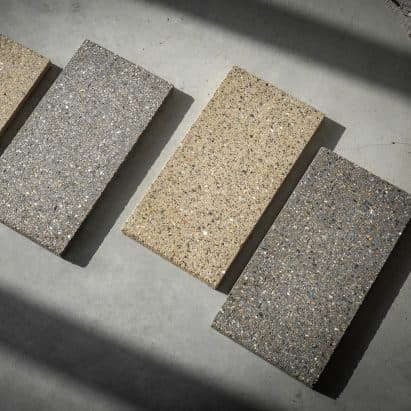
Mimmik Tile by Front and Biomason: A New Chapter in Sustainable Surface Design
In an era when the construction and interiors industry is under increasing pressure to reduce its environmental footprint, a new collaboration is turning heads across the design world. Swedish design studio Front has partnered with US-based biotechnology company Biomason to create Mimmik, a remarkable bio-grown tile that challenges everything we thought we knew about how building materials should be made. This collaboration represents not just a product launch, but a paradigm shift in how designers, architects, and manufacturers can rethink the relationship between the built environment and the natural world.
Who Are Front and Biomason?
To fully appreciate the significance of the Mimmik tile, it helps to understand the two creative forces behind it. Front is a Stockholm-based design studio with a long-standing reputation for work that interrogates the boundaries between art, nature, and industrial production. Founded by Sofia Lagerkvist and Anna Lindgren, Front has consistently produced work that provokes questions about how objects come to exist — often allowing natural processes, chance, and non-human actors to play a role in shaping the final form.
Biomason, on the other hand, is a North Carolina-based biotechnology company that has been quietly revolutionizing the world of construction materials for years. The company's core innovation is its proprietary biocement technology, which uses microorganisms to grow stone-like materials at ambient temperatures. Unlike conventional cement production — one of the single largest contributors to global CO2 emissions, accounting for roughly 8% of worldwide carbon output — Biomason's process requires no kiln firing and produces a dramatically smaller carbon footprint. Their biologically grown materials have already found applications in commercial flooring and large-scale architectural installations.
When these two visionary entities came together, the result was Mimmik: a tile that is as much a living experiment as it is a finished product.
What Is the Mimmik Tile?
Mimmik is a bio-grown ceramic-like tile created using Biomason's signature biocement process, shaped and guided by Front's design intelligence. The name itself gestures toward mimicry — the tile takes aesthetic and structural cues from natural stone and mineral formations while being born from a fundamentally biological process rather than an extractive or energy-intensive one.
The tiles are grown rather than fired. Biomason's microorganisms bind aggregate materials together through a natural mineralization process, producing a hard, durable surface that closely resembles traditional stone or ceramic tile in appearance and function. Front's contribution lies in shaping the visual language of the tile — its texture, pattern, and form — translating the organic logic of biological growth into something architecturally applicable and aesthetically considered.
The resulting surface carries an inherent uniqueness. Because the growth process is biological and not mechanical, no two tiles are perfectly identical. Mimmik embraces this variability rather than trying to suppress it, echoing the qualities that make natural stone so prized in interiors and architecture: depth, character, and an unmistakable sense that the material has a history.
The Sustainability Case for Bio-Grown Tiles
The environmental argument for products like Mimmik is compelling and increasingly urgent. Traditional tile manufacturing — whether ceramic, porcelain, or stone — involves energy-intensive processes including kiln firing at extremely high temperatures, quarrying with significant land disturbance, and transportation chains that add further to carbon costs. The global tile market is enormous, and its environmental toll is proportionally significant.
Biomason's biocement technology sidesteps many of these issues entirely. By growing material at room temperature using microbial processes, the energy consumption of production is dramatically reduced. The process can also incorporate locally sourced aggregate materials, reducing the need for long-distance supply chains. And because no high-temperature firing is required, a major source of industrial CO2 emissions is eliminated from the equation altogether.
For architects, interior designers, and specifiers working toward green building certifications or sustainability commitments, tiles like Mimmik represent a meaningful option — one where the environmental credentials are embedded in the material's very nature rather than bolted on as an afterthought.
Design Meets Biology: The Aesthetic Appeal of Mimmik
Sustainability alone does not make a great design product. What distinguishes Mimmik from other eco-conscious material experiments is that Front has ensured the tile is genuinely beautiful and architecturally versatile. The studio's deep design intelligence is evident in the way the biological process has been guided to produce surfaces with real visual depth — textures and tonal variations that reward close inspection and bring warmth and character to a space.
The tile works equally well in residential and commercial contexts. Its natural, stone-like appearance makes it suitable for use on floors, walls, and feature surfaces, and its unique character lends itself to both contemporary and more traditional interiors. For designers seeking materials that carry a story — that can serve as a conversation piece as much as a functional surface — Mimmik delivers on multiple levels.
Why Mimmik Matters for the Future of Architecture
The Mimmik tile is more than a product. It is a proof of concept for a broader shift that the design and construction industries badly need to accelerate. As the climate crisis deepens, the pressure on architects, designers, and developers to make fundamentally different material choices is only going to increase. Initiatives like building regulations requiring lower embodied carbon, growing client demand for sustainable credentials, and the increasing cost competitiveness of green technologies are all pushing the industry in the same direction.
What Front and Biomason have demonstrated with Mimmik is that this shift does not require a sacrifice of design quality or aesthetic ambition. Bio-grown materials can be beautiful, durable, and commercially viable. They can carry the kind of sensory richness and material authenticity that the market has traditionally only found in extracted natural stone. And they can be made with a fraction of the environmental impact of their conventional equivalents.
- Mimmik is produced using Biomason's proprietary biocement technology, eliminating the need for high-temperature kiln firing.
- The collaboration with Front brings genuine design rigour to the product, making it architecturally applicable and visually distinctive.
- Each tile carries natural variation as a result of the biological growth process, giving the material the character and uniqueness of natural stone.
- The tile is suitable for both residential and commercial applications, including floors, walls, and feature surfaces.
- Mimmik signals a wider industry movement toward biofabricated building materials as a serious alternative to conventional options.
Looking Ahead: Biofabrication as the New Normal
The Mimmik tile arrives at a moment when biofabrication — the use of living organisms to grow or process materials — is transitioning from a niche research curiosity to a commercially viable design discipline. From mycelium-based packaging to bacterial dyes and now bio-grown stone tiles, designers and manufacturers are increasingly finding ways to harness biological processes in the service of production. Front and Biomason are not alone in this space, but Mimmik stands out for the maturity of its design resolution and the credibility of the technology underpinning it.
For anyone working in architecture, interior design, sustainable construction, or materials innovation, the Mimmik tile is well worth paying attention to. It represents the kind of thinking that the industry needs more of: rigorous, beautiful, commercially serious, and genuinely committed to doing things differently. In a material landscape that can sometimes feel dominated by greenwashing and incremental improvement, Mimmik is something more exciting — a tile that is literally grown from the ground up with the future in mind.