
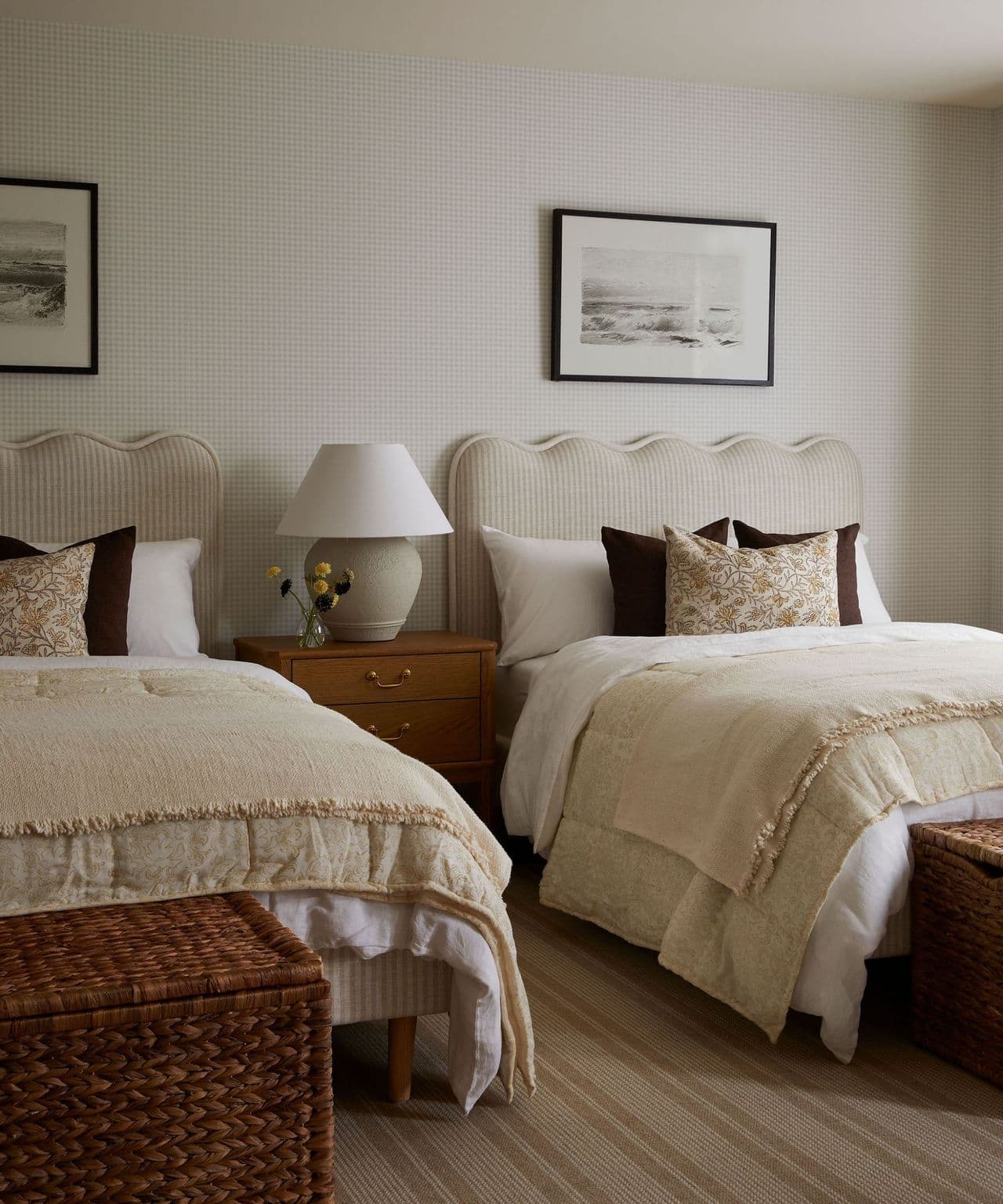
Why Your Home Shouldn't Look Like It Was Styled by a Retail Algorithm
There is a particular kind of interior design dread that strikes when you walk into a home and feel like you've seen it somewhere before — not in a neighbor's house, not in a magazine spread, but in the middle pages of a mass-market furniture catalog. Everything matches. The throw pillows echo the curtains. The coffee table coordinates perfectly with the TV console. The rug is exactly the right shade of greige. And somehow, despite all of that effort and probably a fair amount of money, the room feels completely lifeless.
This is the catalog trap, and millions of well-meaning homeowners fall into it every year. The problem isn't taste. It isn't budget. It's a fundamental misunderstanding of what makes a space feel genuinely beautiful, comfortable, and alive. Great interior design has never been about matching sets. It has always been about tension, contrast, and the kind of layered storytelling that only happens when you mix high with low, old with new, and expensive with inexpensive.
The Myth of the "Complete Look"
Furniture retailers and home decor brands have done an exceptional job of selling the idea of the complete look — buy this sofa, add these accent chairs, finish it with this coffee table, and your living room is done. It's convenient, it's easy, and it photographs beautifully under studio lighting. In real life, however, it produces rooms that feel staged rather than inhabited.
The homes that genuinely stop you in your tracks — the ones you see in architectural magazines, in the homes of creative professionals, or in the houses of people who simply have an innate sense of style — almost never follow this formula. They contain contradictions. A brutalist concrete lamp on an ornate Victorian side table. A $12 flea market print in a museum-quality gilded frame. A worn leather armchair that has clearly lived several lives sitting beside a sleek, modern sectional sofa. These contradictions are not accidents. They are the point.
Why Mixing High With Low Works So Well
The practice of mixing investment pieces with budget finds is one of the oldest and most reliable principles in interior design, yet it remains counterintuitive to many homeowners who assume that a beautiful room requires exclusively expensive things. In reality, high-end pieces often look even better — more considered, more intentional — when they're surrounded by items that didn't cost a fortune.
A handmade ceramic vase from a local artisan market placed next to a designer lamp creates a dialogue that neither object could generate on its own. The luxury item gains warmth and humanity. The inexpensive piece gains credibility and context. Together, they tell a story about a person who makes choices based on meaning rather than price tags.
This approach also has obvious practical advantages. Allocating your budget strategically — spending generously on a sofa you'll use every day and saving dramatically on decorative accents, lighting fixtures, or wall art — is simply smart design. It lets you invest in quality where quality matters most while leaving room for the kind of spontaneous, personality-driven finds that no catalog can anticipate.
Old and New: The Art of Designing Across Time
One of the most common mistakes in home decorating is treating a single design era as a complete aesthetic universe. Mid-century modern enthusiasts furnish entire homes in teak and walnut. Maximalists pile on Victorian excess without relief. Minimalists strip away anything made before 2010. In each case, the result is a room that feels more like a period reproduction than a living space.
The most compelling interiors mix pieces from different eras because real life is not confined to a single decade. A Georgian writing desk that belonged to your grandmother earns its place in a contemporary home not despite its age but because of it. It carries weight, history, and a kind of authentic imperfection that no amount of money can manufacture at a furniture showroom today.
Vintage and antique pieces also solve one of the central challenges of modern decorating: making a space feel unique. In an era when the same mass-produced items are available to millions of people simultaneously, older pieces offer genuine individuality. No one else has exactly your grandmother's desk, your grandfather's field jacket framed on the wall, or the set of mismatched chairs you collected one by one from estate sales over five years.
Practical Ways to Break Free From the Catalog Look
Changing the way you approach your home doesn't require tearing everything out and starting over. Small, deliberate choices made consistently over time will transform a matched, coordinated interior into a layered, personal one.
- Shop outside the furniture store. Thrift shops, estate sales, flea markets, and antique fairs are where personality lives. Even a single well-chosen vintage piece can shift the energy of an entire room.
- Break up matched sets. If you bought a three-piece dining set, consider replacing one or two chairs with something unexpected — a different material, a different era, a different color. The room will immediately feel more considered.
- Frame the inexpensive beautifully. A modest print or a child's drawing displayed in a high-quality frame sends a signal that meaning, not price, determines what deserves to be celebrated in your home.
- Let things wear in. Resist the urge to replace items the moment they show signs of age. A scuffed leather chair, a faded kilim rug, a lamp with a slightly dented shade — these imperfections are evidence of a life actually lived.
- Trust the odd one out. If every piece in a room feels like it belongs, the room probably isn't interesting enough yet. One element that breaks the pattern — in scale, color, material, or era — is usually what makes the whole composition work.
The Room That Looks Like You
Ultimately, the goal of interior design is not to achieve a look. It is to create a place that reflects who you are, how you live, and what you value. Catalogs can't do that for you, no matter how well-curated their collections are, because they have no idea who you are.
The homes that people remember, return to, and feel genuinely comfortable in are always the ones that contain evidence of real human choices — including the contradictory, the impractical, the sentimental, and the deliberately cheap. Mix the high with the low. Bring the old into conversation with the new. Spend extravagantly on the thing that matters most and find the rest wherever it calls to you. That is not a design philosophy. That is just good living.