
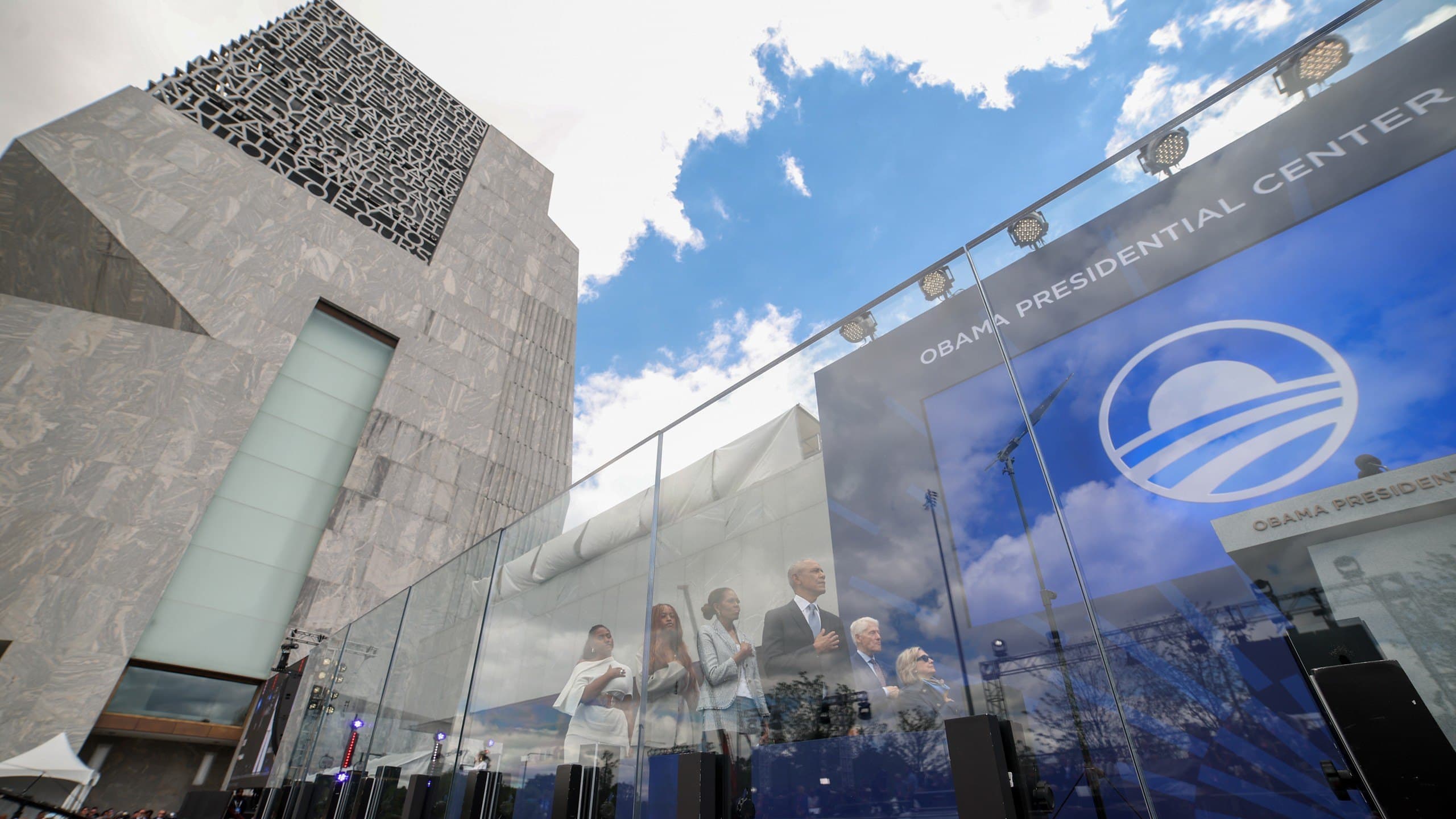
Obama Presidential Center Officially Opens in Chicago on Juneteenth
After years of planning, legal battles, community debates, and construction, the Obama Presidential Center has finally opened its doors to the public. The landmark complex officially welcomed visitors on Juneteenth — a deeply symbolic choice of date — marking a new chapter for Chicago's South Side and for presidential legacy institutions across the country. With an estimated price tag of $850 million, the center is one of the most ambitious and talked-about cultural developments in the United States in recent memory.
Located in the historic Jackson Park neighborhood on Chicago's South Side, the center documents and celebrates Barack Obama's eight-year tenure as the country's 44th president. But the opening has been met with both enthusiastic fanfare and pointed criticism — particularly regarding the complex's striking and unconventional architectural design. Here's everything you need to know about the Obama Presidential Center, what's inside, and why it's already stirring conversation.
What Is the Obama Presidential Center?
The Obama Presidential Center is a public campus dedicated to the life, presidency, and legacy of Barack Obama and former First Lady Michelle Obama. Unlike traditional presidential libraries, which are typically managed by the National Archives, the Obama center is privately operated by the Obama Foundation. This distinction has been a point of ongoing discussion, as it means the facility functions more as a museum, community hub, and cultural institution than a federally administered archive.
The center sits within Jackson Park, a storied green space on Chicago's South Side that also hosted the 1893 World's Columbian Exposition. The choice of location is personal — both Barack and Michelle Obama have deep roots in the South Side, and the center was designed in part to reinvest in a historically underserved community.
Inside the Four Buildings of the Obama Center
The campus is made up of four distinct structures, each serving a different purpose and audience. Together, they create a multi-use destination that blends history, education, community programming, and recreation.
- The Museum Tower: The centerpiece of the complex is an eight-story museum that houses four levels of exhibits. These exhibits tell the story of the Obama family's journey to the White House, highlight impactful social movements from the Obama era, and display memorabilia from their time in Washington. Interactive activities are woven throughout, making the space accessible to visitors of all ages. At the very top of the museum tower is an observation deck offering sweeping panoramic views of the South Side — a feature that is already being celebrated as one of the most rewarding experiences on the campus.
- The Library: The library building features an interactive media area designed to engage visitors with digital archives and educational content. It serves as a research and learning space that complements the historical exhibits in the museum.
- The Community Forum: This building includes a full auditorium suited for performances, lectures, and community gatherings. It reflects the Obama Foundation's stated mission of fostering civic engagement and giving local residents a venue to convene, create, and collaborate.
- The Sports Facility: Rounding out the campus is a recreational facility that includes an NBA regulation-size basketball court — a nod to the former president's well-known love of the game. The sports facility is intended to serve the surrounding community and provide programming for youth and residents of the South Side.
The Brutalist Design: Bold Vision or Unwelcome Fortress?
No conversation about the Obama Presidential Center's opening is complete without addressing the elephant in the room: the architecture. The museum tower in particular has drawn significant criticism for its brutalist, monolithic design. Clad in nearly windowless granite, the imposing structure has been compared — sometimes unfavorably — to a fortress, and critics have not been shy about expressing their displeasure with what some call an "audacious" architectural statement.
Brutalist architecture, characterized by raw concrete or stone surfaces, bold geometric forms, and an emphasis on function over ornamentation, has historically been a polarizing style. It enjoyed a peak in the mid-20th century before falling out of favor, and has seen something of a cultural reassessment in recent years. Supporters argue that brutalist buildings carry a powerful, honest visual language. Detractors say they feel cold, unwelcoming, and out of place in residential or park settings.
In the case of the Obama Center's museum tower, that debate is playing out in real time. While some architecture critics and design enthusiasts have praised the building's confident, uncompromising presence, others have questioned whether a nearly windowless granite tower is the right fit for a public park environment meant to serve a community. The comparisons that have circulated online and in the press have been pointed, and they have ensured that the design conversation will continue long after opening weekend.
What the Opening Means for Chicago's South Side
Regardless of where one stands on the architecture debate, the opening of the Obama Presidential Center carries real significance for the South Side of Chicago. Supporters of the project have long argued that the center would bring economic investment, jobs, tourism, and heightened visibility to a part of the city that has historically been overlooked in terms of civic infrastructure and cultural institutions.
Community advocates and local business owners are hopeful that the steady flow of visitors the center is expected to attract will have a meaningful ripple effect across the surrounding neighborhoods. At the same time, some longtime residents and housing advocates have raised concerns about gentrification and displacement — a tension that has shadowed the project for years and will likely continue to shape the conversation as the center settles into its new role.
Plan Your Visit to the Obama Presidential Center
The Obama Presidential Center is now open to the public in Jackson Park on Chicago's South Side. Whether you're a history enthusiast, an architecture lover looking to form your own opinion about that granite tower, or a Chicago resident curious about what's been rising in your neighborhood, the campus offers something for a wide range of visitors. With four buildings, interactive exhibits, a community auditorium, a rooftop observation deck, and an NBA-regulation basketball court, the center is designed to be experienced more than once.
For hours, admission details, and visitor information, you can visit the official Obama Foundation website. The center's opening marks the beginning of what promises to be an ongoing and evolving conversation about presidential legacy, community investment, architecture, and the meaning of public space in American cities.