
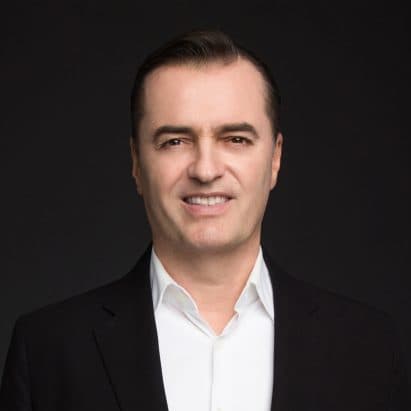
Patrik Schumacher Announces Plans to Rename Zaha Hadid Architects
Few names in contemporary architecture carry as much weight as Zaha Hadid. The Iraqi-British architect, who passed away in 2016, built a global reputation defined by fluid forms, parametric precision, and a fearless rejection of architectural convention. Her firm, Zaha Hadid Architects (ZHA), became one of the most recognizable and respected practices in the world. Now, a decade after her death, Patrik Schumacher — her longtime partner and the firm's current principal — has announced plans to rename the studio, setting off a wave of discussion across the architecture community about legacy, branding, and the evolving identity of one of design's most storied institutions.
Who Is Patrik Schumacher?
Patrik Schumacher joined Zaha Hadid's practice in 1988 and became one of its most influential intellectual forces. A theorist as much as a designer, Schumacher is the author of The Autopoiesis of Architecture, a two-volume theoretical framework that positioned parametricism as the defining architectural style of the 21st century. After Hadid's death, he took the helm of the firm and has led it through a series of high-profile international commissions, from cultural institutions to luxury residential towers. His leadership has kept ZHA at the forefront of global architecture, even as questions about the firm's future direction have persisted.
Schumacher has never shied away from controversy. Over the years he has made provocative statements on housing policy, urban development, and the role of design in society. His decision to explore renaming the firm is, in many ways, entirely in keeping with his instinct to push boundaries — even when those boundaries involve one of architecture's most iconic names.
What We Know About the Renaming
The announcement was highlighted in Dezeen Agenda, the influential weekly newsletter that tracks the most significant developments in architecture and design. According to the coverage, Schumacher has indicated a desire to move the firm away from the Zaha Hadid name and toward an identity that more directly reflects his own leadership and the studio's current creative direction.
While specific details about the new name have not been fully confirmed at the time of reporting, the very act of considering a rebrand raises profound questions. For any architecture firm, its name is more than a label — it is a signal to clients, collaborators, and the public about values, history, and ambition. For a firm bearing the name of one of the most celebrated architects in history, the stakes are even higher.
The Case for a Rebrand
Supporters of the change argue that there are compelling practical and philosophical reasons to rename the studio. From a business perspective, continuing to trade under Zaha Hadid's name when she has been gone for nearly a decade creates a degree of ambiguity about who is actually leading and shaping the work. Schumacher has invested enormous creative and intellectual energy into the firm's output, and a rebrand could more accurately reflect the current reality of its leadership and vision.
There is also a broader precedent within the industry. Many great firms have evolved their names over time to reflect changing partnerships, generations, or ambitions. The architecture world is full of studios that began under one name and transitioned gracefully into new identities while preserving their design DNA. Schumacher's argument, as articulated in various interviews and public statements over the years, is that the firm should be understood as a living, forward-moving practice rather than a permanent monument to a figure who is no longer present to guide it.
Furthermore, at this year's Venice Architecture Biennale, Schumacher made headlines with a provocative exhibition exploring themes around the nature and future of architecture itself. That context suggests a principal deeply engaged in thinking about what architecture is and where it is going — someone for whom a name change might represent not erasure, but evolution.
The Case Against — and Why the Debate Matters
The opposing view is equally forceful. Critics of the potential rename argue that Zaha Hadid's name is not merely a brand asset — it is a symbol of what the firm stands for. Her identity as a pioneering woman of color who broke through some of the most stubborn barriers in a traditionally conservative profession is woven into every commission, every curved wall, every undulating façade the firm has ever produced. For many around the world, the name Zaha Hadid Architects is a source of inspiration that extends well beyond architecture into wider cultural conversations about representation and perseverance.
There is also a question of stewardship. Hadid built this firm, and the argument can be made that preserving her name is a form of respect — not just for her memory, but for the thousands of clients, collaborators, and communities whose work and spaces are tied to that name.
What This Means for the Future of ZHA
Whatever direction Schumacher ultimately takes, the conversation itself is significant. It forces the architecture world to grapple with questions that will only become more relevant as more firms founded by singular visionaries must eventually reckon with transition and succession.
- How do architecture firms honor founding legacies while remaining creatively relevant?
- When does preserving a name become a constraint rather than a tribute?
- What responsibilities do successors have to the identity built before their leadership?
These are not easy questions, and there are no universally correct answers. What is clear is that Zaha Hadid Architects — under whatever name it operates — remains one of the most technically sophisticated and visually distinctive practices in the world. Its work, characterized by sweeping parametric geometry and a commitment to experimentation, continues to shape skylines and cultural institutions across six continents.
A Legacy Larger Than Any Name
Ultimately, the debate over renaming Zaha Hadid Architects points to something larger: the enduring power of Zaha Hadid's contribution to architecture and the difficulty of containing that legacy within any single institutional framework. Whether the firm retains her name or adopts a new one under Schumacher's direction, the design philosophy she helped pioneer — and that he has helped articulate and advance — will continue to influence architects, engineers, and urban planners for generations to come.
As the story develops, the architecture community will be watching closely. Few decisions in the design world carry as much symbolic weight, and how Schumacher navigates this moment will say much about the kind of institution he intends to build for the decades ahead.