
Summer Electricity Bills Are Breaking Records — And Renters Are Feeling It Most
If your electricity bill made you do a double-take this summer, you are not imagining things. Energy costs are climbing to record highs across the United States, and for renters — who typically have fewer options to upgrade appliances or install energy-efficient systems — the financial pressure is especially intense.
According to a new analysis from the National Energy Assistance Directors Association (NEADA), Americans are expected to spend an average of nearly $800 on electricity between June and September, representing a 10.5% increase compared to the same period last year. That is a significant jump that is landing hard on households already operating on tight budgets.
The situation is even more dire when you look at who is most affected. The same NEADA report found that 1 in 6 U.S. households is currently behind on utility bills, and nearly 40% of households earning less than $50,000 annually report difficulty keeping up with energy payments. As NEADA executive director Mark Wolfe put it, "For families already struggling to make ends meet, higher cooling costs can force difficult choices between paying utility bills and covering other necessities such as food, rent, or medicine."
So what can renters actually do about it? As it turns out, a small but surprisingly powerful gadget may hold the answer.
The Plug-In Battery: A Game-Changing Cooling Hack for Renters
If you rent a home or apartment, your options for cutting cooling costs can feel limited. You likely cannot install solar panels, replace your HVAC system, or make structural upgrades to your unit. What you can do is plug something in — and that simple act is at the heart of one of the most talked-about energy solutions of the summer.
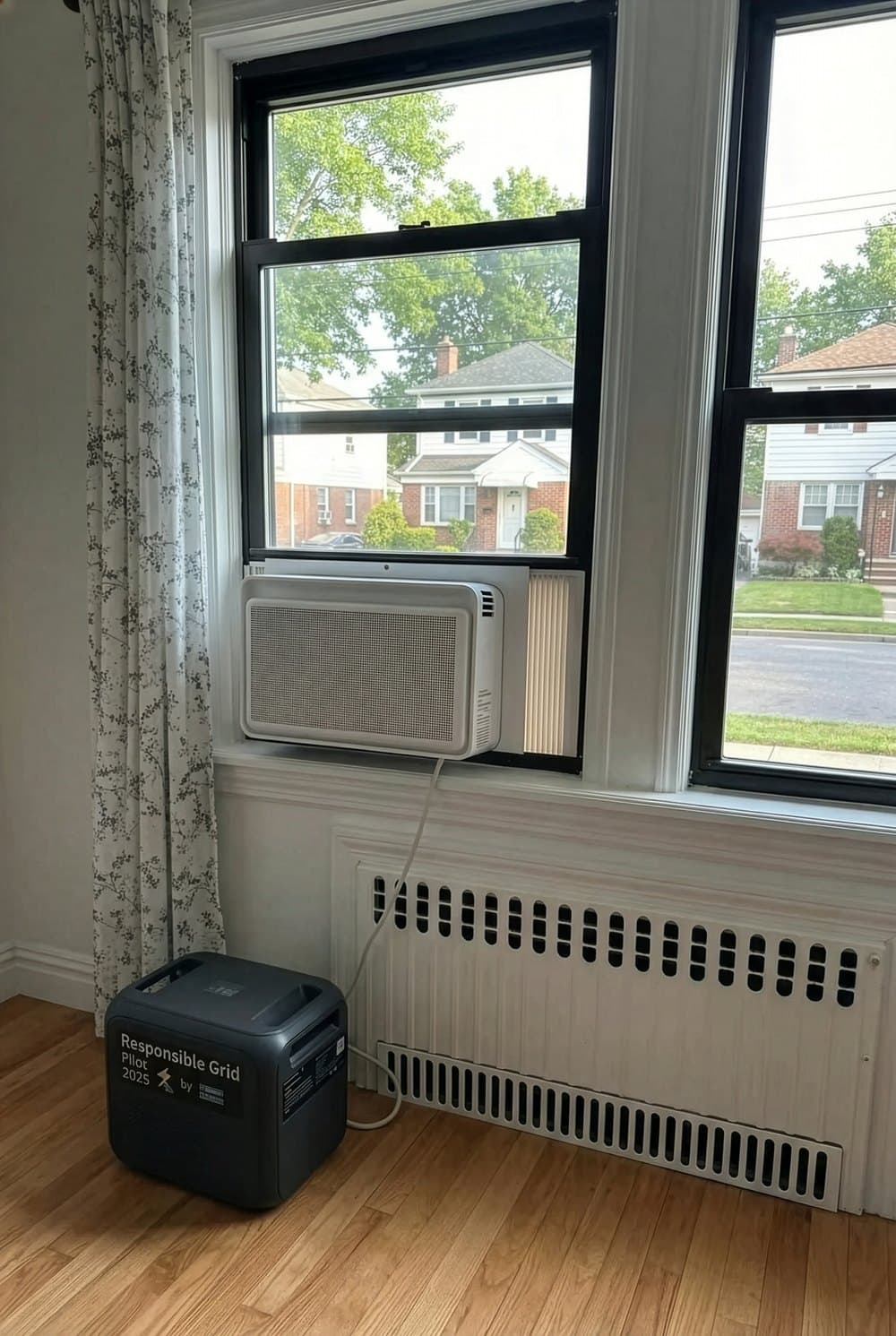
Plug-in power battery solutions — essentially large-capacity portable battery units — are emerging as a practical and renter-friendly way to significantly reduce electricity costs during peak demand hours. These devices charge up during off-peak periods when electricity is cheaper, and then power your window air conditioner unit during the hottest and most expensive parts of the day, when grid demand spikes and energy rates are at their highest.
Think of it like the power bank you carry in your bag to recharge your phone, but scaled up dramatically to handle the energy demands of a full-sized air conditioning unit. It is a straightforward concept with real, measurable financial benefits for everyday renters.
New York City Is Already Piloting This Technology
The idea is not purely theoretical. A pilot program currently underway in New York City is putting this technology to the test in real apartments, with real families, and with promising results.
The program is being led by Every Electric, a company whose CEO, Andrew Wang, has described the device as "basically a souped-up version of the power bank that you would use to charge your phone when you go out." Every Electric has partnered with Con Edison, New York City's major energy utility, to deploy these plug-in batteries in residential units throughout the city.
The batteries are connected to window air conditioner units and programmed to absorb energy from the grid during low-demand, low-cost periods — typically overnight or in the early morning hours. When afternoon heat peaks and electricity demand surges, the battery kicks in to power the AC, reducing the household's draw from the grid precisely when rates are most expensive.
The result? Lower electricity bills for residents and reduced strain on the broader electric grid during the hours when it is most vulnerable to overload. It is a win for individual renters and a win for the city's energy infrastructure at the same time.
Why This Solution Makes So Much Sense for Renters Specifically
Homeowners have long had access to tools like rooftop solar, smart thermostats wired into central HVAC systems, and whole-home battery storage like the Tesla Powerwall. These are effective solutions, but they require ownership, significant upfront investment, and often landlord or municipal approval.
Renters have none of those luxuries. That is exactly what makes the plug-in battery approach so compelling for this demographic. Consider the key advantages:
- No installation required. These units plug directly into a standard outlet, meaning no drilling, no permits, and no conversations with your landlord about making modifications to the unit.
- Portable and lease-friendly. When you move, the battery comes with you. There is no equipment left behind and no complicated removal process.
- Works with existing window AC units. Renters across the country already rely on window air conditioners as their primary cooling method. This solution integrates directly with the equipment they already own.
- Saves money automatically. By shifting energy consumption to off-peak hours, renters can take advantage of time-of-use pricing structures offered by many utility companies without having to manually adjust their habits or comfort levels.
How to Think About Energy Costs as a Renter This Summer
Even before plug-in battery technology becomes widely available in your city, there are smart steps you can take right now to reduce your summer cooling bills. Combining behavioral changes with emerging technology can make a meaningful difference in what you pay each month.
Start by understanding whether your utility company offers time-of-use pricing — a billing structure that charges different rates depending on when you consume electricity. If it does, shifting energy-intensive activities like running the dishwasher, doing laundry, or pre-cooling your apartment to overnight hours can reduce your bill noticeably.
Pairing those habits with a plug-in battery solution, as it becomes more broadly available, positions renters to take full advantage of both behavioral and technological energy savings. The combination is where the real financial impact lies.
The Bigger Picture: Affordable Cooling Is an Equity Issue
It is worth stepping back to acknowledge that the surge in summer electricity costs is not just a budgeting inconvenience — it is a genuine equity crisis for millions of American households. When nearly four in ten lower-income families report struggling to pay energy bills, the consequences extend well beyond discomfort. Extreme heat is a public health risk, and access to affordable cooling is, in very real terms, a matter of safety.
Innovative solutions like plug-in batteries represent exactly the kind of renter-accessible, low-barrier technology that can help close that gap. Programs like the Con Edison pilot in New York City signal that utilities and energy companies are beginning to recognize this — and that scalable solutions are within reach.
For renters searching for practical ways to lower their electricity bills this summer, keeping an eye on plug-in battery programs in your area, reaching out to your local utility for available incentives, and exploring time-of-use rate plans are strong starting points. The cooling hack is here — and it just might be the most powerful thing you can plug into your wall.