
Rent vs. Buy: Is Renting Cheaper Than Buying a Home in 2026?
The age-old question of whether to rent or buy a home has no single universal answer — but in 2026, the data is leaning more clearly in one direction than it has in years. For millions of Americans weighing their housing options, renting is proving to be the more affordable path, at least for now. A combination of falling rental prices, a surge in multifamily housing supply, and persistently high mortgage rates has created a housing market where renting offers real financial advantages over buying.
So what's actually driving this shift, and how long can renters expect relief to last? Here's a detailed breakdown of what the numbers say and what housing economists are predicting for the rest of 2026.
The Current State of the Rental Market
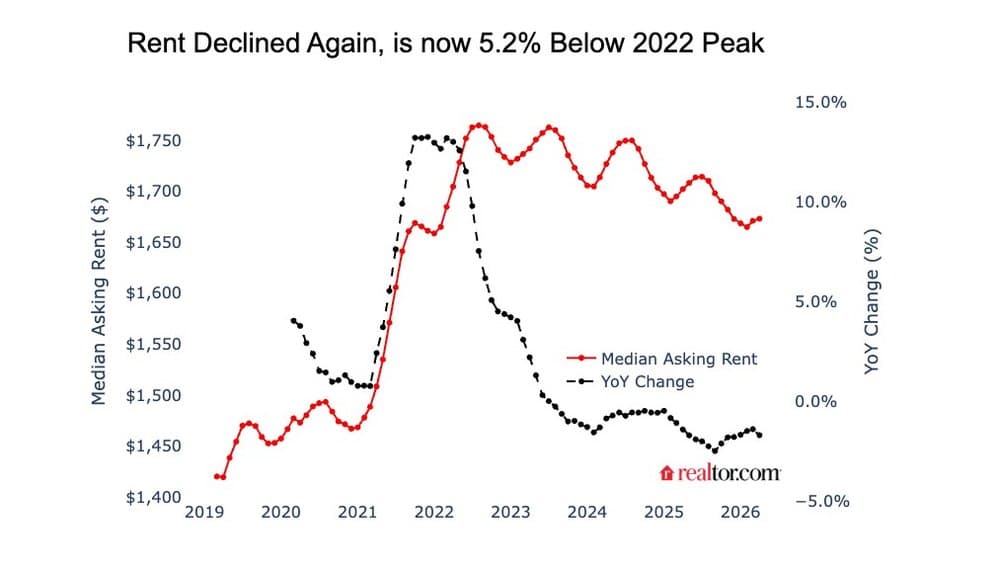
According to data from Realtor.com®, the national median asking rent across the 50 largest metropolitan areas in the United States fell to $1,686 as of May 2026. That figure is $78, or 4.4%, lower than the summer 2022 peak — a peak that many renters remember all too well. While rents are still $248 (17.2%) higher than pre-pandemic levels, the downward correction has been sustained and meaningful.
Perhaps more strikingly, May 2026 marks the 34th consecutive month of year-over-year price declines for rental properties with up to two bedrooms. That's nearly three straight years of falling rents — a prolonged trend that is providing genuine savings for tenants across the country.
"Rent continues to fall in many of the major metros across the United States for a variety of reasons," explains Joel Berner, a senior economist at Realtor.com®. "The biggest one is that rent is still correcting itself from the dramatic run-up of 2021 and 2022, when several years' worth of rent gains were seen over the span of a few months."
Why Is Renting Cheaper Than Buying Right Now?
The answer comes down to a fundamental imbalance between the rental and for-sale housing markets. While inventory for homes available for purchase has remained constrained in many areas, the rental sector has experienced a massive boom in new construction. Multifamily building projects that were greenlit during the pandemic years have been completing at record rates, flooding the market with new units and giving renters far more negotiating power than they've had in years.
This surge in supply is expected to continue pushing rental prices down on a year-over-year basis throughout 2026. Realtor.com economist Jiayi Xu notes that while seasonal patterns typically cause asking rents to tick upward during the summer months, the underlying trend remains favorable for renters.
"However, given the surge in multifamily construction over the past few years, we anticipate continued year-over-year declines," Xu explains. "In other words, modest rent relief is likely to continue in 2026."
In contrast, buying a home carries costs that many prospective buyers find prohibitive. Mortgage rates remain elevated compared to the historic lows seen in 2020 and 2021, making monthly payments on a new home purchase significantly higher than they would have been just a few years ago. When you factor in down payments, closing costs, property taxes, homeowner's insurance, and maintenance expenses, the total cost of homeownership adds up quickly — often far exceeding what a comparable rental unit would cost each month.
What the Multifamily Construction Boom Means for Renters
One of the most significant long-term factors supporting affordable renting is the expansion of the country's rental housing stock. The total number of rental units in the United States is expected to grow to over 50.5 million units by early 2027 — a level significantly higher than the pre-pandemic era. This expanded inventory is the direct result of a multiyear wave of multifamily construction investment, and its effects are already being felt in rental prices from coast to coast.
More units means more competition among landlords, which translates to better deals for tenants. In many metros, renters are finding concessions that were unheard of during the 2021–2022 rental frenzy, including free first months, reduced security deposits, and flexible lease terms. For anyone who has been sitting on the fence about whether to rent or buy, this window of relative affordability in the rental market is worth taking seriously.
Should You Rent or Buy in 2026?
While the financial case for renting is strong right now, the decision ultimately depends on your personal circumstances. Here are some key factors to weigh before making your choice:
- How long do you plan to stay? Buying a home generally makes more financial sense over a longer time horizon of five years or more. If you anticipate moving within a few years, renting is likely the smarter short-term move.
- Can you afford the upfront costs of buying? Down payments, closing costs, and moving expenses can easily run into the tens of thousands of dollars. Renting requires far less upfront capital.
- What are mortgage rates doing? High mortgage rates significantly increase the monthly cost of homeownership. If rates decline meaningfully in the coming years, buying could become more competitive with renting.
- What does the local market look like? National trends don't always reflect what's happening in a specific city or neighborhood. Research your local market carefully before committing to either path.
- What are your lifestyle and flexibility needs? Renting offers greater flexibility to relocate, which matters if your job or life circumstances are likely to change.
Looking Ahead: What to Expect for Rent Prices
The outlook for renters remains cautiously optimistic for the remainder of 2026. While seasonal upticks in asking rents are normal during the summer, the fundamental supply dynamics that have driven rents lower over the past 34 months aren't going away anytime soon. The multifamily construction pipeline still has significant completions ahead, and landlords in high-supply markets will continue to face pressure to keep their prices competitive.
For anyone currently renting and wondering whether to make the leap into homeownership, the current environment suggests there's no urgent reason to rush. Locking in a favorable lease now, while the rental market remains soft, can free up time to save more aggressively for a down payment and wait for more favorable mortgage rate conditions before buying.
The Bottom Line
In the rent vs. buy debate of 2026, renting holds a clear financial edge for the majority of Americans. Falling median asking rents, a growing supply of rental units, and elevated mortgage rates have all combined to make renting more economical than buying in most major markets. While homeownership remains a valuable long-term wealth-building tool for many, the timing, the numbers, and the market fundamentals all point in the same direction right now: for a wide range of households, renting is simply the smarter financial choice in today's housing environment.