
Rent vs. Buy: Is Renting Cheaper Than Buying a Home in 2026?
One of the biggest financial questions Americans face today is whether to rent or buy a home. With mortgage rates still elevated and home prices remaining stubbornly high in many markets, the answer for millions of households in 2026 is becoming increasingly clear: renting is cheaper than buying. Thanks to a surge in new multifamily housing supply and a continued correction from the pandemic-era rent explosion, tenants across the country are finding meaningful savings by staying in the rental market rather than rushing to purchase a home.
Why Renting Is More Affordable Than Buying Right Now
The financial gap between renting and buying a home has widened significantly over the past few years. While homeownership comes with the long-term benefits of equity building and stability, the upfront and monthly costs associated with purchasing a home in today's market are difficult for many buyers to absorb. High mortgage interest rates continue to inflate monthly payments for buyers, while renters are experiencing something quite different — falling prices and increased availability.
According to Joel Berner, a senior economist at Realtor.com®, "Rent continues to fall in many of the major metros across the United States for a variety of reasons. The biggest one is that rent is still correcting itself from the dramatic run-up of 2021 and 2022, when several years' worth of rent gains were seen over the span of a few months."
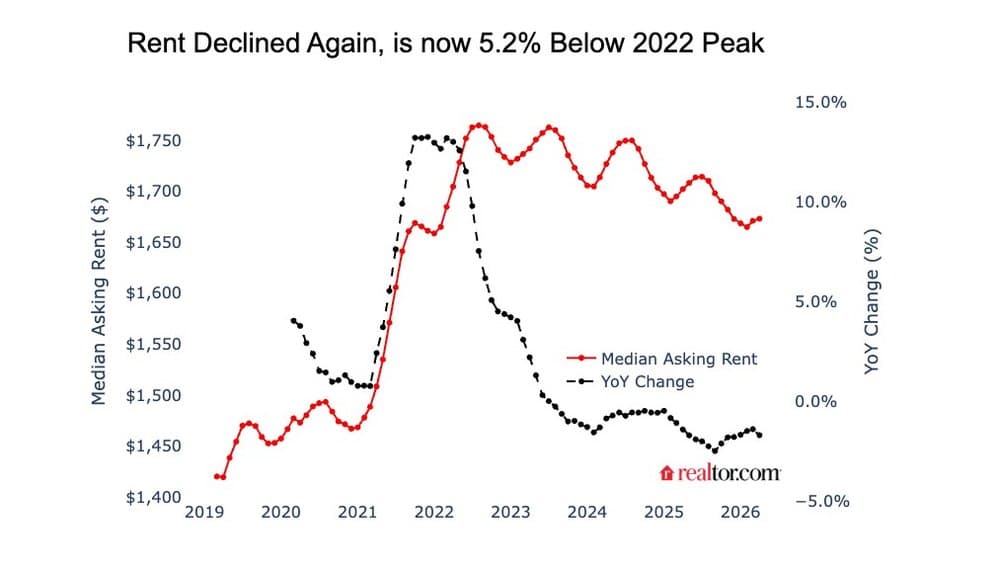
This correction is not just a blip on the radar. May 2026 marks the 34th consecutive month of year-over-year price declines for rental properties with up to two bedrooms — a remarkable and sustained trend that is putting real money back into renters' pockets.
Current Rental Market Data: What the Numbers Say
The latest data from Realtor.com® paints a clear picture of where the rental market stands heading into summer 2026. The national median asking rent across the 50 largest metro areas has fallen to $1,686 per month. That figure is $78, or 4.4%, lower than the peak reached in summer 2022. For renters who lived through that painful spike in housing costs, this represents genuine and measurable relief.
It's worth noting that while rents have fallen significantly from their pandemic peaks, they remain 17.2% — or about $248 — higher than pre-pandemic levels. This means the rental market, while much more favorable than it was two to three years ago, has not fully returned to the affordability levels many renters once enjoyed. Still, the direction of the trend is working in favor of those who choose to rent rather than buy.
The Role of Multifamily Construction in Driving Rents Down
One of the primary drivers behind falling rents is the massive wave of multifamily construction that has swept across the country over the past several years. Developers, responding to the red-hot demand of 2021 and 2022, ramped up construction of apartment buildings and multi-unit housing at a historic pace. Those units are now coming online in large numbers, flooding the market with new inventory and giving renters far more choices than they had just a few years ago.
Realtor.com economist Jiayi Xu notes that "given the surge in multifamily construction over the past few years, we anticipate continued year-over-year declines. In other words, modest rent relief is likely to continue in 2026." The rental housing stock is expected to grow to more than 50.5 million units by early 2027, a level significantly higher than anything seen in the pre-pandemic era.
More supply means more competition among landlords, and that competition is ultimately good news for renters. In many metro areas, landlords are offering concessions such as free months of rent, reduced deposits, and other incentives to attract tenants — benefits that further reduce the true cost of renting.
What to Expect as We Head Into Summer 2026
While the overall trajectory for rents remains downward on a year-over-year basis, experts do anticipate a modest seasonal uptick as summer approaches. Jiayi Xu explains that "as we approach summer, we expect the median asking rent to tick up monthly — a typical seasonal pattern." Summer is traditionally the busiest season for rental activity, as people move more frequently during warmer months and demand temporarily spikes.
However, this seasonal increase is not expected to reverse the broader trend of declining rents. The structural forces driving rents lower — particularly the ongoing influx of new apartment supply — are strong enough to keep year-over-year numbers in negative territory throughout the remainder of 2026, according to Realtor.com economists.
Renting vs. Buying: Key Factors to Consider
Deciding whether to rent or buy ultimately depends on your personal financial situation, lifestyle goals, and local market conditions. That said, in the current environment, renting offers several clear advantages worth weighing carefully.
- Lower monthly costs: With median rents declining and mortgage payments elevated by high interest rates, renting often results in significantly lower monthly housing expenses for comparable properties.
- Flexibility: Renting allows you to relocate more easily if your job, family situation, or personal preferences change — without the burden of selling a home in a slow market.
- No maintenance costs: Renters are not responsible for major repairs or upkeep, which can save thousands of dollars per year compared to homeownership.
- Access to new inventory: The surge in new apartment construction means renters can often access brand-new units with modern amenities at competitive price points.
- Reduced financial risk: Buying a home in a potentially overvalued market exposes buyers to the risk of price declines. Renters avoid this downside risk entirely.
Is Buying Ever the Better Choice?
Despite the current advantages of renting, buying a home still makes sense under the right circumstances. If you plan to stay in the same location for seven or more years, have a substantial down payment saved, and can secure a manageable mortgage rate, purchasing a home remains a powerful long-term wealth-building strategy. Homeownership builds equity over time, offers tax advantages in some cases, and provides a level of stability and personalization that renting cannot match.
The key is to avoid making an emotional or rushed decision. In a market where renting continues to offer strong financial value, there is no urgency to buy before you are truly ready.
The Bottom Line
The rent vs. buy debate in 2026 leans clearly in favor of renting for many Americans, at least in the short term. With 34 consecutive months of year-over-year rent declines, a growing supply of multifamily housing units, and continued downward pressure on asking prices, renters are in one of the most favorable positions they have been in years. As the rental housing stock expands past 50.5 million units by 2027 and modest rent relief continues, choosing to rent rather than buy could be one of the smartest financial decisions you make this year. Always consult with a financial advisor or real estate professional to evaluate what makes the most sense for your unique situation.