
The Social Security Crisis Everyone Is Talking About
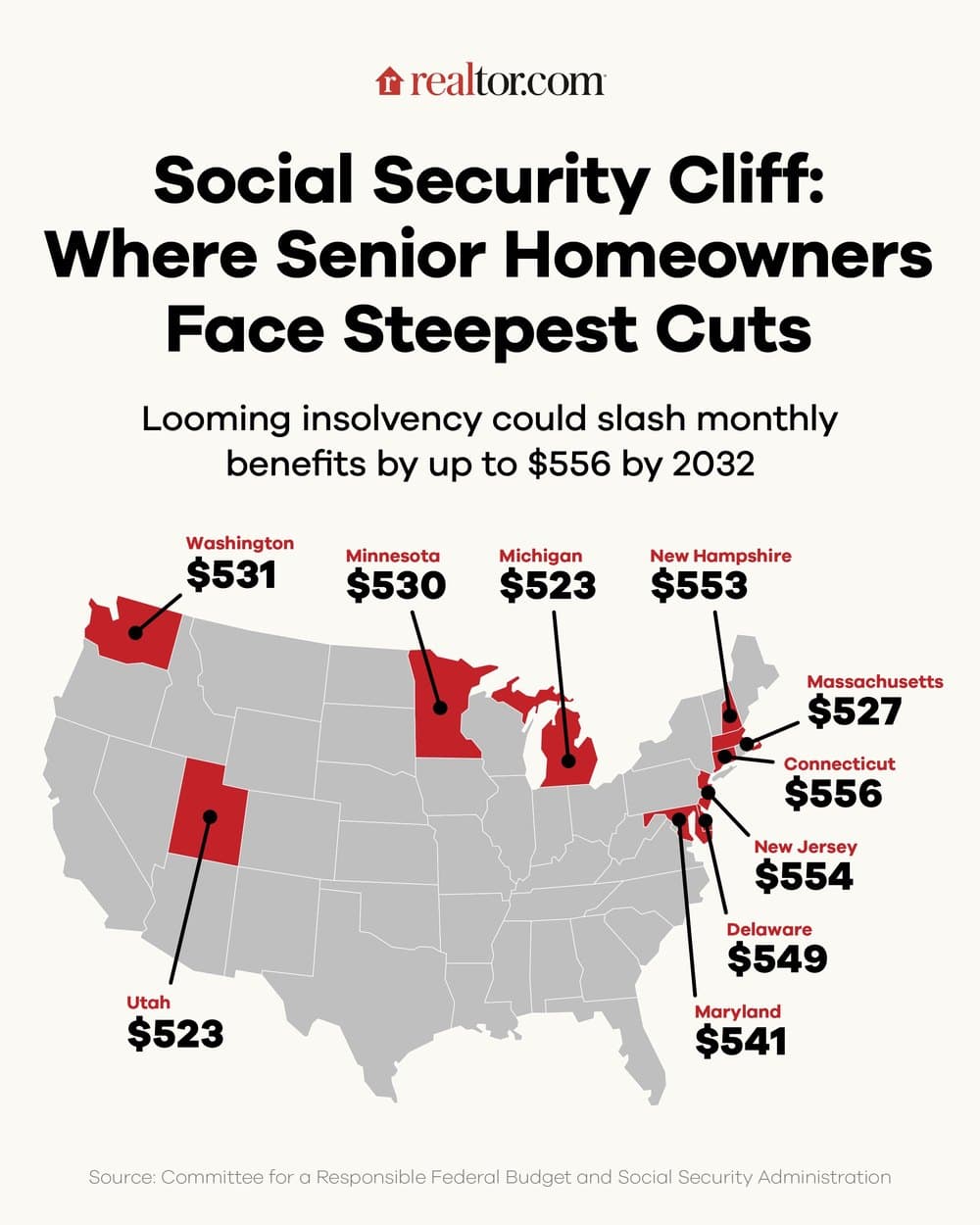
It's the financial story dominating headlines, dinner table conversations, and Senate chambers alike: Social Security is hurtling toward insolvency, and the clock is ticking louder than ever. According to the latest annual trustees report, Social Security's trust fund reserves for retirement benefits are just over six years away from depletion. That means that by 2032, without meaningful legislative action, only 78% of promised benefits would actually be payable to retirees — people who have spent their entire working lives faithfully contributing to the program.
The stakes are enormous. And while politicians debate solutions ranging from raising the retirement age to means-testing benefits, millions of Americans are left wondering: Will I ever actually get to retire? And if my retirement income is slashed, what does that mean for my ability to buy a home?
What the Numbers Really Mean
To understand the gravity of the situation, it helps to look at the math. The Social Security trust fund is the pool of reserves the program draws from when payroll tax revenue isn't enough to cover all scheduled benefits. For decades, more money flowed in than flowed out. But as the Baby Boomer generation ages into retirement and birth rates decline, that equation has flipped dramatically.
The trustees' latest projections confirm what economists have warned for years: without reform, the trust fund will be exhausted by 2032. At that point, Social Security would be forced to operate on current incoming payroll taxes alone — enough to cover only about 78 cents on every dollar of promised benefits. For the average retiree collecting roughly $1,900 per month, that's a cut of more than $400 every single month. For millions of seniors, that isn't a minor inconvenience — it's the difference between stability and financial crisis.
Trump Administration's Rumored Response: Raising the Retirement Age
The political debate over how to fix Social Security has intensified in recent months. The latest development centers on reports that the Trump administration is considering raising the full retirement age — currently set at 67 for those born after 1960 — as a potential path toward long-term solvency.
The rumor prompted Democratic Sen. Elizabeth Warren to fire off a letter to President Donald Trump on a Sunday night, co-signed by Sens. Tammy Duckworth and Richard Blumenthal, demanding clarity on the administration's actual position. In her letter, Warren did not mince words.
"Republicans have a history of attempting to increase the retirement age, privatize Social Security, or otherwise cut Social Security benefits, and some congressional Republicans have called to raise the retirement age or means-test benefits as the 'solution' to this problem," Warren wrote.
Warren and her colleagues argue that raising the retirement age is not a neutral administrative fix — it is, in practical terms, a benefit cut. Workers in physically demanding jobs, lower-income Americans with shorter life expectancies, and those without the luxury of staying employed into their late 60s would bear the heaviest burden.
Why This Directly Affects Future Homebuyers
You might be wondering what Social Security reform has to do with buying a house. The connection is more direct than most people realize, and it flows through one of the most powerful forces in personal finance: retirement security.
For decades, homeownership has been deeply intertwined with retirement planning in the United States. Many Americans build equity in their homes with the intention of downsizing in retirement, using the proceeds to supplement Social Security income and cover living expenses. Others plan to use a stable retirement income — anchored by Social Security — to qualify for mortgages in their 50s and early 60s, purchasing retirement homes before they stop working.
If Social Security benefits are cut by 22% or more, or if the retirement age is pushed back significantly, those plans collapse. Here is how the ripple effects could play out for future homebuyers:
- Reduced purchasing power: Lower guaranteed retirement income means fewer retirees and near-retirees will qualify for mortgages or be able to sustain homeownership costs. Demand in certain housing markets — particularly retirement-friendly communities — could soften considerably.
- Delayed retirement means delayed moves: If workers must stay employed longer to compensate for reduced benefits, the natural flow of older homeowners selling family-sized homes and moving into smaller properties slows down. That constrains housing inventory in markets already struggling with supply shortages.
- Increased financial pressure on younger buyers: Younger Americans who cannot rely on their parents' or grandparents' financial support — because that generation's retirement income has been reduced — may find it harder to receive help with down payments or other first-time buyer assistance.
- Shifts in savings behavior: Uncertainty about Social Security may push more workers to prioritize retirement savings accounts over saving for a down payment, slowing the path to homeownership for millions.
What Should Future Homebuyers Do Right Now?
Waiting for Washington to find a consensus on Social Security reform is not a financial strategy. The smart move is to build a personal plan that accounts for multiple outcomes — including a future where Social Security delivers less than promised.
Financial advisors broadly recommend increasing contributions to tax-advantaged retirement accounts like 401(k)s and IRAs, diversifying income streams, and avoiding the mistake of treating Social Security as the sole pillar of retirement security. For prospective homebuyers, this means being especially intentional about timing — both for purchasing a home and for planning the transition into retirement.
It also means staying informed. The decisions being made in Washington right now — whether the retirement age rises, whether benefits are means-tested, or whether a bipartisan revenue solution is found — will shape the financial landscape for decades. Those decisions will directly influence mortgage markets, housing demand, and the long-term economics of homeownership across the country.
The Bottom Line
Social Security's looming insolvency is not an abstract policy problem. It is a concrete threat to the retirement security and housing plans of tens of millions of Americans. Whether the Trump administration chooses to raise the retirement age, Congress pursues revenue increases, or some combination of reforms emerges, the outcome will reverberate through the housing market for generations. Future homebuyers would be wise to watch closely, plan proactively, and never assume that the safety net will look the same when they finally reach the finish line.