
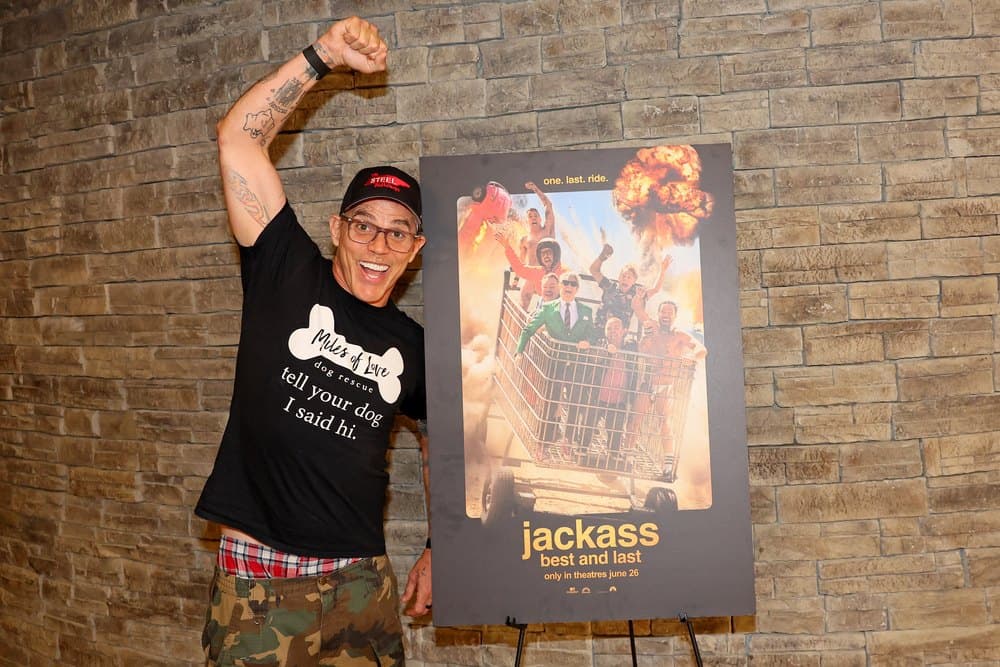
Steve-O Reveals He Earned Just $1,500 for Jackass Season 1—And Was Homeless When It Aired
Fame and fortune are not always two sides of the same coin. For Steve-O, the beloved daredevil comedian best known for his wild stunts on MTV's Jackass, this distinction proved to be a harsh and very personal reality. In a candid new interview with Playboy, the 52-year-old opened up about the financial rock bottom he hit during one of the most exciting periods of his professional life—revealing that he was broke, unemployed, and sleeping without a roof over his head even as he was about to become a household name.
The Shocking Truth Behind Steve-O's Early Jackass Paycheck
Most people assume that landing a starring role on a major MTV television series is the beginning of a comfortable, well-compensated career. For Steve-O—whose real name is Stephen Glover—that assumption could not have been further from the truth. According to his own account, after filming wrapped on the first season of Jackass and after taxes were deducted from his already modest earnings, he walked away with less than $1,500 for the entire season.
"When it was all said and done, after taxes, I was paid less than $1,500 for the entire first season of 'Jackass,'" Steve-O said in the interview. "Before the show came out, my sister kicked me out of the house. I was broke, unemployed, and homeless, and a star on this big MTV show."
The contrast is almost impossible to process. Here was a man who had committed to outrageous, physically punishing stunts alongside future icons like Johnny Knoxville and Bam Margera, all for compensation that would barely cover a month's rent in most American cities. The gap between the cultural buzz surrounding Jackass and Steve-O's actual financial situation at the time was enormous—and deeply humbling.
Fame Came First. Fortune Took Much Longer.
Steve-O's story is a powerful reminder that public recognition and financial security are two very different destinations, and they rarely arrive at the same time. Even after the cameras stopped rolling and Jackass was on the verge of becoming one of the most talked-about shows in early 2000s pop culture, Steve-O had no money, no stable housing, and no certainty about what his future would look like.
"That's one of the first things I learned about fame: It comes a lot easier than fortune," he said, reflecting on the experience with the kind of hard-won wisdom that only comes from living through it.
This insight cuts to the heart of how the entertainment industry actually works for many performers, especially in the early stages of their careers. Television contracts—particularly for unscripted, stunt-based programming in the early 2000s—were not always lucrative for cast members. Budgets were lean, the format was experimental, and network executives held most of the negotiating power. The talent, in many cases, was paid a fraction of what the show would ultimately generate in advertising revenue, merchandise, and cultural cachet.
What Steve-O's Story Tells Us About the Entertainment Industry
The broader lesson in Steve-O's disclosure is one that applies far beyond his own biography. Across music, film, television, and digital media, countless creators have found themselves in the uncomfortable position of being famous but financially struggling. The rise of social media has only accelerated this phenomenon, with influencers and content creators building massive audiences while earning relatively little in return—at least in the early stages.
For Steve-O, the gap between fame and fortune eventually closed. He went on to build a successful career beyond Jackass, including stand-up comedy tours, podcasting, and various television appearances. He has also spoken publicly about his journey through addiction and sobriety, becoming an advocate for recovery in the process. But the early days of his career serve as a sobering counterweight to the glossy, aspirational image that celebrity culture tends to project.
The Human Side of a Jackass Star
What makes Steve-O's revelation particularly compelling is the vulnerability it represents. This is not a man who built his public persona on introspection or emotional openness—he built it on jumping off things, getting hit, and making people laugh through sheer physical commitment. And yet, in sharing this chapter of his life, he reveals something genuinely relatable: the experience of working hard, taking risks, achieving something significant, and still struggling to keep a roof over your head.
His sister kicking him out of the house during this period adds another layer of complexity to the story. It suggests that even his closest family relationships were strained during a time when, from the outside, things might have appeared to be going well. Being a cast member on a buzzy MTV show sounds like success. Living without stable housing tells a very different story.
A Legacy That Outlasted the Struggle
Jackass went on to become a defining piece of early 2000s television and spawned multiple feature films, spinoffs, and a cultural legacy that endures to this day. Steve-O's role in the franchise has secured him a permanent place in entertainment history. But the journey to that legacy, as he has now made clear, was far more difficult and financially precarious than the highlight reel would suggest.
His story is one worth remembering the next time a debut season of any show airs and the cast appears to be living the dream. For Steve-O, that dream came with a paycheck under $1,500 and nowhere to sleep. The fortune, as he learned, always takes a little longer to catch up to the fame.