
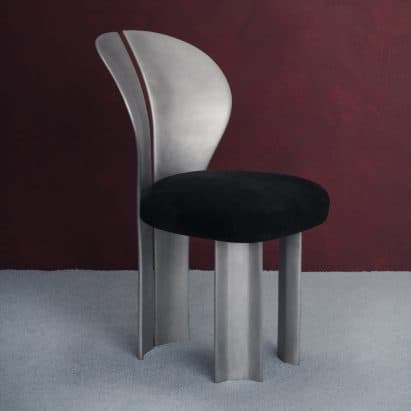
Studio NRG's Lilium Chair Transforms Recycled Car Rims Into Functional Art
In an era where the design world is under increasing pressure to reconcile aesthetics with environmental responsibility, Colombian designer Nicolas Riano Guerrero of Studio NRG has delivered a compelling answer. His latest creation, the Lilium chair, is a striking piece of furniture crafted almost entirely from recycled metal car rims — those discarded automotive components that typically end up rusting in junkyards or overwhelming metal recycling facilities. By reimagining these industrial castoffs as the raw material for a sophisticated seating design, Guerrero has created something that speaks equally to lovers of contemporary furniture and advocates of circular design thinking.
The Concept Behind the Lilium Chair
The name "Lilium" is drawn from the lily flower, a botanical reference that becomes immediately apparent when you study the chair's form. Car rims, when stripped of their tires and examined purely as objects, possess a natural radial symmetry — a spoke-and-ring geometry that echoes the layered petals of a blooming flower. Guerrero recognized this latent visual potential and built his entire design concept around it, using the rims not as hidden structural elements but as the visible, celebrated identity of the piece.
Rather than concealing the industrial origins of the materials, Studio NRG leans into them. The Lilium chair wears its automotive heritage openly, inviting viewers to reconsider the beauty that already exists in mass-produced objects before they are declared waste. This philosophy — finding design value in what society has discarded — sits at the heart of the upcycled furniture movement and positions the Lilium chair as one of its most visually coherent expressions to date.
Material Innovation: From Automotive Waste to Statement Furniture
Car rims present a fascinating set of material properties for a furniture designer to work with. Cast from aluminum alloy or steel, they are engineered to withstand enormous stress loads, extreme temperatures, and continuous mechanical vibration. This inherent durability makes them extraordinarily well-suited for furniture applications, where longevity is one of the most important markers of sustainable design. A chair built from automotive-grade metal is not a piece that will warp, crack, or degrade quickly.
The challenge, of course, lies in transformation. Rims are not flat sheets of metal or simple bars of stock material — they are complex three-dimensional forms with compound curves, varying wall thicknesses, and bolt patterns designed around wheel hubs rather than human anatomy. Guerrero and his studio had to develop fabrication techniques that could work sympathetically with these existing geometries rather than fighting against them. The result is a design process that is inherently collaborative with the material itself, allowing the natural contours of each rim to inform the final silhouette of the chair.
Sustainable Design Principles at Work
The Lilium chair is a textbook example of upcycling applied at a high design level. Upcycling differs from conventional recycling in a critical way: rather than breaking a material down and re-processing it into a raw form, upcycling retains as much of the existing structure and embodied energy as possible, redirecting the object toward a new and often higher-value purpose. In the case of the Lilium chair, this means that the energy-intensive process of smelting, alloying, and casting metal — which already occurred when the rims were originally manufactured — does not need to be repeated.
This approach significantly reduces the carbon footprint associated with producing the chair. When compared to a conventionally manufactured piece of metal furniture, which would require mining raw ore, refining it, and casting new components from scratch, the Lilium chair represents a meaningful reduction in embodied carbon. For consumers and specifiers increasingly attentive to lifecycle assessments and material transparency, this distinction carries real weight.
- Recycled automotive aluminum alloy and steel rims serve as the primary structural and aesthetic material, reducing dependence on virgin metal extraction.
- The manufacturing process maximizes use of existing material geometry, minimizing the need for additional metal cutting, welding reinforcement, or material additions.
- The durability of automotive-grade metals ensures the chair is built for a long service life, reducing replacement frequency and associated waste.
- By working with salvaged rims rather than newly cast components, Studio NRG diverts industrial waste from landfill and metal recycling streams.
Design Aesthetic: Industrial Meets Organic
One of the most compelling qualities of the Lilium chair is the tension it holds between its industrial raw material and its organic final form. Car rims, in their automotive context, read as purely functional, mechanical objects. Removed from that context and reassembled into a chair, they take on an entirely different visual register — one that is almost botanical, recalling not just the lily but also the geometric patterns found in nature, from sunflowers to coral structures.
This interplay between the manmade and the natural gives the Lilium chair a rare visual complexity. It rewards sustained attention in a way that many mass-produced furniture pieces do not. Each rim carries minor variations — slight differences in finish, wear patterns from its previous life, subtle surface textures — that make every chair subtly unique. In an age of hyper-standardized production, this quiet individuality is a genuine distinguishing quality.
The overall silhouette of the chair is bold without being overbearing. The radial spoke patterns of the rims create a visual lightness despite the material's obvious mass, drawing the eye through the form rather than stopping it at the surface. This balance between visual weight and perceived lightness is a hallmark of skilled furniture design and reflects the careful eye Guerrero has brought to the project.
Studio NRG and the Broader Design Conversation
Nicolas Riano Guerrero and Studio NRG are part of a broader wave of designers based in Latin America who are bringing a distinctly regional sensibility to global conversations about sustainability, resourcefulness, and material culture. Colombia, in particular, has a vibrant design community increasingly recognized on the international stage for its willingness to engage with local materials, informal manufacturing traditions, and the creative potential of waste streams that more resource-rich design cultures might overlook.
The Lilium chair participates in this tradition while also speaking the international design language fluently. It would sit comfortably in a gallery context, a design-forward restaurant, a boutique hotel lobby, or a private residential space where the owner wants furniture that carries a story. This versatility — the ability to function as both a design statement and a practical seating object — is what separates truly successful upcycled design from work that remains purely conceptual.
Why Recycled Metal Furniture Matters Right Now
The global furniture industry generates enormous quantities of waste and consumes vast amounts of virgin material each year. Fast furniture — inexpensive, disposable pieces with short service lives — has become an environmental concern comparable in scale to fast fashion. Against this backdrop, pieces like the Lilium chair offer a genuinely different model: furniture as a durable, meaningful object with a traceable material history and a design logic rooted in longevity rather than disposability.
Recycled metal furniture, and upcycled furniture more broadly, is gaining traction among consumers, interior designers, and institutional specifiers who are incorporating material sustainability into their purchasing criteria. The Lilium chair meets this demand without making any aesthetic compromises, demonstrating that sustainable design does not require choosing between beauty and responsibility. That is, perhaps, its most important contribution to the conversation.
Studio NRG's Lilium chair is a reminder that the next great material for furniture design might already exist — sitting in a junkyard, waiting to bloom.