
A Growing Revolt Against Property Taxes Is Reshaping the Political Landscape
For decades, property taxes have been one of the most consistent — and most complained about — costs of homeownership in the United States. But what was once background noise has grown into a full-throated political revolt. Heading into 2026, a wave of state lawmakers are no longer tinkering around the edges of property tax reform. Some are pursuing outright repeal. Others are pushing cuts so deep they would fundamentally reshape how local governments fund schools and public services. The question on everyone's mind: Is 2026 the year property taxes finally start to disappear?
The answer is complicated, but the movement is real — and it is growing faster than most housing experts expected.
Why Property Taxes Are Under Siege Right Now
To understand what is driving this wave of reform, you have to look at what has happened to home values over the past several years. Across the country, surging real estate prices have led to dramatically higher assessed values, which in turn have pushed property tax bills through the roof — even in states where the nominal tax rate has stayed flat.
Joel Berner, senior economist at Realtor.com®, explains it clearly: "Some of these states, namely Texas, have high property tax rates that are unpopular among voters, especially when the state runs a budget surplus nearly every year. The rest have all seen major increases in the taxable value of homes that are leading to higher property tax burdens."
That combination — high rates in some states and rapidly climbing assessments in others — has created a political environment where property tax relief is one of the most broadly popular issues across party lines. Long-tenured homeowners on fixed incomes are feeling particularly squeezed. For retirees who bought their homes decades ago and have watched their neighborhoods appreciate dramatically, a property tax bill that grows by hundreds or even thousands of dollars each year can threaten their ability to stay in the home they have lived in for most of their adult lives.
Florida Takes the Question Directly to Voters
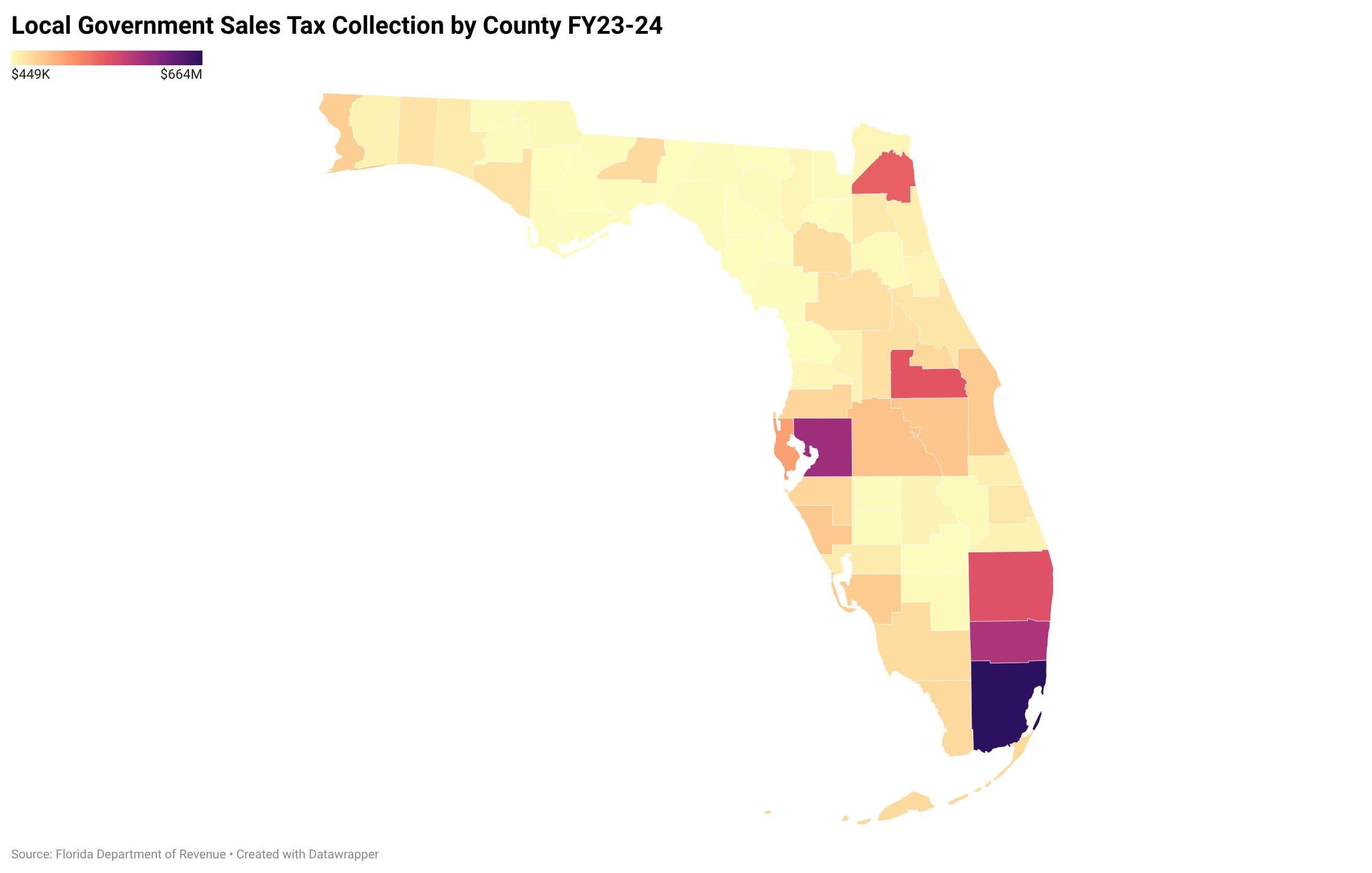
Perhaps the most significant property tax development heading into 2026 is happening in Florida, where voters will have a direct say in one of the largest proposed property tax cuts in the country. A proposed constitutional amendment on the November ballot would raise the state's homestead exemption for nonschool property taxes from $50,000 to $150,000 beginning in 2027.
That is a substantial shift. A homestead exemption reduces the taxable value of a primary residence, meaning homeowners pay taxes only on the assessed value above the exemption threshold. Raising that threshold by $100,000 would deliver meaningful savings to millions of Florida homeowners — particularly those in markets where values have soared in recent years, such as Miami, Tampa, and Orlando.
The Florida proposal is notable not just for its size but for its structure. By targeting only nonschool property taxes, lawmakers have attempted to insulate K-12 education funding from the most immediate impact of the cut. That design reflects a broader tension that defines every serious property tax reform debate: how to give homeowners relief without gutting the services that property taxes pay for.
Texas: High Rates, Surplus Revenue, and Voter Frustration
Texas presents a different but equally instructive case. The Lone Star State has among the highest effective property tax rates in the nation — a legacy of the state's decision not to levy a personal income tax, which pushes more of the public funding burden onto property owners. As the state has continued to run substantial budget surpluses in recent years, pressure has mounted on lawmakers to direct some of that surplus toward property tax relief rather than letting homeowners continue to absorb the full cost.
Various proposals in Texas have floated ideas ranging from expanded homestead exemptions to compression of school district tax rates using state funds to make up the difference. While a full elimination of the property tax remains a long-shot proposal even in Texas, the direction of travel is clear: voters want relief, and lawmakers are responding.
The Central Problem With Eliminating Property Taxes
For all the political appeal of property tax cuts, every proposal forces a hard fiscal question: if property taxes shrink or disappear, who pays for what they currently fund?
Property taxes are the primary funding mechanism for public schools in most states, and they also support local services ranging from fire departments to road maintenance to libraries. Replacing that revenue is not impossible, but it requires either raising other taxes — such as sales or income taxes — or cutting services. Neither option is politically painless, and both carry real consequences for communities.
- Shifting funding to sales taxes tends to place a heavier burden on lower-income households, who spend a larger share of their income on taxable goods.
- Replacing property tax revenue with state income tax revenue changes who controls the money, often shifting power away from local school boards and toward state legislatures.
- Cutting services directly affects the quality of local schools, infrastructure, and public safety — outcomes that can ultimately depress the very home values the reforms are meant to protect.
What This Means for Homeowners Watching the 2026 Debate
The spread of these proposals — even where they have stalled in state legislatures — signals something important. Homeowner frustration with rising property tax bills has reached a level of intensity that politicians can no longer afford to ignore. Election-year pressure is real, and the affordability crisis gripping housing markets across the country has given these reform efforts a sense of urgency they previously lacked.
For homeowners, the most practical takeaway right now is to stay informed about what is happening in their specific state. The reforms being debated vary enormously in scale, design, and likelihood of passage. A constitutional amendment going to Florida voters in November is a very different situation from a bill that has stalled in committee in another state.
It is also worth understanding how any proposed change would interact with your current tax situation. Expanded homestead exemptions primarily benefit owner-occupants of primary residences. Landlords, owners of second homes, and commercial property owners may see little to no benefit — and in some reform designs, could see their own burdens increase as states try to protect revenue.
The Bigger Picture: A Historic Shift May Be Underway
Whether or not any single state successfully eliminates its property tax, the fact that elimination is now a mainstream political conversation is significant. Property taxes have been a fixture of American public finance for more than two centuries. The idea that they might be phased out — or dramatically restructured — would have seemed fringe just a decade ago.
Today, it is ballot-ready language in Florida and a talking point in state capitals from Texas to the Midwest. That alone tells you something important about where housing affordability anxiety has taken us. 2026 may or may not be the beginning of the end for property taxes, but it is almost certainly the beginning of a much bigger fight over who should pay for the communities we live in — and how.