
A House With a 260-Year Story—and a Warning for Today
In 1760, a 30-year-old man named Abraham Choate built a two-story timber-frame house in Ipswich, Massachusetts, for his family of nine. By the modest standards of Colonial America, the home was considered almost extravagant—so much so that a neighboring property owner complained in his diary that the new house was "too big" and "too high." Sound familiar? What we now call NIMBYism—the "Not In My Backyard" resistance to new development—has roots that stretch back more than two and a half centuries.
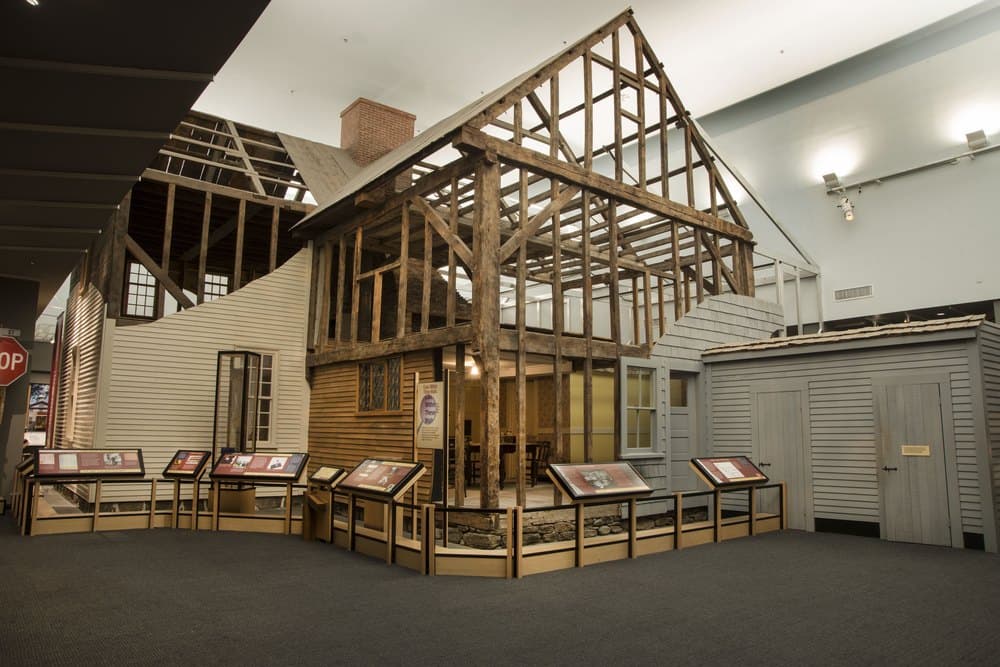
Today, Choate's home stands at the heart of Within These Walls, a landmark installation at the Smithsonian National Museum of American History, sponsored by the National Association of Realtors®. The exhibit follows five different families who lived in that single house from the Colonial era through World War II, and in doing so, it tells a much larger story: the story of what the American home has always meant—and what happens when too few people can access one.
The American Home as an Engine of Stability and Wealth
Throughout American history, owning a home has been far more than a matter of shelter. It has represented stability, identity, community belonging, and—perhaps most powerfully—a vehicle for building generational wealth. The families who passed through the walls of Choate's Ipswich home illustrate this truth with remarkable clarity. From ambitious Colonial builders pushing back against 18th-century social critics to multigenerational renters in the 20th century simply trying to make ends meet, the arc of the American home reflects the arc of the American dream itself.
For generations, homeownership offered ordinary families a way to accumulate assets, pass wealth to their children, and establish roots in their communities. A home is typically the single largest financial investment most Americans will ever make. When families own rather than rent, they build equity over time, benefit from property appreciation, and gain a measure of financial security that renting simply cannot provide. This is why housing policy has always been, at its core, economic policy.
Decades of Underbuilding Have Created a Historic Housing Shortage
As the United States approaches its 250th birthday, the nation faces a sobering reality: after decades of underbuilding, there are simply not enough homes to go around. The housing shortage is not a sudden crisis—it is the result of policy choices, zoning restrictions, supply chain disruptions, labor shortages, and yes, generations of NIMBY opposition to new development that would have added much-needed inventory to American communities.
Experts across the political spectrum largely agree on the scale of the problem. Millions of housing units need to be built to close the gap between supply and demand. That deficit drives up home prices, inflates rents, and pushes the dream of homeownership further out of reach for first-time buyers, young families, and lower-income households. The consequences are not merely financial—they are social and generational.
Who Gets Left Behind When Housing Is Scarce
The Within These Walls exhibit makes an important and uncomfortable point: the home has long been a powerful engine of opportunity, but only for those who could actually access it. Throughout American history, systemic barriers—from discriminatory lending practices and racially restrictive covenants to exclusionary zoning—have locked entire communities out of homeownership and the wealth-building that comes with it.
Today's housing shortage doesn't affect all Americans equally. The burden falls hardest on:
- First-time homebuyers competing against cash offers and investors in a low-inventory market
- Younger generations who face higher home prices relative to income than any previous generation
- Renters in high-cost urban areas where housing costs consume an outsized share of monthly income
- Multigenerational households forced to double up because independent housing is unaffordable
- Communities of color that were historically excluded from wealth-building through homeownership and continue to face a persistent racial homeownership gap
When housing is scarce and expensive, inequality deepens. The families who already own property see their wealth grow. Those locked out fall further behind. The gap between homeowners and renters—already significant—widens with every year that the shortage goes unaddressed.
The Path Forward: Building More, Building Smarter
History offers both a cautionary tale and a source of optimism. Americans have faced housing challenges before and found ways through them. The post-World War II housing boom, fueled by federal investment, returning veterans, and a national commitment to expanding homeownership, reshaped the country and created a broad middle class. The question now is whether the nation has the political will and the practical tools to do something similar.
Solutions being discussed at local, state, and federal levels include zoning reform to allow for more housing density, streamlining permitting processes that can add years and significant costs to new construction, expanding funding for affordable housing development, and incentivizing the conversion of underused commercial space into residential units. None of these solutions is simple, and none will work overnight. But the evidence is clear: communities that build more housing see lower prices, more mobility, and greater economic opportunity.
What Abraham Choate's House Tells Us About America Today
There is something both poignant and instructive about the fact that a house built in 1760 can still speak so directly to the challenges of 2025. The families who lived within those walls—each navigating their own version of the American experience—remind us that housing has never been just about square footage or property values. It has always been about the kind of country we want to be and who we are willing to let in.
As the United States reflects on nearly 250 years of history, the housing crisis is a defining test. The American home built a nation. Now the nation must decide whether it is willing to build enough homes for the next generation of Americans who want to be part of that story.