
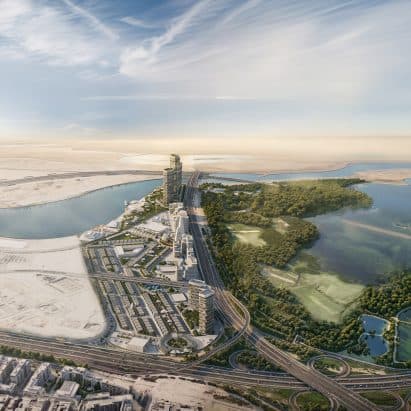
American University in Dubai Students Showcase Bold Urban Design Visions
Architecture and urban design education has always served as fertile ground for reimagining how cities are built and experienced. The latest school show from the American University in Dubai (AUD) proves that the next generation of designers is ready to challenge conventional thinking about the built environment. Among a remarkable cohort of student projects, one standout concept — a zoned neighbourhood masterplan that explores how architecture and urban planning can directly influence human emotion — has captured widespread attention and admiration from the design community.
Featured as part of Dezeen's ongoing School Shows series, which highlights exceptional graduate and undergraduate work from institutions around the world, the AUD student projects reflect both regional sensibilities and globally relevant design philosophies. From waterfront developments to emotionally responsive community planning, these works signal a confident, forward-thinking approach to shaping tomorrow's cities.
What Is the Dezeen School Shows Series?
For those unfamiliar with the platform, Dezeen School Shows is an annual showcase that brings student architecture, interior design, and urban planning projects to a global audience. The series gives emerging designers an invaluable opportunity to have their work seen by industry professionals, potential employers, and fellow creatives around the world. Being featured in Dezeen School Shows is widely regarded as a prestigious recognition within the academic design community.
The American University in Dubai has become a recurring presence in this celebrated series, consistently producing graduates whose projects push conceptual and technical boundaries. This year's selection is no exception, with work that ranges from speculative urbanism to deeply human-centered design interventions.
The Zoned Neighbourhood Masterplan: Designing for Human Emotion
The headline project from AUD's school show is a masterplan that investigates the profound relationship between the built environment and human psychological experience. Rather than treating urban design purely as a logistical or infrastructural challenge, the student behind this project asked a more fundamental question: how can the way a neighbourhood is zoned and arranged make people feel?
This emotionally driven approach to urban planning is increasingly relevant in an era where mental health, social connection, and community wellbeing are taking center stage in city planning conversations globally. The masterplan proposes a zoned neighbourhood where different areas are intentionally designed to evoke specific emotional responses — spaces of calm and contemplation, zones of energy and social interaction, and transitional areas that gently guide residents from one psychological state to another.
The visualisation of the project, set against a striking waterfront context, demonstrates a sophisticated understanding of scale, materiality, and spatial sequence. The design uses natural water features, varied building heights, and carefully considered public spaces to create a neighbourhood that feels not only livable but emotionally resonant.
Why Emotionally Responsive Urban Design Matters
The concept of designing spaces that actively support human emotion is not entirely new — elements of it can be traced to biophilic design principles, therapeutic landscapes, and even ancient traditions of sacred architecture. However, applying this thinking at the scale of an entire neighbourhood masterplan represents a significant and exciting evolution of the idea.
Research consistently shows that the environments we inhabit have measurable effects on our stress levels, sense of belonging, creativity, and overall happiness. Poorly designed urban spaces — those dominated by traffic, noise, and visual clutter with little green space or human-scale detail — contribute to social isolation and mental fatigue. Conversely, thoughtfully planned neighbourhoods with accessible public spaces, greenery, and clear spatial hierarchy have been linked to stronger community bonds and improved mental health outcomes.
The AUD student's masterplan taps into this body of knowledge and translates it into a coherent, visually compelling design proposal. It is exactly the kind of thinking that contemporary cities — including Dubai, a metropolis in continuous evolution — need as they grow and mature.
Dubai as a Laboratory for Future Urban Design
It is no coincidence that this kind of ambitious urban thinking is emerging from a school based in Dubai. The emirate has long functioned as a living laboratory for bold architectural and urban experimentation. With rapid population growth, ambitious sustainability targets, and a government committed to innovation, Dubai provides an extraordinary context in which students can test and develop radical design ideas.
The American University in Dubai sits at the intersection of this dynamic regional context and a rigorous international academic tradition. Students are exposed to the specific challenges and opportunities of designing in the Middle East — including climate responsiveness, cultural sensitivity, and the pressures of fast-paced urban growth — while also engaging with global design discourse and emerging technologies.
This dual perspective gives AUD graduates a distinctive edge, and it is reflected in the quality and ambition of the projects presented in this year's school show.
Other Notable Projects from AUD's School Show
While the zoned neighbourhood masterplan may be the most talked-about project from this year's showcase, it represents just one thread in a rich tapestry of student work. Other projects from the cohort explore themes including:
- Adaptive reuse of existing urban structures to reduce construction waste and preserve cultural memory within rapidly developing city contexts.
- Community-focused housing typologies that prioritise shared spaces and cross-generational living arrangements to combat loneliness in dense urban environments.
- Climate-responsive design strategies tailored to the extreme heat of the Gulf region, proposing shading systems, passive cooling techniques, and material choices that reduce energy consumption without sacrificing aesthetic quality.
- Waterfront activation concepts that reimagine Dubai's coastal edges as accessible, inclusive public spaces rather than privately controlled developments.
Together, these projects paint a picture of a student body that is deeply engaged with the pressing issues of our time — sustainability, equity, mental health, and cultural identity — and equipped with the design skills to address them meaningfully.
The Growing Influence of Middle Eastern Architecture Schools
The prominence of AUD's work in international platforms like Dezeen School Shows reflects a broader shift in the global architecture conversation. Middle Eastern institutions are increasingly recognized not just as regional players but as contributors to worldwide design culture. Schools in Dubai, Beirut, Cairo, and beyond are producing graduates whose ideas resonate far beyond their immediate geographies.
This growing influence is partly a result of the region's unique position at the crossroads of tradition and modernity, East and West, heritage and hyper-development. Students studying architecture in this context are, almost by necessity, asked to grapple with complex questions about identity, belonging, and change — questions that are ultimately universal.
Conclusion: A New Generation Ready to Shape Our Cities
The student projects from the American University in Dubai's latest school show — anchored by the emotionally resonant zoned neighbourhood masterplan — offer an inspiring glimpse of what thoughtful, human-centered urban design can look like. These are not merely academic exercises. They are genuine contributions to the global conversation about how we should build our cities and what kind of life those cities should support.
As Dubai continues to grow and as the rest of the world wrestles with questions of sustainability, wellbeing, and urban equity, the ideas being developed in schools like AUD will become increasingly important. The next generation of architects and urban designers is clearly paying attention — and they have plenty of compelling answers to offer.